Above all, after climaxes the most intense
In our close-knit uniting, frenzied, barbarous,
Reclining side by side, gasping for breath, I sense
The abyss that severs us;
In silence we recline, not understanding why,
After such pent-up fury, longed-for, deep, insane,
So suddenly we find ourselves apart and lie
As separate selves again;
You are beside me but your gaze does not reveal
That eagerness I answered with a fire unknown,
You are a helpless beast gorged with its meal,
A corpse sculpted in stone;
You sleep and do not stir — how can another know
What dream has quieted your restless mind?
But through me yet great gusts of yearning blow
Leaving their mark behind;
I cannot cease from living, O my dearest love!
My warlike frenzy underneath its peaceful air
In desperation searches round me and above
To find a passage there!
And still you lie content! The throbbing ecstasy
Of sadness coursing through my limbs, and that profound
Confusion, nothing of all this in you I see.
My love, my only love! Between yourself and me
There is no common ground.
The evening empties, inexplicably.
Places no longer receive us,
toss us out, to the elements. There’s
cold and wind. Sounds
linger, trembling in the air,
don’t know to disappear.
And then a poet
the usual one, somewhere,
takes a blank sheet of paper, totals up
the void (consoled by
the fine arabesque of his writing
on silence), drafts
an image, a lovely
turn of phrase perhaps, perhaps
fleeting, no matter.
No one will know the other half
of his day, falling into shadow,
the real, the not written, what was
knocking at the doors of everything beautiful
like a beggar. And who knows
if the snow, the star,
are also the void’s
merciful stories, and you,
you, too, lights
of autumn, lit up
houses, so many other
beggar poets?
It is a goodly sight through the clear air,
From Hampstead’s heathy height, to see at once
England’s vast capital in fair expanse,
Towers, belfries, lengthened streets and structures fair.
St. Paul’s high dome amidst the vassal bands
Of neighb’ring spires, a regal chieftain stands,
And over fields of ridgy roofs appear,
With distance softly tinted, side by side,
In kindred grace, like twain of sisters dear,
The Towers of Westminster, her Abbey’s pride;
While, far beyond, the hills of Surrey shine
Through thin soft haze, and shew their wavy line.
View’d thus, a goodly sight! but when survey’d
Through denser air when moisten’d winds prevail,
In her grand panoply of smoke arrayed,
While clouds aloft in heavy volumes sail,
She is sublime.—She seems a curtained gloom
Connecting heaven and earth,—a threat’ning sign of doom.
With more than natural height, reared in the sky
‘Tis then St. Paul’s arrests the wondering eye;
The lower parts in swathing mist concealed,
The higher through some half-spent shower revealed,
So far from earth removed, that well, I trow,
Did not its form man’s artful structure shew,
It might some lofty alpine peak be deemed,
The eagle’s haunt with cave and crevice seamed.
Stretched wide on either hand, a rugged skreen,
In lurid dimness, nearer streets are seen
Like shore-ward billows of a troubled main,
Arrested in their rage. Through drizly rain,
Cataracts of tawny sheen pour from the skies,
Black furnace-smoke in curling columns rise,
And many-tinted vapours, slowly pass
O’er the wide draping of that pictured mass.
So shews by day this grand imperial town,
And, when o’er all the night’s black stole is thrown,
The distant traveller doth with wonder mark
Her luminous canopy athwart the dark,
Cast up, from myriads of lamps that shine
Along her streets in many a starry line:—
He wondering looks from his yet distant road,
And thinks the northern streamers are abroad.
‘What hollow sound is that?’ approaching near,
The roar of many wheels breaks on his ear.
It is the flood of human life in motion!
It is the voice of a tempestuous ocean!
With sad but pleasing awe his soul is filled,
Scarce heaves his breast, and all within is stilled,
As many thoughts and feelings cross his mind,—
Thoughts, mingled, melancholy, undefined,
Of restless, reckless man, and years gone by,
And Time fast wending to Eternity.
I’ve heard them lilting at our ewe-milking,
Lasses a-lilting before the dawn of day;
But now they are moaning on ilka green loaning—
The Flowers of the Forest are a’ wede away.
At bughts, in the morning, nae blythe lads are scorning,
The lasses are lonely, and dowie, and wae;
Nae daffin’, nae gabbin’, but sighing and sabbing,
Ilk ane lifts her leglin and hies her away.
In har’st, at the shearing, nae youths now are jeering,
Bandsters are lyart, and runkled, and gray;
At fair or at preaching, nae wooing nae fleeching—
The Flowers of the Forest are a’ wede away.
At e’en, in the gloaming, nae younkers are roaming
‘Bout stacks wi’ the lasses at bogle to play;
But ilk ane sits drearie, lamenting her dearie—
The Flowers of the Forest are weded away.
Dool and wae for the order sent our lads to the Border!
The English, for ance, by guile wan the day;
The Flowers of the Forest, that fought aye the foremost,
The prime of our land, are cauld in the clay.
We’ll hear nae mair lilting at our ewe-milking;
Women and bairns are heartless and wae;
Sighing and moaning on ilka green loaning—
The Flowers of the Forest are a’ wede away.
Outside the afterlight’s lucent rose
Is smiting the hills and brimming the valleys,
And shadows are stealing across the snows;
From the mystic gloom of the pineland alleys.
Glamour of mingled night and day
Over the wide, white world has sway,
And through their prisoning azure bars,
Gaze the calm, cold eyes of the early stars.
But here, in this long, low-raftered room,
Where the blood-red light is crouching and leaping,
The fire that colors the heart of the gloom
The lost sunshine of old summers is keeping¬
The wealth of forests that held in fee
Many a season’s rare alchemy,
And the glow and gladness without a name
That dwells in the deeps of unstinted flame.
Gather we now round the opulent blaze
With the face that loves and the heart that rejoices,
Dream we once more of the old-time days,
Listen once more to the old-time voices!
From the clutch of the cities and paths of the sea
We have come again to our own roof-tree,
And forgetting the loves of the stranger lands
We yearn for the clasp of our kindred’s hands.
There are tales to tell, there are tears to shed,
There are children’s flower-faces and women’s sweet laughter;
There’s a chair left vacant for one who is dead
Where the firelight crimsons the ancient rafter;
What reck we of the world that waits
With care and clamor beyond our gates,
We, with our own, in this witching light,
Who keep our tryst with the past tonight?
Ho! how the elf-flames laugh in glee!
Closer yet let us draw together,
Holding our revel of memory
In the guiling twilight of winter weather;
Out on the waste the wind is chill,
And the moon swings low o’er the western hill,
But old hates die and old loves burn higher
With the wane and flash of the farmhouse fire.
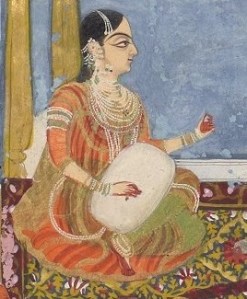
In honor of the festival of Dr. Amdekar Jayanti, we present this work by a great 20th century Indian poet.
Kamala Surayya Indian 1934 – 2009
At sunset, on the river ban, Krishna
Loved her for the last time and left…
That night in her husband’s arms, Radha felt
So dead that he asked, What is wrong,
Do you mind my kisses, love? And she said,
No, not at all, but thought, What is
It to the corpse if the maggots nip?
From behind the moon boys’ graves
bleed endlessly; from photograph
to browning photograph they blacken
headlines, stranded outside of time
at the story’s frigid edge.
Though they are long buried
in French soil, we are still speaking
of trenches, of who rose, who fell,
who merely hung on. The morning drills
secretly, like an element that absorbs.
We are right back where we were
before the world turned over,
the dreary steeples of Fermanagh and Tyrone
are all that Sunday means. Their North
was not ‘The North that never was’.
Artemis, protector of virgins, shovels up
fresh pain with the newly-wed
long-stemmed roses, pressing two worlds
like a wedding kiss upon another Margaret:
lip-Irish and an old family ring.
It’s like asking for grey
when that colour is not recognised,
or changes colour from friend to friend.
I track the muse through subwoods, curse
the roads, but cannot write the kiss.





 Poets Corner