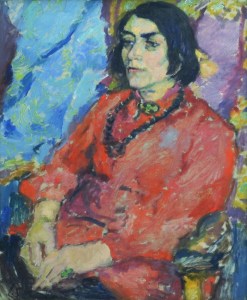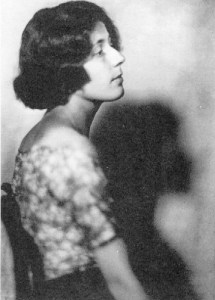
Report on Horst K., or the Rehabilitation of the Individual

Elisabeth Borchers
German
1926 – 2013


1

Raised without a mother,
the father a drinker.
Once at fourteen, again at sixteen
then off to a facility.
At twenty a third time.
Fifteen years in total,
petty crimes: the possessions of others.
Not a Picasso
or a run through the bank.
Bicycle, briefcase,
a coat, ill-fitting
but warm.
Backsliding: slipping out on the check.

Enough of that, my friend,
now things are looking up,
with gentleness and hope
into a happy life.
Congratulations,
a spot on the sunny side
has opened up.

2

Forced entry into an empty house,
consumption of canned food, use of a bed.
That wasn’t long ago.
The winter is hard.
Then once again
doing time in the warmth.
They remember it.
A story appeared in the paper.
It’s too much to bear
and we become hardened.

3

After release
a rehabilitated man at last.
In the final night of the year
he took refuge,
laid himself down in the woods and froze.
A story appeared in the paper.
The angel who carried him out of the woods
is not mentioned.
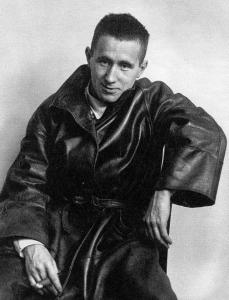
Questions from a Worker Who Reads

We present this work in honor of Labor Day.

Bertolt Brecht
German
1898 – 1956


Who built Thebes of the seven gates?
In the books you will find the names of kings.
Did the kings haul up the lumps of rock?
And Babylon, many times demolished
Who raised it up so many times? In what houses
of gold-glittering Lima did the builders live?
Where, the evening that the Wall of China was finished
Did the masons go? Great Rome
Is full of triumphal arches. Who erected them? Over whom
Did the Caesars triumph? Had Byzantium, much praised in song
Only palaces for its inhabitants? Even in fabled Atlantis
The night the ocean engulfed it
The drowning still bawled for their slaves.

The young Alexander conquered India.
Was he alone?
Caesar beat the Gauls.
Did he not have even a cook with him?

Philip of Spain wept when his armada
Went down. Was he the only one to weep?
Frederick the Second won the Seven Year’s War. Who
Else won it?

Every page a victory.
Who cooked the feast for the victors?
Every ten years a great man?
Who paid the bill?

So many reports.
So many questions.

Colour Grey

Herta Müller
German
b. 1953


1.

I grow time, beans, the colour gray
And stitch the shadows of a dying day
They make a woman, rather a girl
Lost in the ocean like a grain of pearl
The swans of Coole fly over me
Will they rest for a while by me!
Maybe it’s my turn now.
Deep in the frost where my eyes shall never go
The leopard will print his paw
And with a sudden leap break free
All the chimes of poetry
Maybe it’s my turn now.
The rough beast was never born
Though we devised a cage for his morn
Maybe it’s my turn now.
I have a tale to tell I shall also ring the bell
When you start believing
When you start hearing
Maybe it’s my turn now.

2.

These days I don’t think of you
But after the soot covers me
I begin to wonder where those
Evenings have gone, those wanderings
In the spacious lawns of enchantment
That smacked of no design, though
We were bent on making a sense
The early birds get their worms
I lie in the tireless ticking of my old watch
Counting the bits of frozen blood,
Listening to the worms
That are in all of us
Then I begin to crawl towards the womb
That threw me off a long way back
And look for the dark, the black hole
To suck me up.

3.

I was nice to him
He was nice to me
Only
Our doors, our windows
Kept closed
Lest we smell each other.

Elysium

Friedrich Schiller
German
1759 – 1805


Past the despairing wail—
And the bright banquets of the Elysian vale
Melt every care away!
Delight, that breathes and moves forever,
Glides through sweet fields like some sweet river!
Elysian life survey!
There, fresh with youth, o’er jocund meads,
His merry west-winds blithely leads
The ever-blooming May!
Through gold-woven dreams goes the dance of the hours,
In space without bounds swell the soul and its powers,
And truth, with no veil, gives her face to the day.
And joy to-day and joy to-morrow,
But wafts the airy soul aloft;
The very name is lost to sorrow,
And pain is rapture tuned more exquisitely soft.

Here the pilgrim reposes the world-weary limb,
And forgets in the shadow, cool-breathing and dim,
The load he shall bear never more;
Here the mower, his sickle at rest, by the streams,
Lulled with harp-strings, reviews, in the calm of his dreams,
The fields, when the harvest is o’er.
Here, he, whose ears drank in the battle roar,
Whose banners streamed upon the startled wind
A thunder-storm,—before whose thunder tread
The mountains trembled,—in soft sleep reclined,
By the sweet brook that o’er its pebbly bed
In silver plays, and murmurs to the shore,
Hears the stern clangor of wild spears no more!
Here the true spouse the lost-beloved regains,
And on the enamelled couch of summer-plains
Mingles sweet kisses with the zephyr’s breath.
Here, crowned at last, love never knows decay,
Living through ages its one bridal day,
Safe from the stroke of death!

The Boy on the Moor

Annette von Droste-Hulshoff
German
1797 – 1848


How dreadful it is to go over the moor
When it is teeming with will o’ the wisps
And mists are whirling like phantoms
As brambles are hooking on bushes.
A pool springs up below each of his steps
When from the cleft it hisses and sings
How dreadful it is to go over the moor
When the reed beds are rustling in wind!

The child all atremble holds fast to his books
And runs as if he were hunted;
Hollowly whistles the wind o’er the plain-
What’s rustling there in the bushes?
The ghostly ditch digger it is
Who steals the best peat from the master;
Hu, hu, it sounds like a cow that is mad
As the boy ducks low in his fear.

From the bank, the stumps stare forth
The pines are eerily nodding
The boy runs on, pricking his ears,
Through gigantic grasses like spears;
And how it crumbles and crushes in there!
That is the unfortunate spinner
That is Leonore who is spinning enchanted
Winding her distaff there in the reeds.

Onwards, onwards, but always at speed
Onwards, as if it wanted to catch him;
By his feet it’s swirling and seething
It’s whistling under his soles
Like a tune set to haunt him;
That is the treacherous violinist;
That is the thieving fiddler, Knauf,
Who stole the marriage farthing.

The moor is breaking asunder, a sigh
Rises up from the cavernous gap;
Woe, woe, it is damned Margret who calls:
‘Ho, ho, my poor little soul’!
The boy leaps on like a wounded deer:
Were protecting angels not near him,
His whitened bones would later be found
By a digger in a dried up peat ditch.

Gradually, the ground becomes firmer
And there, next to the meadow,
The lamp flickers so homely.
The boy stands at the border;
Deeply he breathes, and back to the moor
Casts yet another horror struck look:
Yes, in the reeds, it was a terror,
How dreadful it was on the heath!

Hope

Johann Ludwig Tieck
German
1773 – 1853


Love came out of a distant land
But no one followed her.
So the goddess beckoned me,
And bound me with sweet bands.

As I began to feel the pain,
Tears darkened my eyes.
— Ah! What is Love’s happiness?
I cried, why this game?

— I have not yet found anyone,
Said the figure kindly.
— Feel now the power
Which has bound other hearts.

All my desires fled
Into the blue and airy expanse.
Fame seemed to me but a daydream:
The sound of waves breaking on the shore.

Ah! Who will release me from my chains?
For my arms are bound fast,
A swarm of sorrows flies around me.
Will no one, no one at all, save me?

Dare I look in the mirror
Which Hope holds up before me?
Ah, the world is but a delusion!
No, I cannot put my trust in it.

O, but do not let that waver
Which is your only strength.
If your soul mate does not love you,
Your only fate is the bitter death of the invalid.

To the Barbarian

We present this work in honor of the poet’s 150th birthday.

Else Lasker-Schüler
German
1869 – 1945


I spend my nights asleep
Upon your face.

In the steppe of your body
I plant cedar and almond trees.

Tirelessly I search your chest
For Pharao’s golden pleasures.

But your lips are heavy, and
My miracles cannot deliver them.

Please lift your snowy skies
Off my soul –

Your diamond dreams
Slice through my veins.

I am Joseph, I wear a sweet belt
Around my many-colored skin.

The frightened thunder in my shells
Is bliss to you.

But your heart is closed to oceans.
Oh you!

Southern Heart

We present this work in honor of the poet’s 125th birthday.

Henriette Hardenberg
German
1894 – 1993


Blossom deep down,
mountain tops swaying,
wind stretched out in rest,
the tree stands frozen.

Then suddenly a flowering,
and in my heart’s center
you burn in me, tree.

Nowhere is there rest in me,
I cry out in flames,
a sea swelling in all things.

Then they too – blossom and
tree – twitch, having
already reddened with sweetness.

Is Love a Fire?

Sibylla Schwarz
German
1621 – 1638

Is love a fire? Can love melt iron?
Am I like fire and full of the pain of love?
Out of what is the heart of my lover?
If it were made of iron then I could melt it with my fire.

If it were made of gold I could bend it
with my glow, should it made of flesh
so I see: it is a stone made of flesh.
However, a stone cannot betray me like she does.

But if her heart were like frost, as cold as snow and ice
Then how can she make me hot with love?
I think: her heart is like laurel leaves

Which are not touched by any thunderstorm
She laughs about you, Cupid, and your arrow
She is immune to your thunderstorm