We present this work in honor of National Senior Citizens’ Day.
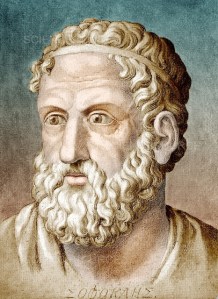
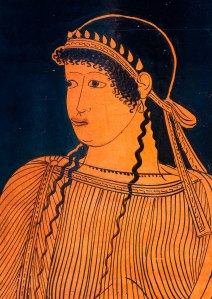
Sophocles Greek c. 497 BC – c. 406 BC
What man is he that yearneth For length unmeasured of days? Folly mine eye discerneth Encompassing all his ways. For years over-running the measure Small change thee in evil wise: Grief draweth nigh thee; and pleasure, Behold it is hid from thine eyes. This to their wage have they Which overlive their day. And He that looseth from labor Doth one with other befriend, Whom bride nor bridesmen attend, Song, nor sound of the tabor, Death, that maketh an end.
Thy portion esteem I highest, Who was not even begot; Thine next, being born who diest And straightway again art not. With follies light as the feather Doth Youth to man befall; Then evils gather together, There wants not one of them all— Wrath, envy, discord, strife, The sword that seeketh life. And sealing the sum of trouble Doth tottering Age draw nigh, Whom friends and kinsfolk fly, Age, upon whom redouble All sorrows under the sky.
This man, as me, even so, Have the evil days overtaken; And like as a cape sea-shaken With tempest at earth’s last verges And shock of all winds that blow, His head the seas of woe, The thunders of awful surges Ruining overflow; Blown from the fall of eve, Blown from the dayspring forth, Blown from the noon in heaven, Blown from night and the North.
We present this work in honor of the poet’s 75th birthday.
Constance Dima Greek b. 1948
What are you going to do in a dusty landscape they asked seeing me leave hastily with a longing for escape I would like – I replied – to lose myself inside the Parthenon to become his image to defy death
So feasted they through Troy, and in their midst Loud pealed the flutes and pipes: on every hand Were song and dance, laughter and cries confused Of banqueters beside the meats and wine. They, lifting in their hands the beakers brimmed, Recklessly drank, till heavy of brain they grew, Till rolled their fluctuant eyes. Now and again Some mouth would babble the drunkard’s broken words. The household gear, the very roof and walls Seemed as they rocked: all things they looked on seemed Whirled in wild dance. About their eyes a veil Of mist dropped, for the drunkard’s sight is dimmed, And the wit dulled, when rise the fumes to the brain: And thus a heavy-headed feaster cried: “For naught the Danaans mustered that great host Hither! Fools, they have wrought not their intent, But with hopes unaccomplished from our town Like silly boys or women have they fled.”
So cried a Trojan wit-befogged with wine, Fool, nor discerned destruction at the doors.
When sleep had locked his fetters everywhere Through Troy on folk fulfilled of wine and meat, Then Sinon lifted high a blazing torch To show the Argive men the splendour of fire. But fearfully the while his heart beat, lest The men of Troy might see it, and the plot Be suddenly revealed. But on their beds Sleeping their last sleep lay they, heavy with wine. The host saw, and from Tenedos set sail.
Then nigh the Horse drew Sinon: softly he called, Full softly, that no man of Troy might hear, But only Achaea’s chiefs, far from whose eyes Sleep hovered, so athirst were they for fight. They heard, and to Odysseus all inclined Their ears: he bade them urgently go forth Softly and fearlessly; and they obeyed That battle-summons, pressing in hot haste To leap to earth: but in his subtlety He stayed them from all thrusting eagerly forth. But first himself with swift unfaltering hands, Helped of Epeius, here and there unbarred The ribs of the Horse of beams: above the planks A little he raised his head, and gazed around On all sides, if he haply might descry One Trojan waking yet. As when a wolf, With hunger stung to the heart, comes from the hills, And ravenous for flesh draws nigh the flock Penned in the wide fold, slinking past the men And dogs that watch, all keen to ward the sheep, Then o’er the fold-wall leaps with soundless feet; So stole Odysseus down from the Horse: with him Followed the war-fain lords of Hellas’ League, Orderly stepping down the ladders, which Epeius framed for paths of mighty men, For entering and for passing forth the Horse, Who down them now on this side, that side, streamed As fearless wasps startled by stroke of axe In angry mood pour all together forth From the tree-bole, at sound of woodman’s blow; So battle-kindled forth the Horse they poured Into the midst of that strong city of Troy With hearts that leapt expectant. [With swift hands Snatched they the brands from dying hearths, and fired Temple and palace. Onward then to the gates Sped they,] and swiftly slew the slumbering guards, [Then held the gate-towers till their friends should come.] Fast rowed the host the while; on swept the ships Over the great flood: Thetis made their paths Straight, and behind them sent a driving wind Speeding them, and the hearts Achaean glowed. Swiftly to Hellespont’s shore they came, and there Beached they the keels again, and deftly dealt With whatso tackling appertains to ships. Then leapt they aland, and hasted on to Troy Silent as sheep that hurry to the fold From woodland pasture on an autumn eve; So without sound of voices marched they on Unto the Trojans’ fortress, eager all To help those mighty chiefs with foes begirt. Now these—as famished wolves fierce-glaring round Fall on a fold mid the long forest-hills, While sleeps the toil-worn watchman, and they rend The sheep on every hand within the wall In darkness, and all round [are heaped the slain; So these within the city smote and slew, As swarmed the awakened foe around them; yet, Fast as they slew, aye faster closed on them Those thousands, mad to thrust them from the gates.] Slipping in blood and stumbling o’er the dead [Their line reeled,] and destruction loomed o’er them, Though Danaan thousands near and nearer drew.
We present this work in honor of the 95th anniversary of the poet’s death.
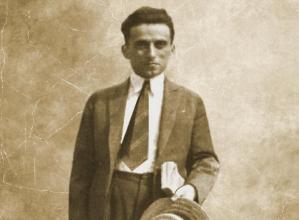
Kostas Karyotakis Greek 1896 – 1928
Such peace holds sway here! One would say the graves themselves were smiling, while the dead converse in muted tones in upper case, deep in the darkness.
From there with plain and simple words they want to reach our peaceful hearts. But their lament, whatever they desire to say, fails in its purpose, for they’ve fled too far away.
All that’s here to mark Martzokis are two sticks of wood laid one across the other. For Vasiliadis, here’s a great stone book.
And a plaque half hidden in the grass – for that’s how Death presents her now – this is Lamari, a forgotten poet.
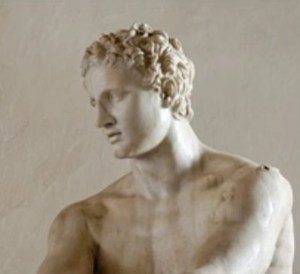
Cythera saw Adonis And knew that he was dead; She marked the brow, all grisly now, The cheek no longer red; And “Bring the boar before me” Unto her Loves she said.
Forthwith her winged attendants Ranged all the woodland o’er, And found and bound in fetters Threefold the grisly boar: One dragged him at a rope’s end E’en as a vanquished foe; One went behind and drave him And smote him with his bow: On paced the creature feebly; He feared Cythera so.
To him said Aphrodite: “So, worst of beasts, ‘twas you Who rent that thigh asunder, Who him that loved me slew?” And thus the beast made answer: “Cythera, hear me swear By thee, by him that loved thee, And by these bonds I wear, And them before whose hounds I ran— I meant no mischief to the man Who seemed to thee so fair.
“As on a carven statue Men gaze, I gazed on him; I seemed on fire with mad desire To kiss that offered limb: My ruin, Aphrodite, Thus followed from my whim.
“Now therefore take and punish And fairly cut away These all unruly tusks of mine; For to what end serve they? And if thine indignation Be not content with this, Cut off the mouth that ventured To offer him a kiss”—
But Aphrodite pitied And bade them loose his chain. The boar from that day forward Still followed in her train; Nor ever to the wildwood Attempted to return, But in the focus of Desire Preferred to burn and burn.
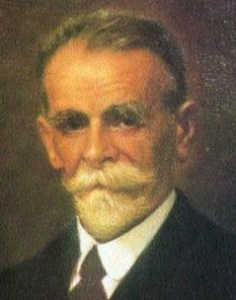
We present this work in honor of the poet’s 225th birthday.
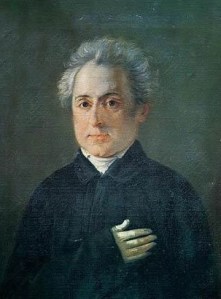
Dionysius Solomos Greek 1798 – 1857
Nature is magic and a dream in beauty and charm, The black stone and the dry grass look golden. Through a thousand springs gushes forth, a thousand tongues say it “Whoever dies today, he dies one thousand times”.
Immortal spirit of antiquity, Father of the true, beautiful and good, Descend, appear, shed over us thy light Upon this ground and under this sky Which has first witnessed the unperishable fame. Give life and animation to those noble games! Throw wreaths of fadeless flowers to the victors In the race and in the strife! Create in our breasts, hearts of steel! In thy light, plains, mountains and seas Shine in a roseate hue and form a vast temple To which all nations throng to adore thee, Oh immortal spirit of antiquity!
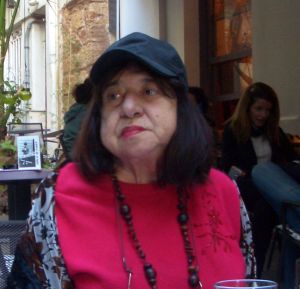
We present this work in honor of the 5th anniversary of the poet’s death.
Lili Bita Greek 1935 – 2018
Asia Minor, 1922
Don’t look at the sun with pleasure. Don’t cry, or even curse. Before you touch the yellowed clippings make a shroud of your palms and tell the story gently.
She lies on the bed. There aren’t any sheets, only a gnawed pillowcase and a mattress stained with urine and feces the only witness of decades of silence.
Don’t look at the sun with pleasure, don’t cry or even curse. Look at the ropes looped double over ankles and wrists tied to the posts, the body spread-eagled as in Da Vinci’s drawing, lashed to the bed.
Look at her puberty, the black camellia plucked from the roots of its innocence, the fragile petals scattered on the bloody pulp, the red trickle threading its decades to reach us.
Look at the torn sky until the girl in the yellowed clipping escapes with a flower in her hand.
The heavenly battles descend on the soil and death returns to earth: its place of origin. High flashes accompany it; it is the only luxury left to the corpses. Indeed, how did evil change direction! From below, its immediate action would start: from mud, hoofs of animals boots, swamps and it would rise up to the black clouds and the innocent souls. Now the desert, as I imagine it with countless pink shades sand breasts breathing in the desert wind a secret body with its dark oases hidden under impartial spectator of disaster conquered by parachutes. From above downwards now the evolution of bleeding flesh; heaven a past in flames will be forgotten and the good will be thrust in the earth buried deep, very deep in memory.



 Poets Corner