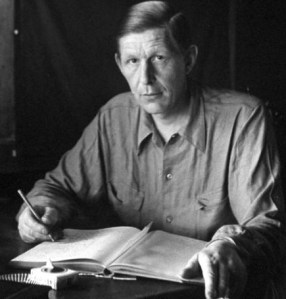
Refugee Blues

W.H. Auden
English
1907 – 1973


Say this city has ten million souls,
Some are living in mansions, some are living in holes:
Yet there’s no place for us, my dear, yet there’s no place for us.

Once we had a country and we thought it fair,
Look in the atlas and you’ll find it there:
We cannot go there now, my dear, we cannot go there now.

In the village churchyard there grows an old yew,
Every spring it blossoms anew:
Old passports can’t do that, my dear, old passports can’t do that.

The consul banged the table and said,
“If you’ve got no passport you’re officially dead”:
But we are still alive, my dear, but we are still alive.

Went to a committee; they offered me a chair;
Asked me politely to return next year:
But where shall we go to-day, my dear, but where shall we go to-day?

Came to a public meeting; the speaker got up and said;
“If we let them in, they will steal our daily bread”:
He was talking of you and me, my dear, he was talking of you and me.

Thought I heard the thunder rumbling in the sky;
It was Hitler over Europe, saying, “They must die”:
O we were in his mind, my dear, O we were in his mind.

Saw a poodle in a jacket fastened with a pin,
Saw a door opened and a cat let in:
But they weren’t German Jews, my dear, but they weren’t German Jews.

Went down the harbour and stood upon the quay,
Saw the fish swimming as if they were free:
Only ten feet away, my dear, only ten feet away.

Walked through a wood, saw the birds in the trees;
They had no politicians and sang at their ease:
They weren’t the human race, my dear, they weren’t the human race.

Dreamed I saw a building with a thousand floors,
A thousand windows and a thousand doors:
Not one of them was ours, my dear, not one of them was ours.

Stood on a great plain in the falling snow;
Ten thousand soldiers marched to and fro:
Looking for you and me, my dear, looking for you and me.


Sonnet XXXV

Lope de Vega
Spanish
1562 – 1635


Troy is burning, black smoke rises up
to the opposing sky, and all the while,
with joy, Juno observes the fire and tears:
a woman’s vengeance, what harsh penalty!

The masses, even in their shrines exposed,
all flee, enveloped by a yellow fright;
congealed blood down the murky Xanthus runs,
and to earth fall high walls of masonry.

The fire from without fuels flames within,
lofty devices falling to the ground,
which now are seen in ruins, shattered, disarmed.

And the harsh cause of so much injury,
while conquered Paris dies engulfed in flames,
of the Greek victor sleeps within the arms.

The End of the Furrow

William Wilfrid Campbell
Canadian
1858 – 1918


When we come to the end of the furrow,
When our last day’s work is done,
We will drink of the long red shaft of light
That slants from the westering sun.

We will turn from the field of our labour,
From the warm earth glad and brown,
And wend our feet up that village street,
And with our folk lie down.

Yea, after the long toil, surcease,
Rest to the hearts that roam,
When we join in the mystic silence of eve
The glad procession home.

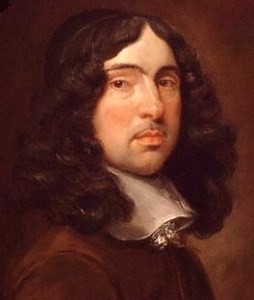
To His Coy Mistress

Andrew Marvell
English
1621 – 1678


Had we but World enough, and Time,
This coyness Lady were no crime.
We would sit down, and think which way
To walk, and pass our long Loves Day.
Thou by the Indian Ganges side.
Should’st Rubies find: I by the Tide
Of Humber would complain. I would
Love you ten years before the Flood:
And you should if you please refuse
Till the Conversion of the Jews.
My vegetable Love should grow
Vaster then Empires, and more slow.
An hundred years should go to praise
Thine Eyes, and on thy Forehead Gaze.
Two hundred to adore each Breast.
But thirty thousand to the rest.
An Age at least to every part,
And the last Age should show your Heart.
For Lady you deserve this State;
Nor would I love at lower rate.
But at my back I alwaies hear
Times winged Charriot hurrying near:
And yonder all before us lye
Desarts of vast Eternity.
Thy Beauty shall no more be found;
Nor, in thy marble Vault, shall sound
My ecchoing Song: then Worms shall try
That long preserv’d Virginity:
And your quaint Honour turn to durst;
And into ashes all my Lust.
The Grave’s a fine and private place,
But none I think do there embrace.
Now therefore, while the youthful hew
Sits on thy skin like morning glew,
And while thy willing Soul transpires
At every pore with instant Fires,
Now let us sport us while we may;
And now, like am’rous birds of prey,
Rather at once our Time devour,
Than languish in his slow-chapt pow’r.
Let us roll all our Strength, and all
Our sweetness, up into one Ball:
And tear our Pleasures with rough strife,
Thorough the Iron gates of Life.
Thus, though we cannot make our Sun
Stand still, yet we will make him run.

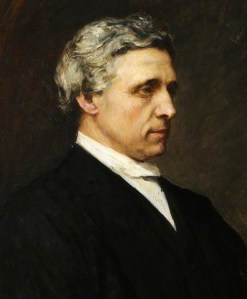
You Are Old, Father William

We present this work in honor of National Senior Citizens’ Day.

Lewis Carroll
English
1832 – 1898


“You are old, Father William,” the young man said,
“And your hair has become very white;
And yet you incessantly stand on your head—
Do you think, at your age, it is right?”

“In my youth,” Father William replied to his son,
“I feared it might injure the brain;
But now that I’m perfectly sure I have none,
Why, I do it again and again.”

“You are old,” said the youth, “As I mentioned before,
And have grown most uncommonly fat;
Yet you turned a back-somersault in at the door—
Pray, what is the reason of that?”

“In my youth,” said the sage, as he shook his grey locks,
“I kept all my limbs very supple
By the use of this ointment—one shilling a box—
Allow me to sell you a couple?”

“You are old,” said the youth, “And your jaws are too weak
For anything tougher than suet;
Yet you finished the goose, with the bones and the beak—
Pray, how did you manage to do it?”

“In my youth,” said his father, “I took to the law,
And argued each case with my wife;
And the muscular strength which it gave to my jaw,
Has lasted the rest of my life.”

“You are old,” said the youth, “one would hardly suppose
That your eye was as steady as ever;
Yet you balanced an eel on the end of your nose—
What made you so awfully clever?”

“I have answered three questions, and that is enough,”
Said his father; “don’t give yourself airs!
Do you think I can listen all day to such stuff?
Be off, or I’ll kick you down stairs!”

Before (from The Rising of the Ashes)

In honor of the Moroccan holiday, Revolution Day, we present this work by one of Morocco’s most revolutionary poets.

Tahar Ben Jelloun
Moroccan
b. 1944


Before
a long time ago
I lived in a tree, then in a cemetery.
My tomb was under an oak. Dogs and men pissed on my head. I said nothing. Little
mauve flowers, scentless, grew there.
I had nothing to say.
Today shovels picked me up and threw me in this well.
I pace the abyss.
I descend. I am suspended.
The ashes still smolder. They rise, surround me, then fall again,
grey dust that makes my body a sand-filled hourglass.
I crumble. I am old abandoned rock.
I am sand and time.
I am faceless.
I nourish the land and pour my words into the land’s blood.
I irrigate the tree roots in late spring.
I count the days and the deaths while
men carry their households on their backs.

This body which was once a word will no longer look at the sea and think of Homer.
It did not pass away. It was touched by a flash from the sky crushing speech and breath.
These crystals mixed in the sand are the last words pronounced by these unarmed men.

In this country the dead travel
as statues and flames
They wear eyeglasses
and stretch out their scorched arms for flight.
We say they became invisible
Left to offer the living the years that remained of their lives.
Thus only years litter the desert: a century, more.
Lives for the taking, as jackals gorged on lives tremble to say:
“Death is not fatal just as night is the sun’s shadow.”

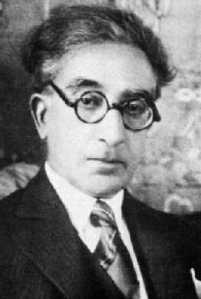
Ithaca

C.P. Cavafy
Greek
1863 – 1933


When you set out on your journey to Ithaca,
pray that the road is long,
full of adventure, full of knowledge.
The Lestrygonians and the Cyclops,
the angry Poseidon — do not fear them:
You will never find such as these on your path,
if your thoughts remain lofty, if a fine
emotion touches your spirit and your body.
The Lestrygonians and the Cyclops,
the fierce Poseidon you will never encounter,
if you do not carry them within your soul,
if your soul does not set them up before you.

Pray that the road is long.
That the summer mornings are many, when,
with such pleasure, with such joy
you will enter ports seen for the first time;
stop at Phoenician markets,
and purchase fine merchandise,
mother-of-pearl and coral, amber and ebony,
and sensual perfumes of all kinds,
as many sensual perfumes as you can;
visit many Egyptian cities,
to learn and learn from scholars.

Always keep Ithaca in your mind.
To arrive there is your ultimate goal.
But do not hurry the voyage at all.
It is better to let it last for many years;
and to anchor at the island when you are old,
rich with all you have gained on the way,
not expecting that Ithaca will offer you riches.

Ithaca has given you the beautiful voyage.
Without her you would have never set out on the road.
She has nothing more to give you.

And if you find her poor, Ithaca has not deceived you.
Wise as you have become, with so much experience,
you must already have understood what Ithacas mean.

Sonnet XII

Garcilaso de la Vega
Spanish
1501 – 1536


If trying to hold back this crazy, vain,
impossible and frightening desire,
and if to hide from danger so intense,
convincing myself of what I can’t see,

it does not help to see me as I am,
sometimes courageous, sometimes racked with fear,
in such confusion that I never dare
to guard against the evil deep in me,

how could it help to see the painting of
the famous youth who with his melted wings
in falling, to a sea his name bestowed,

and one of him, whose own madness and fire
he must lament beneath those fabled trees,
and even in the water won’t grow cold.

Strength and Mercy

In honor of Parsi New Year, we present this work by one of India’s great 20th century poets.

Ramdhari Singh Dinkar
Indian
1908 – 1974


Mercy, resolve, tact, tolerance
You’ve tried everything and some
But o my king of men
When did Suyodhan succumb?

The more forgiving you were
In your humane compassion
The more these rouge Kauravas
Pegged you as cowardly ashen

This is the consequence
Of tolerating atrocities
The awe of machismo is lost
When one’s gentle n kindly

Forgiveness is becoming of
The serpent that’s got venom
None cares for the toothless,
Poisonless, kind, gentle one

For three days Lord Raam kept
Asking the ocean for a passage
Sitting there he petitioned
Using the sweetest words to engage

When in response there was
Not a whisper from the sea
A raging fire of endeavor
Rose from Raam’s body

The ocean took human-form
‘N supplicated to Raam
Touched his feet, was subservient
A slave he had become

ruth be told, it’s in the quiver
That lies the gleam of modesty
Only his peace-talk is reputable
Who is capable of victory

Tolerance, forgiveness and clemency
Are respected by the world
Only when the glow of strength
From behind them is unfurled

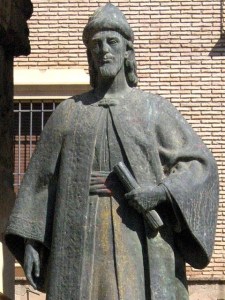
My Beloved Comes

We present this work in honor of the 955th anniversary of the poet’s death.

Ibn Hazm
Arab Andalusian
994 – 1064


You came to me just before
the Christians rang their bells.
The half-moon was rising
looking like an old man’s eyebrow
or a delicate instep.

And although it was still night
when you came a rainbow
gleamed on the horizon,
showing as many colours
as a peacock’s tail.