Johnny’s drowned — here’s his clo’es
Where he’s got to, we dunno;
Sure enough, he never rose;
So we thought we’d let you know.
Gosh! the fright has knocked us flat —
Here’s his shirt, an’ here’s his hat.
Never seen him since he plopp’d,
Jist a’side the big red-gum;
So, thinks we, poor Johnny’s copp’d —
All so suddent! — ain’t it rum?
Must be snagg’d among the roots —
Here’s his pants, an’ socks, an’ boots.
Simplest thing you ever seen —
Only just a common swim —
Cripes! it might as ready been
Me or Bill in place o’ him!
Try to snake him out, I s’pose?
Anyway, we fetch’d his clo’es.
There are girls from Lo-yang in that door across the street,
Some of them fifteen and some a little older.
While their master rides a rapid horse with jade bit and bridle,
Their handmaid brings them codfish on a golden plate.
On the painted pavilions, facing their red towers,
Cornices are pink and green with peach-bloom and with willow;
Canopies of silk awn their seven-scented chairs;
Their lord, with rank and wealth and in the green of life,
Exceeds, for magnificence, even chi-lun;
He favors girls of lowly birth and teaches them to dance,
And he gives away his coral-trees to almost anyone.
The wind of dawn just stirs when his nine soft lights go out,
Those nine soft lights like petals in a flying chain of flowers.
From play to play they have barely time for singing over the songs;
No sooner are they dressed again than incense burns before them.
Those they know in town are only the rich and the lavish,
And day and night they’re visiting the homes of Chao and Li…
Who cares about a girl from Yueh, face jade-white,
Humble, poor, alone, by the river, washing silk!
At five in the afternoon.
It was exactly five in the afternoon.
A boy brought the white sheet
at five in the afternoon.
A frail of lime ready prepared
at five in the afternoon.
The rest was death, and death alone.
The wind carried away the cottonwool
at five in the afternoon.
And the oxide scattered crystal and nickel
at five in the afternoon.
Now the dove and the leopard wrestle
at five in the afternoon.
And a thigh with a desolated horn
at five in the afternoon.
The bass-string struck up
at five in the afternoon.
Arsenic bells and smoke
at five in the afternoon.
Groups of silence in the corners
at five in the afternoon.
And the bull alone with a high heart!
At five in the afternoon.
When the sweat of snow was coming
at five in the afternoon,
when the bull ring was covered with iodine
at five in the afternoon.
Death laid eggs in the wound
at five in the afternoon.
At five in the afternoon.
At five o’clock in the afternoon.
A coffin on wheels is his bed
at five in the afternoon.
Bones and flutes resound in his ears
at five in the afternoon.
Now the bull was bellowing through his forehead
at five in the afternoon.
The room was iridiscent with agony
at five in the afternoon.
In the distance the gangrene now comes
at five in the afternoon.
Horn of the lily through green groins
at five in the afternoon.
The wounds were burning like suns
at five in the afternoon.
At five in the afternoon.
Ah, that fatal five in the afternoon!
It was five by all the clocks!
It was five in the shade of the afternoon!
2. The Spilled Blood
I will not see it!
Tell the moon to come,
for I do not want to see the blood
of Ignacio on the sand.
I will not see it!
The moon wide open.
Horse of still clouds,
and the grey bull ring of dreams
with willows in the barreras.
I will not see it!
Let my memory kindle!
Warm the jasmines
of such minute whiteness!
I will not see it!
The cow of the ancient world
passed har sad tongue
over a snout of blood
spilled on the sand,
and the bulls of Guisando,
partly death and partly stone,
bellowed like two centuries
sated with threading the earth.
No.
I will not see it!
Ignacio goes up the tiers
with all his death on his shoulders.
He sought for the dawn
but the dawn was no more.
He seeks for his confident profile
and the dream bewilders him
He sought for his beautiful body
and encountered his opened blood
Do not ask me to see it!
I do not want to hear it spurt
each time with less strength:
that spurt that illuminates
the tiers of seats, and spills
over the cordury and the leather
of a thirsty multiude.
Who shouts that I should come near!
Do not ask me to see it!
His eyes did not close
when he saw the horns near,
but the terrible mothers
lifted their heads.
And across the ranches,
an air of secret voices rose,
shouting to celestial bulls,
herdsmen of pale mist.
There was no prince in Sevilla
who could compare to him,
nor sword like his sword
nor heart so true.
Like a river of lions
was his marvellous strength,
and like a marble toroso
his firm drawn moderation.
The air of Andalusian Rome
gilded his head
where his smile was a spikenard
of wit and intelligence.
What a great torero in the ring!
What a good peasant in the sierra!
How gentle with the sheaves!
How hard with the spurs!
How tender with the dew!
How dazzling the fiesta!
How tremendous with the final
banderillas of darkness!
But now he sleeps without end.
Now the moss and the grass
open with sure fingers
the flower of his skull.
And now his blood comes out singing;
singing along marshes and meadows,
sliden on frozen horns,
faltering soulles in the mist
stoumbling over a thousand hoofs
like a long, dark, sad tongue,
to form a pool of agony
close to the starry Guadalquivir.
Oh, white wall of Spain!
Oh, black bull of sorrow!
Oh, hard blood of Ignacio!
Oh, nightingale of his veins!
No.
I will not see it!
No chalice can contain it,
no swallows can drink it,
no frost of light can cool it,
nor song nor deluge og white lilies,
no glass can cover mit with silver.
No.
I will not see it!
3. The Laid Out Body
Stone is a forehead where dreames grieve
without curving waters and frozen cypresses.
Stone is a shoulder on which to bear Time
with trees formed of tears and ribbons and planets.
I have seen grey showers move towards the waves
raising their tender riddle arms,
to avoid being caught by lying stone
which loosens their limbs without soaking their blood.
For stone gathers seed and clouds,
skeleton larks and wolves of penumbra:
but yields not sounds nor crystals nor fire,
only bull rings and bull rings and more bull rings without walls.
Now, Ignacio the well born lies on the stone.
All is finished. What is happening! Contemplate his face:
death has covered him with pale sulphur
and has place on him the head of dark minotaur.
All is finished. The rain penetrates his mouth.
The air, as if mad, leaves his sunken chest,
and Love, soaked through with tears of snow,
warms itself on the peak of the herd.
What is they saying? A stenching silence settles down.
We are here with a body laid out which fades away,
with a pure shape which had nightingales
and we see it being filled with depthless holes.
Who creases the shroud? What he says is not true!
Nobody sings here, nobody weeps in the corner,
nobody pricks the spurs, nor terrifies the serpent.
Here I want nothing else but the round eyes
to see his body without a chance of rest.
Here I want to see those men of hard voice.
Those that break horses and dominate rivers;
those men of sonorous skeleton who sing
with a mouth full of sun and flint.
Here I want to see them. Before the stone.
Before this body with broken reins.
I want to know from them the way out
for this captain stripped down by death.
I want them to show me a lament like a river
wich will have sweet mists and deep shores,
to take the body of Ignacio where it looses itself
without hearing the double planting of the bulls.
Loses itself in the round bull ring of the moon
which feigns in its youth a sad quiet bull,
loses itself in the night without song of fishes
and in the white thicket of frozen smoke.
I don’t want to cover his face with handkerchiefs
that he may get used to the death he carries.
Go, Ignacio, feel not the hot bellowing
Sleep, fly, rest: even the sea dies!
4. Absent Soul
The bull does not know you, nor the fig tree,
nor the horses, nor the ants in your own house.
The child and the afternoon do not know you
because you have dead forever.
The shoulder of the stone does not know you
nor the black silk, where you are shuttered.
Your silent memory does not know you
because you have died forever
The autumn will come with small white snails,
misty grapes and clustered hills,
but no one will look into your eyes
because you have died forever.
Because you have died for ever,
like all the dead of the earth,
like all the dead who are forgotten
in a heap of lifeless dogs.
Nobady knows you. No. But I sing of you.
For posterity I sing of your profile and grace.
Of the signal maturity of your understanding.
Of your appetite for death and the taste of its mouth.
Of the sadness of your once valiant gaiety.
It will be a long time, if ever, before there is born
an Andalusian so true, so rich in adventure.
I sing of his elegance with words that groan,
and I remember a sad breeze through the olive trees.
Away, ye gay landscapes, ye garden of roses!
In you let the minions of luxury rove;
Restore me to the rocks, where the snowflake reposes,
Though still they are sacred to freedom and love:
Yet, Caledonia, beloved are thy mountains,
Round their white summits though elements war;
Though cataracts foam ‘stead of smooth-flowing fountains,
I sigh for the valley of dark Loch na Garr.
Ah! there my young footsteps in infancy wandered;
My cap was teh bonnet, my cloak was the plaid;
On chieftains long perished my memory pondered,
As daily I strode through the pine-covered glade;
I sought not my home till the day’s dying glory
Gave place to the rays of the bright polar star;
For fancy was cheered by traditional story,
Disclosed by the natives of dark Loch na Garr.
“Shades of the dead! have I not heard your voices
Rise on the night-rolling breath of the gale?”
Surely the soul of the hero rejoices,
And rides on the wind, o’er his own Highland vale.
Rouch Loch na Garr while the stormy mist gathers,
Winter presides in his cold icy car:
Clouds there encircle the forms of my fathers;
They dwell in the tempests of dark Loch na Garr.
“Ill-starred, though brave, did no visions foreboding
Tell you that fate had forsaken your cause?”
Ah! were you destined to die at Culloden,
Victory crowned not your fall with applause:
Still were you happy in death’s earthy slumber,
You rest with your clan in the caves of Braemar;
The pibroch resounds, to the piper’s loud number,
Your deeds on the echoes of dark Loch na Garr.
Years have rolled on, Loch na Garr, since I left you,
Years must elapse ere I tread you again:
Nature of verdure and flowers has bereft you,
Yet still are you dearer than Albion’s plain.
England! thy beauties are tame and domestic
To one who has roved o’er the mountains afar:
Oh for the crags that are wild and majestic!
The steep frowning glories of the dark Loch na Garr.
Where the mind is without fear and the head is held high Where knowledge is free Where the world has not been broken up into fragments By narrow domestic walls Where words come out from the depth of truth Where tireless striving stretches its arms towards perfection Where the clear stream of reason has not lost its way Into the dreary desert sand of dead habit Where the mind is led forward by thee Into ever-widening thought and action Into that heaven of freedom, my Father, let my country awake.
My early unforgettable years I lived them
Close to the sea,
There by the shallow and calm sea,
There by the open and boundless sea.
And every time that my budding, early life
Comes back to me,
And I see the dreams and hear the voices
Of my early life there by the sea,
You, oh my heart, feel the same old yearning:
If I could live again,
Close to the shallow and calm sea,
There by the open and boundless sea.
Was it really my destiny, was it my fortune,
I haven’t met another
A sea within me as shallow as a lake,
And like an ocean boundless and big.
And, lo! In my sleep a dream brought her
Close again to me,
The same there shallow and calm sea,
The same there boundless and open sea.
Yet, thrice be alas! A grief was poisoning me,
A powerful grief,
A grief that you did not lighten, my dream
Of my great early love, my home by the sea.
What storm, I wonder, was raging in me,
And what whirlwind,
That couldn’t put it to rest, or lull it to sleep
My wonderful dream of my home by the sea.
A grief that is unspoken, an unexplained grief,
A powerful grief,
A grief not quenched even within the paradise
Of our early life close to the boundless sea.
We present this work in honor of the 45th anniversary of the poet’s death.
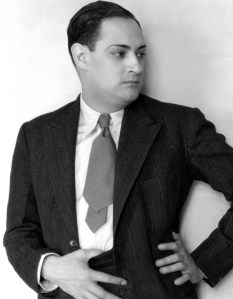
Salvador Novo Mexican 1904 – 1974
My life goes on as usual, why dear friend would you ask:
awake and a horror, I head for the bath
and with Helena Rubinstein lotions and creams
staunch the wrinkles, mend the seams.
I go to work. But is it work?
the monthly bulletin, year after year…
then lunch with the oddball
Minister fate has assigned me here.
Sometimes I give my usual class;
sleepily arrive at my office;
there, I’ve completed my official tasks.
Now it’s home sweet home and fare you well;
my guts are bored
by my usual clientele.
A furrier once, as one reports,
Espoused a lady young and fair
Who craved that best of indoor sports
And made him run the gamut there,
Who, though he blamed her not, could bear
Only a little, so ‘twas said,
And loved a jug of wine to share
Better than any woman’s bed.
A curate, seeing how things stood,
Of the said wife grew amorous,
And thought that to his house he would
Invite this beggar of Bacchus.
Wherefore he sought him, all joyous,
Because he’d found the way to tup her,
Saying: “Neighbor, I am desirous
Of having you this night to supper.”
The furrier liked this well enough,
Who always liked a fine free feast,
And took his belly there to stuff
And make good cheer with this said priest,
Who, using compliments for yeast,
Said: “Since the lining’s worn away,
I wish you’d mend my robe—at least
Tell me what I shall have to pay.”
“Ah well,” replied the furrier,
“I’ll do so since you wish it done;
Provided that you pay me, sir,
I’m yours: I never work for fun.”
With bargain made the work’s begun,
It being agreed, as you may think,
That, more than ten sous, such a one
Would ask sufficient wine to drink.
In order there be no delay,
Because he needed it to wear,
It was arranged he’d start straightaway,
The priest’s clerk for his fellow there.
He was content of this affair,
And master curate locked them up
(To drink and labour, not for prayer),
Then left the house and went to tup.
The curate to the furrier’s house
Came thus by way of sterling debts,
And found so fine a chance to chouse
He sang right well in love’s duets.
In all shirts do with chemisettes
He bore his part well, so it seems,
And parting then without regrets,
Went out and home to pleasant dreams.
And thus the furrier, for his feed,
Was made a cuckold, as was meant;
And his good wife, who’d found her need,
Begged curate be not indolent,
And charged him, by the Sacrament,
That he remember her and do
As much again, expedient,
Whenever he’d a fancy to.
Nevertheless, a man should guard,
Who’s got a wife that’s young and fair,
Lest he acquire some plumage hard
For a free feed: they’re ill to wear:
The scandal’s gossiped everywhere
And shames a man through all his days.
Remember and avoid the snare,
For feeds are found in divers ways.
The power of sails and winds shall work my wish,
Setting a chancy course across the sea.
Ponente and Mistral rise to resist.
Levante and Sirocco fight for me
Backed by their allies Midi and Gregal
Beseeching the North Mountain Wind to turn
Its storms aside in their support, so all
Five winds may blow the way of my return.
The sea shall seethe like boiling casserole,
Change colors, taking on unnatural form,
Showing its ill will at full blast to all
That stray on it one second in that storm.
The fish will panic all throughout the sea
And seek out secret shelter in the deep,
Till from the sea that gave them life they flee
To their deaths on dry land with desperate leap.
The pilgrim passengers aboard my ship
Will call on God, pledge votive gifts in tears,
And fear force every secret from their lips
That never fell on a confessor’s ears.
Through those dangers, you will not leave my mind.
Before the God that joined us two I swear
Nothing shall weaken this resolve of mine,
And you’ll be with me always, everywhere.
I fear death – lest it break my heart from yours,
For death can cancel love out with its still,
Not that I think even death’s severing force
Could overcome my strength of loving will.
I wish I could believe your love for me
Would not leave me forgotten when I die,
And though while we two live this could not be
One thought makes all life’s pleasure out a lie:
That on the day I died, your love as well
Would die, and be transformed to hate that night.
While I, cast from this world, would feel full Hell
Never again to hold you in my sight.
Oh God, if only there were bounds to love
So I at love’s extreme might stand apart!
I’d face the future without fear or hope
Knowing the cutoff limit of your heart.
I am the most extreme of all in love
Save those who’ve breathed in love their life’s last breath.
The anguish of my heart I cannot prove
Without the good faith agony of death.
For good or ill at love’s command I wait
Though Fortune still withholds my fate from me.
She’ll find the gates unbarred, and me awake,
Prepared to humbly follow her decree.
Getting what I so wish may cost me dear
Yet this alone consoles the soul in strife:
If it turns out my fate is what I fear
I only ask that God not spare my life.
For then people will see the outward fact
Of love at work within, needing no faith.
Capacity will be revealed in act,
And my words’ credit backed by deed of death.
Envoi:
Love! I who feel you don’t know you at all,
And so can only win the loser’s prize.
No one who knows you is within your thrall.
Your simile: addictive game of dice.
There’s no trace of spring left
The tree leaf has fallen on the grass
The orchard trees wear the robe of divestiture
The autumn wind in the grass has the plane tree’s permission.
Golden is the flow at their feet from every side
The orchard trees hope for the river’s favor.
Don’t wait on the grass’ theatrical stage. Let it sway with the light breeze
The sapling is free of leaf and fruit.
Baki, the leaf is distraught in the grass
It resembles a complaint against the wind.


 Poets Corner