We present this work in honor of the poet’s 135th birthday.
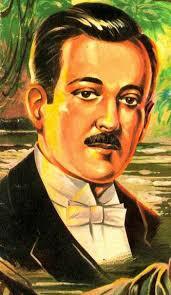
José Eustasio Rivera Colombian 1888 – 1928
Simple singer of a great discontent, Among the shrubs the canopy keeps hidden, Troubling the foliage with soft lament, Nibbling myrtle, sour grape pips – wood pigeon!
Sings coo-roo-roo, glimpsing day’s first ascent And later evening’s brief reflected vision, Sees from the gúaimaro’s¹ overspreading tent Silent peace fill the slopes, that tree’s dominion.
Half-open the wings iridescent in the light, Solitude – poor soul! – saddens its delight, And it fluffs up its head feathers, a light hood.
To the maternal heartbeat of domains it holds In its own entrails, it croons to mountains, folds Them in sleep; light drowns in a dark wood.
We present this work in honor of the 85th anniversary of the poet’s death.
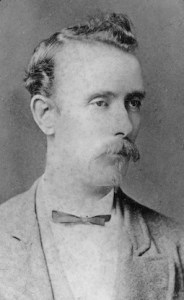
Leopoldo Lugones Artgentine 1874 – 1938
Your slow desolation, you coal of delirium, puts my soul into mourning. Yet a phrase of black notes transforms my sigh into a heavenly butterfly.
The taste of fresh rose petals intoxicates my arid tongue, and moistens my song unsung: my naïve happiness in the loss above only to find the lips of my love.
Themes of love, my humble flute will sing in praise. I am pale yet happy all my days, and in the evening, as the piragua sails, marking the water with childlike nails, my sweetheart will sing the same salute.
We present this work in honor of the 130th anniversary of the poet’s death.
Ignacio Manuel Altamirano Mexican 1834 – 1893
Come, embrace me, never remove your arms from round my neck, never hide your lovely face from me, don’t run away shyly. Let our lips meet In an endless, burning kiss. Let the hours, slow and sweet, Flow by just like this. Doves fall silent in green tamarind trees; spikenards have exhausted their supply of scents. You’re growing languid; your eyes close with fatigue, and your bosom, sweet friend, is trembling. On the river bank Everything droops and swoons; The rosebays on the beach Grow drowsy with the heat. I’ll offer you repose on this carpet of clover, in the perfumed shade of orange trees in bloom.
We present this work in honor of the poet’s 125th birthday.
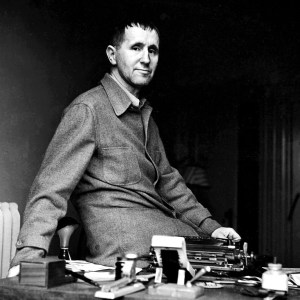
Bertolt Brecht German 1898 – 1956
When the Regime ordered that books with dangerous teachings Should be publicly burnt and everywhere Oxen were forced to draw carts full of books To the funeral pyre, an exiled poet, One of the best, discovered with fury, when he studied the list Of the burned, that his books Had been forgotten. He rushed to his writing table On wings of anger and wrote a letter to those in power, Burn me, he wrote with hurrying pen, burn me! Do not treat me in this fashion. Don’t leave me out. Have I not Always spoken the truth in my books? And now You treat me like a liar! I order you: Burn me!
These unshaped islands, on the sawyer’s bench, Wait for the chisel of the mind, Green canyons to the south, immense and passive, Penetrated rarely, seeded only By the deer-culler’s shot, or else in the north Tribes of the shark and the octopus, Mangroves, black hair on a boxer’s hand.
The founding fathers with their guns and bibles, Botanist, whaler, added bones and names To the land, to us a bridle As if the id were a horse: the swampy towns Like dreamers that struggle to wake,
Longing for the poets’ truth And the lover’s pride. Something new and old Explores its own pain, hearing The rain’s choir on curtains of grey moss Or fingers of the Tasman pressing On breasts of hardening sand, as actors Find their own solitude in mirrors,
As one who has buried his dead, Able at last to give with an open hand.
As I upon my pallet lie, The greatest grief I know Is thinking when I said “Good-bye” To the breast I’m loving so.
In spite of all the woes I feel Upon that parting thought, At times my memories reveal The mighty joys you brought. So let the world a-whispering go To tell why here I lie; Because they know I’ve said “Good-bye” To the breast I’m loving so.
I languish but I let none hear How deep my sorrows are, Although my griefs are quite as near As your sweet balm is far. And if it be the end they show And death is coming nigh, While living, let me say “Good-bye” To the breast I’m loving so.
I become light; you become light; Neither are you from you, nor I from me; we have ripened into one blood…
—One dead, how will death be split into two corpses?
—It is one corpse.
—What if the kin fought to fill two dust holes with one dust gathered by love in the prostration of passion?
—Soft is the clay step in the clay; beneath us the earth gathers into a carpet, dust flinging upon dust; and in the passion prostration the blood of the man prostrating does not reveal the blood of the woman prostrator; one blood runs aground in the darkness of the earth beneath the hand of God, then tossed by the wind in the hand of omnipotence; it rises lightly, taking its course in the radiant mystery of its nocturnal journeys, largely, as the frame of the universe exacts, narrower than the sigh of spirit in spirit.
Between heavens and earth the wind was tempted by us, for it steps along our steps, and we step along its steps…




 Poets Corner