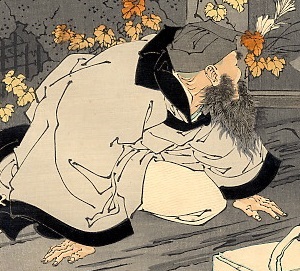
The Prophet, who dwells in the Garden’s summit, Most deserving of God’s praise and glory, Experienced, worthy to guide God’s servants, The beloved, who knows the secrets of hearts Leads the messengers from beginning to end The beautiful dhikr begins and ends on him. From the signs of the messengers they were ahead. The most brilliant are those from our Messenger.
We present this work in honor of the poet’s 265th birthday.
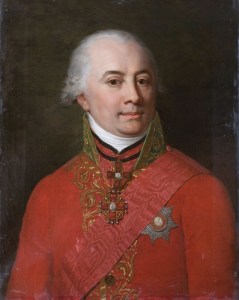
Mikhail Nikitich Muravyov Russian 1757 – 1807
Your evening is full of coolness— The shore is moving in crowds Like a magical serenade The voice is carried by the wave Reveal the goddess of grace Seeing enthusiastic piit. That spends sleepless nights Leaning on granite.
We present this work in honor of National Unity Day.
Mikhail Lomonosov Russian 1711 – 1765
on the birthday of her majesty, the sovereign empress Elisaveta Petrovna, autocrat of all Russia, in the year 1746
This very day, most blessèd Russia, A pleasing land in heaven’s eyes, This very day from holy heights Elisaveta’s given thee. To raise our Peter posthumously, To crush our foes’ o’erweening pride And cast them also into horror, To make thee safe from dire misfortunes, To place thee judge above the kingdoms And elevate thee o’er the clouds.
Oh child of Him who thunders above us, Mother of all the tribes of earth, Oh Nature, marvelous in actions, As if you judge me to be worthy To know the deepest of your secrets, And if the weak engine of thoughts May penetrate into your mansions, Present to me that fateful epoch And the stars’ whole course in order, As He most high gave us this token.
Through stormy clouds of former sadness, Which cruèl fate brought unto us, Oh, how the mountains wept for Peter And Pontus roared within its banks, Through changes dreadful for the Rossians, Through the dust that wars disturbed, I see that bright and radiant moment: There ’round the young Elisaveta Shine planets bearing happy fate, I hear the voice of Nature present.
How clear the sun when that first time Upon you shone its gleaming ray, Already fortune stretched her hand With love for all your pleasant ways, She held the crown above your head And elevated there before you The trophies of your fathers’ conquests, Most glorious to the ends of earth. How fortunate was Russia then When first upon the world you gazed!
Then from Poltava, filled with gladness, The sound of Rossian vict’ry roared, Then all the universe’s limits Could not contain the fame of Peter, Then the heads of vanquished vandals Bowed low as they were herded past, E’en when you were in swaddling clothes; Then it was that fate made known, The regiments of their descendants Would fall before you tremorously.
But lo, the various tongues and peoples From the great rivers and the seas Lift up harmonious exclamations, To you, their monarch and their lady, They spread out wide their hearts and hands, And many a time do they repeat: “Long live the great Elisaveta, Born on this day for Rossian glory, And may the heavens fortify her Through multitudes of happy years.”
We present this work in honor of the 75th anniversary of the poet’s death.
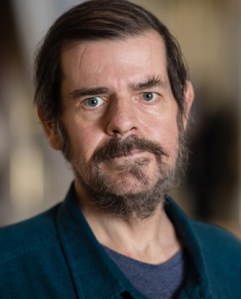
Óscar Castro Zúñiga Chilean 1910 – 1947
I.
I will start to live in each rose And in each lily that your eyes will see And in every bird trill I’ll sing your name So that you‘ll never forget me.
II.
If you cry as you contemplate the stars And your soul fills with impossibilities, It’s because my loneliness has come to kiss you So that you’ll never forget me.
III.
I will paint a rose colored horizon And I will paint blue wallflowers And I will guild the moon on your hair So that you’ll never forget me.
IV.
If asleep you sweetly walk Through a world of diaphanous gardens, Think of my heart that dreams of you, So that you’ll never forget me.
V.
And if some evening, at a far away altar, You hold another’s hand, and you are blessed, When the golden ring is placed on your finger, My soul will be an invisible tear In the eyes of the moribund Christ So that you’ll never forget me!
My soul cries out, Snared by the beauty Of the formless one. As I cry by myself, Night and day, Beauty amassed before my eyes Surpasses numberless moons and suns. If I look at the clouds in the sky, I see his beauty afloat; And I see him walk on the stars Blazing my heart
We present this work in honor of the Turkish holiday, Republic Day.
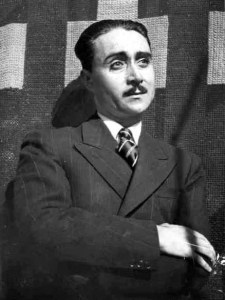
Yahya Kemal Beyatli Turkish 1884 – 1958
The great Itri has of old been called The Patron of our music; How he leads the people far and near, That conqueror of the day-break, On how many holiday mornings early Rattling the heavens with their voices massed together, Have they chanted the magnificent Tekbir. From Budapest to Iraq, even unto Egypt, From the furthest conquered lands, The breeze free-flowing o’er the homeland, Brought with it sound from every blossoming spring. This man of genius collected them So that from the plane trees he heard us, Heard our tale of seven centuries. In his music flowed on one hand Faith, On the other, all of Life; From every side that brightness of the city, the Bosphorus Flowed with the blue Tunca, and proud Euphrates. With what voices, with our sky and earth, With our sadness, our passion, our victories, Flowed that creation, which resembled us. How many times have I listened to the Neva-Kâr, A refrain which is both broad and lively: While scattering the secrets of the mode Neva, Brightness shines from the horizons of the Orient; Drunk with every syllable of his words, By night, one by one they set out, Toward the dawn go fifty million souls. But Chance and Fortune enviously Have hidden more than a thousand of his works, As his inheritance there remain to us but twenty. His Hymn to the Prophet, most awesome and profound, Then appear the flute and kettle-drum, And while the turning of the dervishes grows wilder, His liturgy ascends the seven-tiered Celestial Throne. He who was the master of a splendid world Of voice and string, Remains to us a mystery. Our learned men know not, who was he? Who hides his works today? Are they a treasure kept by Eternity? Does someone know? Where might they be today? Death, which covers up such music Leaves no consolation to mankind. My heart still is blind As in exile it passes many hours, It falls into a pleasant revery: Perhaps those compositions are yet played, On an Ocean which never ship shall pass.




 Poets Corner