Why Do the Wrong People Travel

We present this work in honor of World Tourism Day.

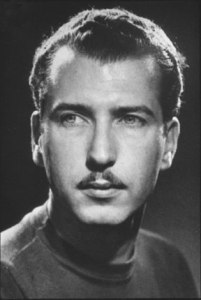
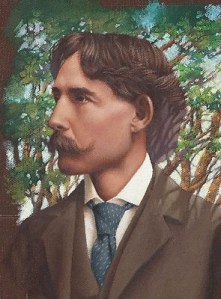
Noël Coward
English
1899 – 1973


Travel they say improves the mind,
An irritating platitude, which frankly, entre nous,
Is very far from true.

Personally I’ve yet to find that longitude and latitude
can educate those scores of monumental bores
Who travel in groups and herds and troupes
Of varying breeds and sexes
Till the whole world reels…

to shouts and squeals…
And the clicking of Rolleiflexes.

Why do the wrong people travel, travel, travel
When the right people stay back home?
What compulsion compels them
and who the hell tells them
To drag their cans to Zanzibar,
instead of staying quietly in Omaha.
The Taj Mahal and the Grand Canal
And the sunny French Rivera
Would be less oppressed if the Middle West
Would settle for somewhere rather nearer.
Please do not think that I criticize or cavel
at a genuine urge to roam.
But why, oh why, do the wrong people travel

when the right people stay back home
And mind their business
when the right people stay back home
And eat hot doughnuts
when the right people stay back home
I sometimes wonder
why the right people stay back home.

Just when you think romance is ripe it rather sharply dawns on you
That each sweet serenade is for the tourist trade
Any attractive native type who resolutely fawns on you
Will give as his address American Express
There isn’t a rock between Bangkok and the beaches of Hispianola
That does not recoil from suntan oil and the gurgle of Coca-Cola

Why do the wrong people travel, travel, travel
When the right people stay back home?
What explains this mass mania to leave Pennsylvania
And clack around like flocks of geese.
Demanding dry martinis on the isles of Greece
In the smallest street, where the gourmets meet,
They invariably fetch up
And it’s hard to make them accept a steak
that isn’t served rare and smeared with ketchup.

Millions of tourists are churning up the gravel
While they gaze at St. Peter’s Dome,

But why, oh why do the wrong people travel when the right people stay back home
with Cinerama
when the right people stay back home
with all that Kleenex
when the right people stay back home
I merely asking
why the right people stay back home

What peculiar obsessions inspire those processions
Of families from Houston Tex
with all those cameras around their necks?
They will take a train
Or an aeroplane
For an hour on the Costa Brava,
And they’ll see Pompeii
On the only day
When it’s up to its ass in molten lava!
It would take years to unravel, ravel, ravel
Every impulse that makes them wanna roam.
But why oh WHY do the wrong people travel
When the right people stay at home.”
and Yogie Bear-O
when the right people stay back home
won’t someone tell me
why the right people stay back home.

Sonnet CXI

We present this work in honor of the 480th anniversary of the poet’s death.

Juan Boscan Almogaver
Spanish
1490 – 1542


I am like one who in a desert bides
Forgotten by the world and its concerns,
By chance encounter suddenly who learns
A dear friend lives, whom he supposed had died.

He fears at first this doubtful apparition,
But finding it then reliable and assured,
Commences to recall his past condition
By newly awakened sentiments allured

But when it’s time for friend and friend to part
Since to be parted soon he must consent
He finds old solitude stamped with new indent.

To mountain grass he must then reconcile,
And barren wastes which lack a trace of art,
Trembling each time he enters his cave the while.

Translation by Dia Tsung

from Electra

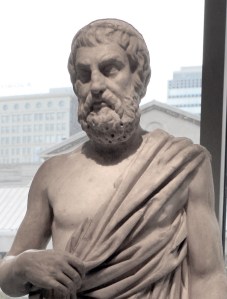
Sophocles
Greek
c. 497 BC – c. 406 BC


They took their stand where the appointed judges
Had cast their lots and ranged the rival cars.
Rang out the brazen trump! Away they bound,
Cheer the hot steeds and shake the slackened reins;
As with a body the large space is filled
With the huge clangor of the rattling cars.
High whirl aloft the dust-clouds; blent together,
Each presses each and the lash rings; and loud
Snort the wild steeds, and from their fiery breath,
Along their manes and down the circling wheels
Scatter the flaking foam. Orestes still—
Ays, as he swept around the perilous pillar
Last in the course, wheeled in the rushing axle;
The left rein curbed,—that on the dexter hand
Flung loose.— So on erect the chariots rolled!
Sudden the Ænian’s fierce and headlong steeds
Broke from the bit — and, as the seventh time now
The course was circled, on the Libyan car
Dashed their wild fronts: then order changed to ruin:
Car crashed on car; the wide Crissæan plain
Was sea-like strewed with wrecks; the Athenian saw,
Slackened his speed, and wheeling round the marge,
Unscathed and skillful, in the midmost space,
Left the wild tumult of that tossing storm.
Behind, Orestes, hitherto the last,
Had yet kept back his coursers for the close;
Now one sole rival left — on, on he flew,
And the sharp sound of the impelling scourge
Rang in the keen ears of the flying steeds.
He nears, he reaches — they are side by side —
Now one — the other — by a length the victor.
The courses all are past — the wheels erect —
All safe — when, as the hurrying coursers round
The fatal pillar dashed, the wretched boy
Slackened the left rein: on the column’s edge
Crashed the frail axle: headlong from the car
Caught and all meshed within the reins, he fell;
And masterless the mad steeds raged along!
Loud from that mighty multitude arose
A shriek — a shout! But yesterday such deeds,
To-day such doom! Now whirled upon the earth,
Now his limbs dashed aloft, they dragged him — those
Wild horses — till all gory from the wheels
Released; — and no man, not his nearest friends,
Could in that mangled corpse have traced Orestes.
They laid the body on the funeral-pyre;
And while we speak, the Phocian strangers bear,
In a small, brazen, melancholy urn,
That handful of cold ashes to which all
The grandeur of the Beautiful hath shrunk.

The Prisoner in Aghmāt Speaks to His Chains

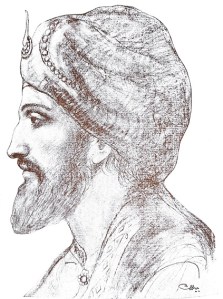
Muhammad Ii Al-mu’tamid
Arab Andalusian
1040 – 1095


I say to my chains,
don’t you understand?
I have surrendered to you.
Why, then, have you no pity,
no tenderness?

You drank my blood.
You ate my flesh.
Don’t crush my bones.

My son Abu Hasim sees me
fettered by you and turns away
his heart made sore.

Have pity on an innocent boy
who never knew fear
and must now come begging to you.

Have pity on his sisters
innocent like him
who have had to swallow poison
and eat bitter fruit.

Some of them are old enough
to understand and I fear
they will go blind from weeping.

The others are now too young
to take it in and open theirs mouths
only to nurse.

Tranlsation by Cola Franzen

On the Death of the Late Queen

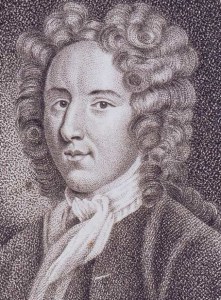
George Farquhar
Irish
1677 – 1707


Whilst heaven with envy on the earth looked down,
Saw us unworthy of the royal pair,
And justly claimed Maria as its own,
Yet kindly left the glorious William here:
The heaven and earth alike do in the blessing share.
He makes the earth, she heaven our great allies,
And though we mourn, she for our comfort dies,
Nor need we fear the rash presumptuous foe,
Whilst she’s our saint above, and he our king below.

The Romance of Patrolman Casey

We present this work in honor of the 85th anniversary of the poet’s death.

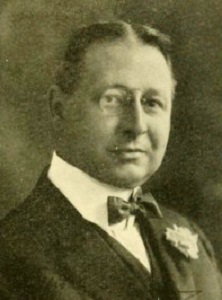
Ellis Parker Butler
American
1869 – 1937


There was a young patrolman who
Had large but tender feet;
They always hurt him badly when
He walked upon his beat.
(He always took them with him when
He walked upon his beat.)

His name was Patrick Casey and
A sweetheart fair had he;
Her face was full of freckles but
Her name was Kate McGee.
(It was in spite of freckles that
Her name was Kate McGee.)

‘Oh, Pat!’ she said, ‘I’ll wed you when
Promotion comes to you!’
‘I’m much-obliged,’ he answered, and
‘I’ll see what I can do.’
(I may remark he said it thus?
‘Oi’ll say phwat Oi kin do.’)

So then he bought some new shoes which
Allowed his feet more ease?
They may have been large twelves. Perhaps
Eighteens, or twenty-threes.
(That’s rather large for shoes, I think?
Eighteens or twenty-threes!)

What last they were I don’t know, but
Somehow it seems to me
I’ve heard somewhere they either were
A, B, C, D, or E.
(More likely they were five lasts wide?
A, B plus C, D, E.)

They were the stoutest cowhide that
Could be peeled off a cow.

But he was not promoted

So
Kate wed him anyhow.

(This world is crowded full of Kates
That wed them anyhow.)

Meeting Point

We present this work in honor of the poet’s 115th birthday.

Louis Macneice
Irish
1907 – 1963


Time was away and somewhere else,
There were two glasses and two chairs
And two people with the one pulse
(Somebody stopped the moving stairs):
Time was away and somewhere else.

And they were neither up nor down;
The stream’s music did not stop
Flowing through heather, limpid brown,
Although they sat in a coffee shop
And they were neither up nor down.

The bell was silent in the air
Holding its inverted poise—
Between the clang and clang a flower,
A brazen calyx of no noise:
The bell was silent in the air.

The camels crossed the miles of sand
That stretched around the cups and plates;
The desert was their own, they planned
To portion out the stars and dates:
The camels crossed the miles of sand.

Time was away and somewhere else.
The waiter did not come, the clock
Forgot them and the radio waltz
Came out like water from a rock:
Time was away and somewhere else.

Her fingers flicked away the ash
That bloomed again in tropic trees:
Not caring if the markets crash
When they had forests such as these,
Her fingers flicked away the ash.

God or whatever means the Good
Be praised that time can stop like this,
That what the heart has understood
Can verify in the body’s peace
God or whatever means the Good.

Time was away and she was here
And life no longer what it was,
The bell was silent in the air
And all the room one glow because
Time was away and she was here.

Heat

Archibald Lampman
Canadian
1861 – 1899


From plains that reel to southward, dim,
The road runs by me white and bare;
Up the steep hill it seems to swim
Beyond, and melt into the glare.
Upward half-way, or it may be
Nearer the summit, slowly steals
A hay-cart, moving dustily
With idly clacking wheels.
By his cart’s side the wagoner
Is slouching slowly at his ease,
Half-hidden in the windless blur
Of white dust puffiing to his knees.
This wagon on the height above,
From sky to sky on either hand,
Is the sole thing that seems to move
In all the heat-held land.

Beyond me in the fields the sun
Soaks in the grass and hath his will;
I count the marguerites one by one;
Even the buttercups are still.
On the brook yonder not a breath
Disturbs the spider or the midge.
The water-bugs draw close beneath
The cool gloom of the bridge.

Where the far elm-tree shadows flood
Dark patches in the burning grass,
The cows, each with her peaceful cud,
Lie waiting for the heat to pass.
From somewhere on the slope near by
Into the pale depth of the noon
A wandering thrush slides leisurely
His thin revolving tune.

In intervals of dreams I hear
The cricket from the droughty ground;
The grasshoppers spin into mine ear
A small innumerable sound.
I lift mine eyes sometimes to gaze:
The burning sky-line blinds my sight:
The woods far off are blue with haze:
The hills are drenched in light.

And yet to me not this or that
Is always sharp or always sweet;
In the sloped shadow of my hat
I lean at rest, and drain the heat;
Nay more, I think some blessèd power
Hath brought me wandering idly here:
In the full furnace of this hour
My thoughts grow keen and clear.

Hail to Thee, Nicaragua!

We present this work in honor of the poet’s 135th birthday.

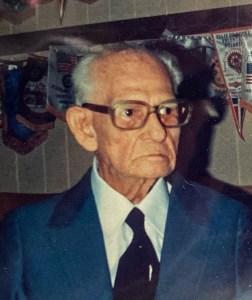
Salomón Ibarra Mayorga
Nicaraguan
1887 – 1985


Hail to thee, Nicaragua! On thy land
roareth the voice of the cannon no more,
nor doeth the blood of brothers now stain
thy glorious bicolor banner.

Let peace shine beautifully in thy sky,
and nothing dimmeth thine immortal glory,
for labor is thy well-earned laurel
and honor is thy triumphal emblem,
is thy triumphal emblem!