The Walrus and the Carpenter

We present this work in honor of the poet’s 190th birthday.

01-27 Carroll
Lewis Carroll
English
1832 – 1898

The sun was shining on the sea,
Shining with all his might:
He did his very best to make
The billows smooth and bright —
And this was odd, because it was
The middle of the night.

The moon was shining sulkily,
Because she thought the sun
Had got no business to be there
After the day was done —
“It’s very rude of him,” she said,
“To come and spoil the fun.”

The sea was wet as wet could be,
The sands were dry as dry.
You could not see a cloud, because
No cloud was in the sky:
No birds were flying overhead —
There were no birds to fly.

The Walrus and the Carpenter
Were walking close at hand;
They wept like anything to see
Such quantities of sand:
“If this were only cleared away,”
They said, “it would be grand!”

“If seven maids with seven mops
Swept it for half a year,
Do you suppose,” the Walrus said,
That they could get it clear?”
“I doubt it,” said the Carpenter,
And shed a bitter tear.

“O Oysters, come and walk with us!”
The Walrus did beseech.
“A pleasant walk, a pleasant talk,
Along the briny beach:
We cannot do with more than four,
To give a hand to each.”

The eldest Oyster looked at him,
But never a word he said:
The eldest Oyster winked his eye,
And shook his heavy head —
Meaning to say he did not choose
To leave the oyster-bed.

But four young Oysters hurried up,
All eager for the treat:
Their coats were brushed, their faces washed,
Their shoes were clean and neat —
And this was odd, because, you know,
They hadn’t any feet.

Four other Oysters followed them,
And yet another four;
And thick and fast they came at last,
And more, and more, and more —
All hopping through the frothy waves,
And scrambling to the shore.

The Walrus and the Carpenter
Walked on a mile or so,
And then they rested on a rock
Conveniently low:
And all the little Oysters stood
And waited in a row.

“The time has come,” the Walrus said,
“To talk of many things:
Of shoes — and ships — and sealing-wax —
Of cabbages — and kings —
And why the sea is boiling hot —
And whether pigs have wings.”

“But wait a bit,” the Oysters cried,
“Before we have our chat;
For some of us are out of breath,
And all of us are fat!”
“No hurry!” said the Carpenter.
They thanked him much for that.

“A loaf of bread,” the Walrus said,
“Is what we chiefly need:
Pepper and vinegar besides
Are very good indeed —
Now if you’re ready, Oysters dear,
We can begin to feed.”

“But not on us!” the Oysters cried,
Turning a little blue.
“After such kindness, that would be
A dismal thing to do!”
“The night is fine,” the Walrus said.
“Do you admire the view?”

“It was so kind of you to come!
And you are very nice!”
The Carpenter said nothing but
“Cut us another slice:
I wish you were not quite so deaf —
I’ve had to ask you twice!”

“It seems a shame,” the Walrus said,
To play them such a trick,
After we’ve brought them out so far,
And made them trot so quick!”
The Carpenter said nothing but
“The butter’s spread too thick!”

“I weep for you,” the Walrus said:
I deeply sympathize.”
With sobs and tears he sorted out
Those of the largest size,
Holding his pocket-handkerchief
Before his streaming eyes.

“O Oysters,” said the Carpenter,
“You’ve had a pleasant run!
Shall we be trotting home again?”
But answer came there none —
And this was scarcely odd, because
They’d eaten every one.

Spiritual Verses

We present this work in honor of the poet’s 480th birthday.

01-24 De La Cruz
Juan de la Cruz
Spanish
1542 – 1591


I

So I might seize the prey
in this divine venture
I flew ever higher
from sight was forced to stray,
yet love so far did fly
that though in my flight
I faltered in the height
I caught the prey on high.

II

As higher I ascended
so the hardest conquest
came about in darkness,
all my sight was dazzled:
yet since love was my prey
from blind dark a leaper
I flew on ever higher
till I overtook the prey.

III

In this highest game,
the further I ascended
the humbler, more subdued
more abased I became.
‘None attains it’, I did say.
I sank down lower, lower,
yet I rose higher, higher
and so I took the prey.

IV

My one flight in strange manner
surpassed a hundred thousand
for the hope of highest heaven
attains the end it hopes for:
there hope alone did fly
unfaltering in the height:
hope, seeking in its flight,
I caught the prey on high.


Translation by A.S. Kline

The Good-Morrow

We present this work in honor of the poet’s 450th birthday.

01-22 Donne
John Donne
English
1572 – 1631


I wonder, by my troth, what thou and I
Did, till we loved? Were we not weaned till then?
But sucked on country pleasures, childishly?
Or snorted we in the Seven Sleepers’ den?
‘Twas so; but this, all pleasures fancies be.
If ever any beauty I did see,
Which I desired, and got, ‘twas but a dream of thee.

And now good-morrow to our waking souls,
Which watch not one another out of fear;
For love, all love of other sights controls,
And makes one little room an everywhere.
Let sea-discoverers to new worlds have gone,
Let maps to other, worlds on worlds have shown,
Let us possess one world, each hath one, and is one.

My face in thine eye, thine in mine appears,
And true plain hearts do in the faces rest;
Where can we find two better hemispheres,
Without sharp north, without declining west?
Whatever dies, was not mixed equally;
If our two loves be one, or, thou and I
Love so alike, that none do slacken, none can die.

Nocturne

01-21 Caceres
Omar Cáceres
Chilean
1904 – 1943


The trees are drunk, from nocturnal lights,
and they drag their shadows, nervous and stiff.

Their shadows, strangling the night’s winds,
shelter and rattle me, as if I were a bird.

And my steps echo in their black boughs,
and the weakest hooks fill me with vertigo;

yet when I cast my eye on them from another, simpler pair,
they respond, swaying, that they remained intact;

The leaves, dilating the communal shadows,
return like ruined boats to their tree.

They cannot, oh, attain the solid banks
that the tips of heavenly bodies announce from above,

yet thick with silence they plow, quivering
through deep and frozen ponds of miracle.

And in the nocturnal trees embracing the earth,
I find oblivion and mercy, when in despair,

while the light runs down their boughs,
thin, diaphanous, like water between my hands.


Translation by Mónica de la Torre

In Difficult Times

We present this work in honor of the poet’s 90th birthday.

01-20 Padilla
Heberto Padilla
Cuban
1932 – 2000


They asked that man if they could
take his time and join it to history.
They asked for his hands,
because in difficult times
there is nothing better than a good pair of hands.
They asked for his eyes
that once had tears
so he could ponder the bright side
(especially the bright side of life)
because for horror one terrified eye is enough.
They asked for his lips,
dry and cracked, to affirm,
to erect, with each affirmation, a dream
(the high dream);
they asked for his legs,
hard and gnarled,
(his old high-stepping legs)
because in difficult times
is there anything better than a pair of legs
for building or trench-digging?
They asked him for the forest that nourished him as a child
with its obedient tree.
They asked for his chest, his heart, his shoulders.
They told him
that it was strictly necessary.
Later they explained
that all this giving would be pointless
unless he gave up his tongue,
because in difficult times
there is nothing so useful for stopping hatred or lies.
And finally they begged him
please, to begin to walk
because in difficult times
that is without a doubt the decisive test.


Translation by Mark Strand

Far Away

We present this work in honor of the poet’s 155th birthday.

01-18 Dario
Rubén Darío
Nicaraguan
1867 – 1916


Ox that I saw in my childhood, as you steamed
in the burning gold on the Nicaraguan sun,
there on the rich plantation filled with tropical
harmonies; woodland dove, of the woods that sang
with the sound of the wind, of axes, of birds and wild bulls:
I salute you both, because you are both my life.

You, heavy ox, evoke the gentle dawn
that signaled it was time to milk the cow,
when my existence was all white and rose;
and you, sweet mountain dove, cooing and calling,
you signify all that my own springtime, now
so far away, possessed of the Divine Springtime.


Translation by Lysander Kemp

Madagascar

In honor of Tu B’Shavat, we present this whimsical Jewish pastoral.

01-17 Broderzon
Moishe Broderzon
Russian
1890 – 1956


1
I take my feet under my arm,
I go, I walk, stride on,
to east and west and north and south,
I look for Birobidjan.
people give this advice – it’s a habit,
take a pack on your back,
and go forth like a rabbit!

To Madagascar, the land of grass and rabbits
and when the wind will blow,
to Madagascar. No meat there,
I know that from Genesis.
that’s where Adam the first man
started to mix in,
where Mother Eve can,
be curious too,
Ay Madagascar, may as well be there
that’s the thing to do.

2
The sun there bakes on pagodas
Winter hot snow falls
come in to all’s ready
don’t need to make a living
for people eat each other
So poof and you’re not there.

To Madagascar, the land of grass and rabbits
and when the wind will blow,
to Madagascar. No meat there,
I know that from Genesis.
that’s where Adam the first man
started to mix in,
where Mother Eve can,
be curious too,
Ay Madagascar, may as well be there
that’s the thing to do.


Translation by Sarah Traister Moskovitz

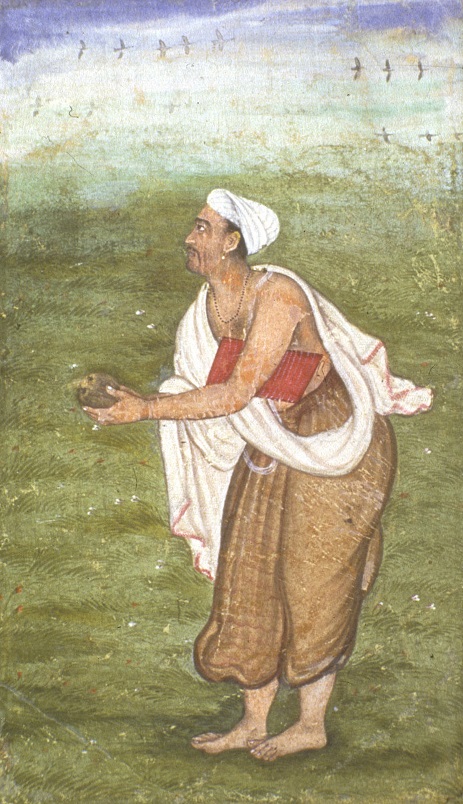
65th Poem from Daasarathii Satakam

We present this work in honor of Uzhavar Tirunal.

01-16 Ramadasu
Bhadrachala Ramadasu
Indian
1620 – 1680

Wonder was it when a rock touched by your foot became a youthful woman,
Wonder was it when a multitude of boulders floated on water in steadiness,
But, what wonder it is when a man by constant thinking of you obtains salvation? on
This earth, pleasant one to the daughter of earth, Daasarathii, ocean of kindness!

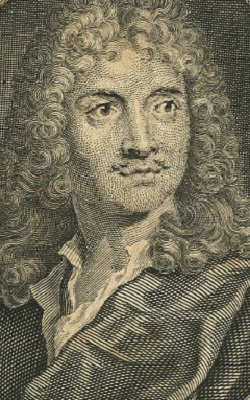
from Tartuffe

We present this work in honor of the poet’s 400th birthday.

01-15 Moliere
Moliere
French
1622 – 1673


A love of heavenly beauty does not preclude
A proper love for earthly pulchritude;
Our senses are quite rightly captivated
By perfect works our Maker has created.
Some glory clings to all that Heaven has made;
In you, all Heaven’s marvels are displayed.
On that fair face such beauties are displayed.
On that fair face such beauties have been lavished,
The eyes are dazzled and the heart is ravished;
How could I look on you, O flawless creature,
And not adore the Author of all Nature,
Feeling a love both passionate and pure
For you, his triumph of self-portraiture?
At first, I trembled lest that love should be
A subtle snare that Hell had laid for me;
I vowed to flee the sight of you, eschewing
A rapture that might prove my soul’s undoing;
But soon, fair being, I became aware
That my deep passion could be made to square
With rectitude, and with my bounden duty.
I thereupon surrendered to your beauty.
It is, I know, presumptuous on my part
To bring you this poor offering of my heart,
And it is not my merit, heaven knows,
But your compassion on which my hopes repose.
You are my peace, my solace, my salvation;
On you depends my bliss—or desolation;
I bide your judgment and, as you think best,
I shall be either miserable or blest.
I may be pious, but I’m human too:
With your celestial charms before his eyes,
A man has not the power to be wise.
I know such words sound strangely, coming from me,
But I’m no angel, nor was meant to be,
And if you blame my passion, you must needs
Reproach as well the charms on which it feeds.
Your loveliness I had no sooner seen
Than you became my soul’s unrivalled queen;
Before your seraph glance, divinely sweet,
My heart’s defenses crumbled in defeat,
And nothing fasting, prayer, or tears might do
Could stay my spirit from adoring you.
My eyes, my sighs have told you in the past
What now my lips make bold to say at last,
And if, in your great goodness, you will deign
To look upon your slave, and ease his pain—
If, in compassion for my soul’s distress,
You’ll stoop to comfort my unworthiness,
I’ll raise to you, in thanks for that sweet manna,
An endless hymn, an infinite hosanna.
With me, of course, there need be no anxiety,
No fear of scandal or of notoriety.
These young court gallants, whom all the ladies fancy,
Are vain in speech, in action rash and chancy;
When they succeed in love, the world soon knows it;
No favor’s granted them but they disclose it
And by the looseness of their tongues profane
The very altar where their hearts have lain.
Men of my sort, however, love discreetly,
And one may trust our reticence completely.
My keen concern for my good name insures
The absolute security of yours;
In short, I offer you, my dear Elmire,
Love without scandal, pleasure without fear.


Translation by Richard Wilbur

from The Virsimhdevcarit

We present this work in honor of Pongal.

01-14 Keshavdas
Keshavdas
Indian
1555 – 1617


When Generosity and Greed set out to see Jahangirpur
They saw a huge array of forts, towns and villages –
How could I possibly recount all their names?
They saw lakes and rivers that made them glad.
Then they approached the ‘Bir lake.’ Seeing the magnificent Bir lake
They sought the appropriate terms for describing it.
It gives such pleasure on earth, this body of water!
It is marvelous, clear, vast, and profound in its depths.
It is home to blossoming flowers, bright like a star-lit sky.
It is a place of great coolness, where the heat of summer is forbidden entry:
Abode of scents, a place of beauty, effacer of the world’s cares
Like the goddess Candika in its dark hue.
The tall waves are a cluster of clouds releasing their spray in the wind
At sunset the water takes on a red quality,
Waves shimmering like lightning, removing the sorrow of men’s hearts.
Night and day peacocks dance in all directions to the spray of the lake
The lotuses bloom, their white luster like moonlight…


Translation by Allison Busch