Donna me Prega

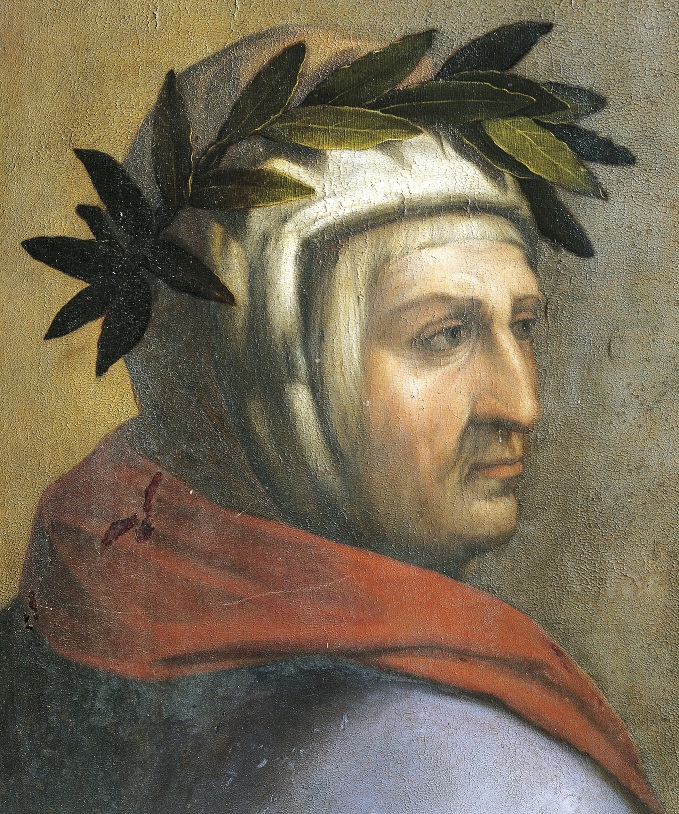
Portrait of Guido Cavalcanti (Florence, 1258 - Florence, 1300), Italian poet, oil on board by Cristofano dell'Altissimo (1525-1605), 69x44 cm
Guido Cavalcanti
Italian
1255 – 1300


A lady asks me – I speak for that reason
Of an effect – that so often – is daring
And so haughty – he’s called Amore:
He who denies him – now realise the truth!
I speak – to those present – with knowledge,
Owning no expectation – that the base-hearted
Can gain understanding through explanation:
Nor that – without practical demonstration
I have the talent – to prove at will
Where he lives, or who gave him creation,
Or what his power is, or what his virtue,
His essence too – and his every movement,
Nor the delight – so that we say: ‘to love’,
Nor whether a man can show him to gazing.

In the place – that memory inhabits
He has his station – and takes on form
Like a veil of light – born of that shadow
Which is of Mars – that arrives and remains;
He is created – has sensation – name,
From the soul, manner – from the heart, will.
And comes from visible form that takes on,
And embraces – in possible intellect,
As in the subject – location and dwelling.
And yet he has no weight in that state
Since he is not as a quality descending:
Shines out – of himself perpetual impression;
Takes no delight – except in awareness;
Nor can scatter his likenesses around.
He is not virtue – but out of that comes
Which is perfection – (so self-established),
And through feeling – not rationally, I say;
Beyond balance – yet proclaiming judgement,
That will itself – ’stead of reason – is valid:
Poor in discernment – so vice is his friend.
Oft from his power then death will follow,
He’s strong – and, virtue opposing him,
Thus runs counter to what brings succour:
Not that he is by nature in conflict;
But twisted awry from true perfection
By fate – no man possessor of life can say
That once established – he has no lordship.
Likewise he has power though men forget.

He comes into being – when will is such
That a further measure – of nature’s – at play;
Then he will never adorn himself – with rest.
Moving – changing colour, laughing through tears,
Contorting – the features – with signatures of fear;
Scarce pausing; – yet you will note of him
He’s most often found with people of worth.
His strange quality gives rise to sighing,
And makes a man gaze – into formless places
Arousing the passion that stirs a flame,
(No man can imagine him who’s not known him)
Unmoving – yet he draws all towards him,
Not turning about – to discover joy:
Nor minded to know whether great or small.
From his like he elicits – the complex glance
That makes – the pleasure – appear more certain:
Nor can stay hidden – when he is met with.
Not savage indeed – yet beauty his arrow,
So that desire – for fear is – made skilful:
Following all merit – in the piercing spirit.
Nor can be comprehended from the face:
Seen – as blankness fallen among objects;
Listening deep – yet seeing not form itself:
But led by what emanates from it.
Far from colour, of separate being,
Seated – in midst of darkness, skirting the light,
Yet far from all deceit – I say, worthy of trust,
So that compassion is born from him alone.

Canzone, confidently, now you may go
Wherever you please, I’ve adorned you so
Your reasoning – will be praised by everyone
Who makes the effort to comprehend you: though
You will reveal no art to other than them.
 

Translation by A.S. Kline

Poetics

We present this work in honor of the poet’s 75th birthday.

12-29 Roca
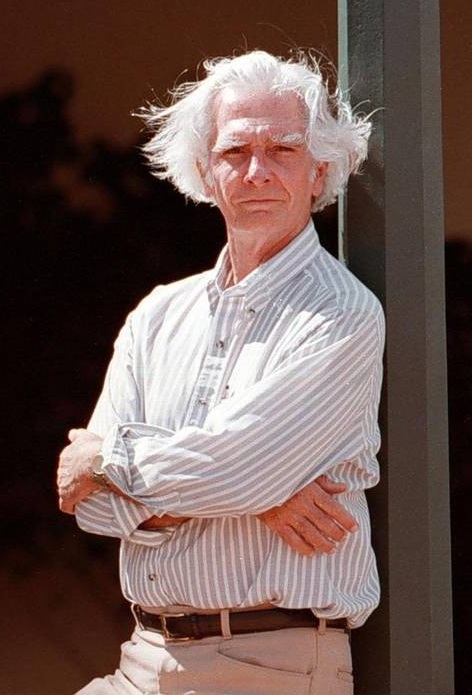
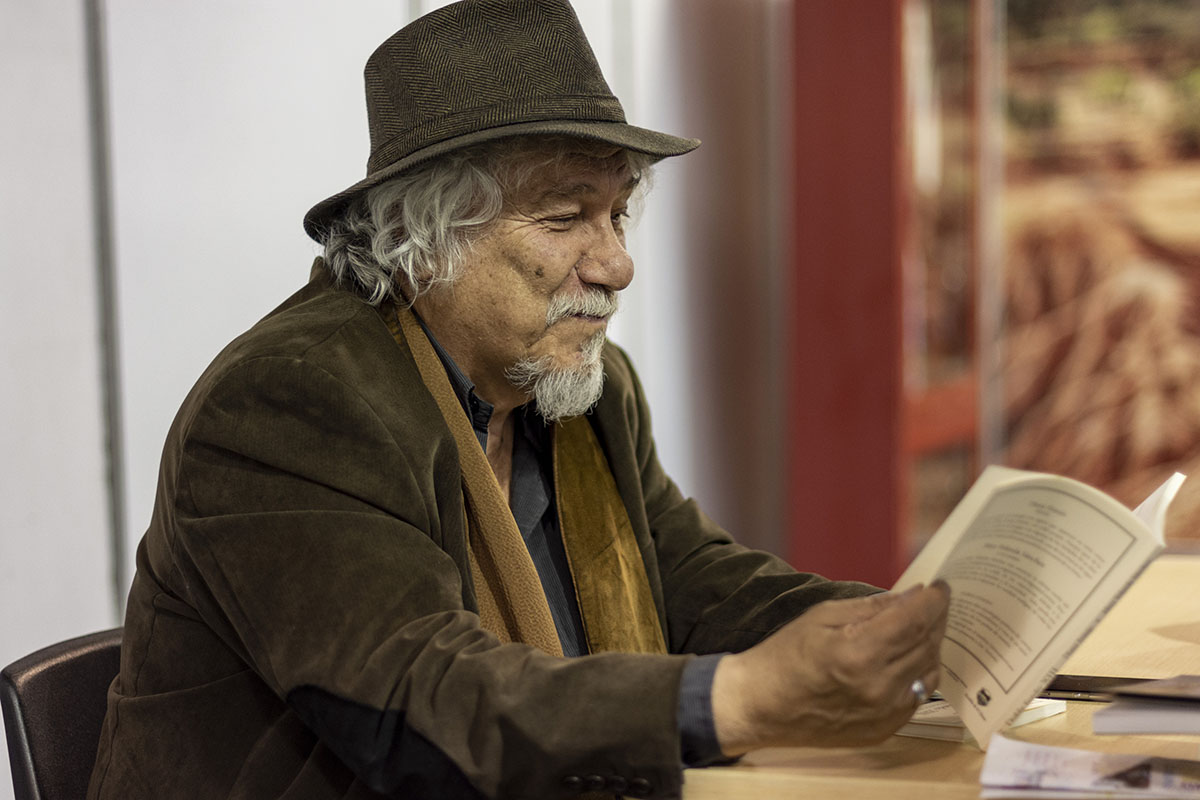
Juan Manuel Roca
Colombian
b. 1946


After writing on paper the word coyote
You must watch out that the meat-craving word
Does not take over the page,
Does not manage to hide
Behind the word jacaranda
To wait for the word hare to pass by
And then tear it apart.
In order to prevent it,
To sound the alarm
When the coyote stealthily
Prepares its ambush,
Some old masters
Who know the spells of language
Recommend tracing the word match
Rubbing it against the word stone
And lighting up the word fire
To scare it away.
There is no coyote or jackal, no hyena or jaguar,
No puma or wolf thar won’t flee
When fire converses with air.


Translation by Laura Chalar

Dream of Istanbul

We present this work in honor of the 85th anniversary of the poet’s death.

12-27 Ersoy
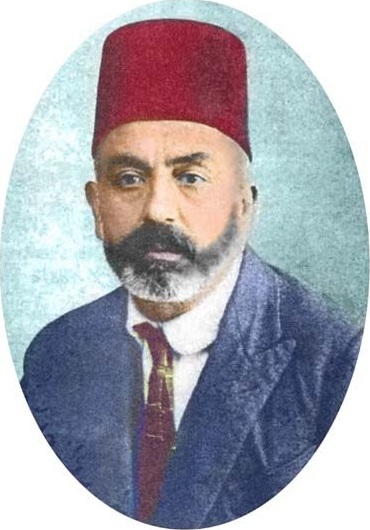
Mehmet Akif Ersoy
Turkish
1873 – 1936


The boat was rolling over in an ocean…
The dream threw me on the shores of Marmara!
I saw from only a couple of miles away
your blackened Istanbul clear as crystal,
Its forehead shining like a crescent:
She’s laughing; coquettish, charming and attractive.

What base destitution now, alas!
What arrogance, what ostentation!
Many schools are opened, men and women study;
factories are in full steam, textile industries progress.
Printing houses work day and night.
New companies emerge for the benefit of the people,
New parties arise to enlighten the people,

Economy prospers
And ships unload wealth from length to length of her shores.


Translation by Mevlut Ceylan

One Night

We present this work in honor of the poet’s 140th birthday.

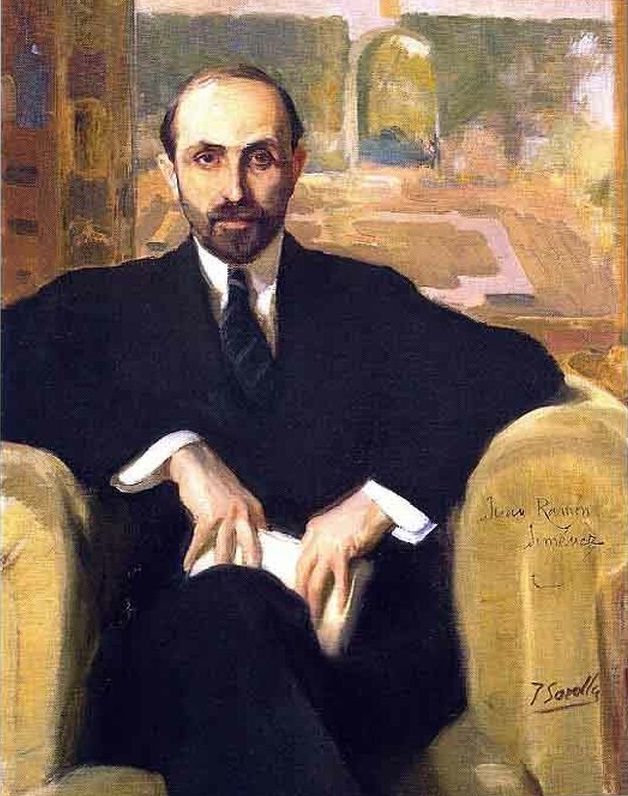
12-24 Jimenez
Juan Ramón Jiménez
Spanish
1881 – 1958


The ancient spiders with a flutter spread
Their misty marvels through the withered flowers,
The windows, by the moonlight pierced, would shed
Their trembling garlands pale across the bowers.

The balconies looked over to the South;
The night was one immortal and serene;
From fields afar the newborn springtime’s mouth
Wafted a breath of sweetness o’er the scene.

How silent! Grief had hushed its spectral moan
Among the shadowy roses of the sward;
Love was a fable—shadows overthrown
Trooped back in myriads from oblivion’s ward.

The garden’s voice was all—empires had died—
The azure stars in languor having known
The sorrows all the centuries provide,
With silver crowned me there, remote and lone.


Translation by Thomas Walsh

Hymn on the Nativity

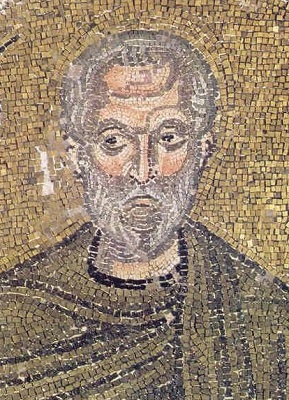
12-22 Ephrem
Ephrem of Nisibis
Turkish
c. 306 – 373


Your mother is a cause for wonder: the Lord entered her
and became a servant; He who is the Word entered
—and became silent within her; thunder entered her
—and made no sound; there entered the Shepherd of all,
and in her he became the Lamb, bleating as he came forth.
Your mother’s womb has reversed the roles:
the Establisher of all entered in His richness,
but came forth poor; the Exalted One entered her,
but came forth meek; the Splendrous One entered her,
but came forth having put on a lowly hue.
The Mighty One entered, and put on insecurity
from her womb; the Provisioner of all entered
—and experienced hunger; He who gives drink to all entered
—and experienced thirst: naked and stripped
there came forth from her He who clothes all.


Translation by Eugene Peterson

Son, Are You…?

12-21 Valls
Jorge Valls
Cuban
1933 – 2015


‘Son, are you suffering?’
(It was your voice, mother, speaking to me…
and your cheek and your smell
and the warm tenderness of your lips.
I became seas and marshes:
All the fallen stars plunging into my waters,
Unrelenting waters, mother, ungovernable.)
‘Is that you, my son?’
(As though your finger touched
in the midst of the night’s depths
soothing my brow,
and I, shuddering and with choking throat
wracked by boundless pain.
Mother, my bones, my tendons hurt;
the joints of my blood hurt;
this stone wounding my breast hurts…
and the jaws tearing at my back.)
You there as limpid as a moist jasmine flower!
‘Son, are you suffering?’

Celia

We present this work in honor of the poet’s 105th birthday.

12-20 Rojas
Gonzalo Rojas
Chilean
1916 – 2011


I

And no more tears; this transparent woman,
who today is sealed away,
this woman who now is walled
in a niche grave
like a madwoman chained
to a cruel bedstead in an airless room
with neither boat nor boatman, among faceless strangers,
this woman who, alone, is
The One,
who held us all in the heaven
of her body.
Blessed
be her womb.

II

And nothing nothing else; that she bore me and made me
a man with her seventh birth
her figure of fire
and of ivory
in the trials of poverty and sadness
and she knew
how to hear through the silence of my childhood the sign
the Secret
Sign
without ever
breathing
a word.
Blessed
be the fruit of her womb.

III

Let others go instead of me
I can’t go now to put
the red carnations there
the carnations of the Rojases ‚— mine and yours ‚—
today
on the painful thirteenth day of your martyrdom
those family members who are born at dawn
and who are reborn ‚— let them go to that wall for us for Rodrigo
for Tomás for young Gonzalo for Alonso; let them go
or not as they wish
or let them leave you in the dark
alone
alone with the ashes
of your beauty
which are your resurrection Celia
Pizarro
daughter and granddaughter of Pizarros
of late Pizarros Mother;
and may you come with us
into exile dwelling as always in grace
and mutual delight.
Blessed
be thy name.


Translation by Tom Boll

Evening Falls on the Berea Hills

H.I.E. Dhlomo
South African
1903 – 1956


I’m weary of myself. I’m dejected.
I stand and gaze and feel — and marvel! Is
This then the great city that has planted
Despair in me? What contrasts jolt in this
Strange Hive: souls kind and hard; pure Good; great Sins!
This Hope or Mockery, Lord? Or Joy or Pain?
For here beneath my eyes lie wonder scenes
That should ring Joy, but only fling me Pain!
All forces good or evil bring them Light

Who worship at Art’s shrine or read her Book.
My soul doth live! A flash out of the night!
I’ve been with God! I’m back content! I look
Where Nature’s work and Man’s mingle or fight —
Up sprout man’s flowers! Electric lights! ‘Tis night!

Extinguished Smoldering

We present this work in honor of the poet’s 465th birthday.

12-17 Khan-I-Khana
Abdul Rahim Kahn-I-Khana
Indian
1556 – 1627


What good is this petty love of exchanging little gifts?
Wager your life on love, and see if you lose or win.

When the fish is cut up, it’s washed in water; eat it and you thirst for water.
How great is the fish’s love for its mate, that even when dead it yearns for water.

Some burn and then go out, and some never burn at all.
But those who burn with love go out and then flare again.

A sugarcane is full of juice all over.
Except where there’s a knot, and that’s how love is.

The path of love is arduous, not everyone makes it to the end.
You mount a horse made of wax and ride through a blazing fire.