We present this work in honor of the poet’s 230th birthday.
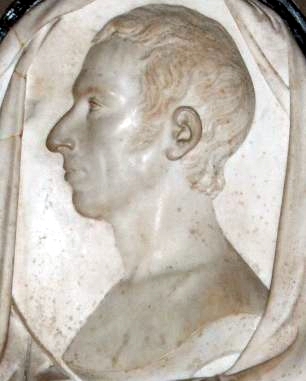
Charles Wolfe
Irish
1791 – 1823
Oh say not that my heart is cold To aught that once could warm it — That Nature’s Form so dear of old No more has power to charm it; Or that th’ ungenerous world can chill One glow of fond emotion For those who made it dearer still, And shared my wild devotion.
Still oft those solemn scenes I view In rapt and dreamy sadness; Oft look on those who loved them too With Fancy’s idle gladness; Again I longed to view the light In Nature’s features glowing; Again to tread the mountain’s height, And taste the soul’s o’erflowing.
Stern Duty rose, and frowning flung His leaden chain around me; With iron look and sullen tongue He muttered as he bound me — ‘The mountain breeze, the boundless heaven, Unfit for toil the creature; These for the free alone were given, — But what have slaves with Nature?’
After my death mourn me this way: ‘There was a man-and see: he is no more; before his time this man died and his life’s song in mid-bar stopped; and oh, it is sad! One more song he had and now the song is gone for good, gone for good!
And it is very sad!-a harp too he had a living being and murmurous and the poet in his words in it all of his heart’s secret revealed, and all the strings his hand gave breath but one secret his heart kept hid, round and round his fingers played, and one string stayed mute, mute to this day!
And it is sad, very sad! All of her days this string moved, mute she moved, mute she shook, for her song, her beloved redeemer she yearned, thirsted, grieved and longed as a heart pines for its intended: and though he hesitated each day she waited and in a secret moan begged for him to come, and he hesitated and never came, never came!
And great, great is the pain! There was a man-and see: he is no more, and his life’s song in mid-bar stopped, one more song he had to go, and now the song is gone for good, gone for good!
In honor of the Day of the Virgin of Guadalupe, we present this work by one of modern Mexico’s most thoughtfully spiritual poets.
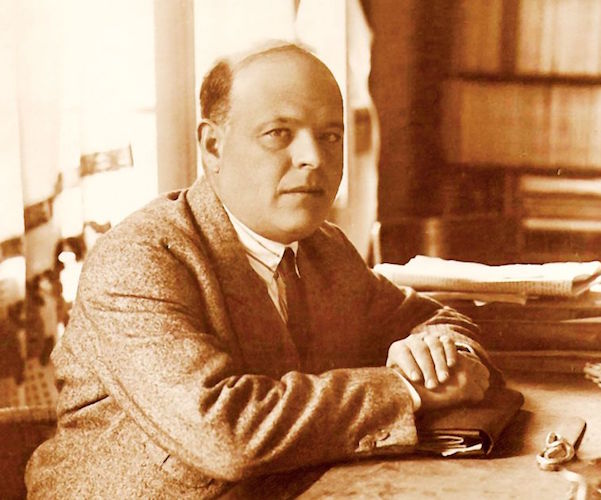
Amado Nervo Mexican 1870 – 1919
You who think I don’t believe when we two feud do not imagine my desire, my thirst, my hunger for God;
nor have you heard my desolate cry that echoes through the inner place of shadow, calling on the infinite;
nor do you see my thought laboring in ideal genesis, frequently in distress with throes of light.
If my sterile spirit could own your power of birth, by now — I would have columned heaven to perfect your earth.
But tell me, what power stows within a flagless soul to carry anywhere at all its torturer — who knows? —
that keeps a fast from faith, and with valiant integrity goes on asking every depth and every darkness, why?
Notwithstanding, I am shielded by my thirst for inquiry — my pangs for God, cavernous and unheard; and there is more love in my unsated doubt than in your tepid certainty.
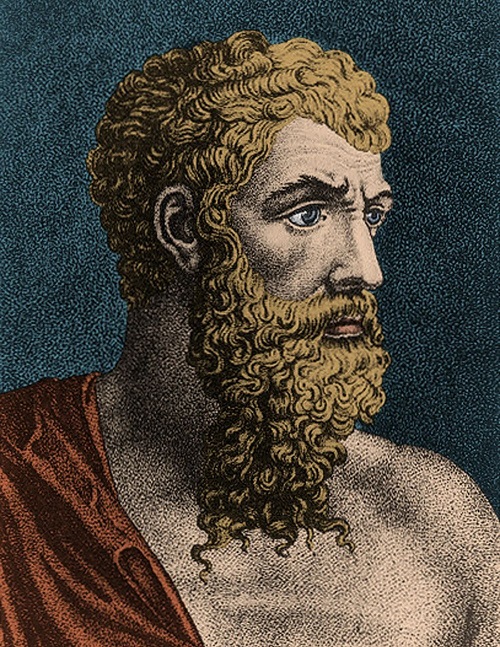
Ye Children of Man! whose life is a span, Protracted with sorrow from day to day, Naked and featherless, feeble and querulous, Sickly calamitous creatures of clay! Attend to the words of the Sovereign Birds, (Immortal, illustrious, lords of the air), Who survey from on high, with a merciful eye, Your struggles of misery, labor, and care. Whence you may learn and clearly discern Such truths as attract your inquisitive turn; Which is busied of late with a mighty debate, A profound speculation about the creation, And organical life, and chaotical strife, With various notions of heavenly motions, And rivers and oceans, and valleys and mountains, And sources of fountains, and meteors on high, And stars in the sky… We propose by and by, (If you’ll listen and hear,) to make it all clear. And Prodicus henceforth shall pass for a dunce, When his doubts are explained and expounded at once.
Our antiquity proved, it remains to be shown That Love is our author and master alone; Like him we can ramble, and gambol and fly O’er ocean and earth, and aloft to the sky; And all the world over, we’re friends to the lover, And when other means fail, we are found to prevail, When a Peacock or Pheasant is sent as a present. All lessons of primary daily concern You have learnt from the Birds, and continue to learn, Your best benefactors and early instructors; We give you the warning of seasons returning. When the Cranes are arranged, and muster afloat In the middle air, with a creaking note, Steering away to the Libyan sands, Then careful farmers sow their lands; The crazy vessel is hauled ashore, The sail, the ropes, the rudder and oar Are all unshipped and housed in store. The shepherd is warned, by the Kite reappearing, To muster his flock, and be ready for shearing. You quit your old cloak at the Swallow’s behest, In assurance of summer, and purchase a vest. For Delphi, for Ammon, Dodona, in fine For every oracular temple and shrine, The Birds are a substitute equal and fair, For on us you depend, and to us you repair For counsel and aid when a marriage is made, A purchase, a bargain, a venture in trade: Unlucky or lucky, whatever has struck ye, An ox or an ass that may happen to pass, A voice in the street, or a slave that you meet, A name or a word by chance overheard, If you deem it an omen, you call it a Bird; And if birds are your omens, it clearly will follow That birds are a proper prophetic Apollo.
Whose name will sound among the fields? Whose battle-cries will grind the grain? Once, learned men and layfolk both swore Basque and shouted English oaths: “Help, Holyhead!” “Saint George, to me!” were then in fashion, for we feared the noble deeds their troops had done. A new language always comes.
After those two, Breton displaced the Basque and English from our lips. Their fame exploded! No one clung to words outworn, outmoded songs, and all you heard was, “By God’s grace!” from every father and his son. The mad spoke Breton, and the dumb. A new language always comes.
Forgotten now, no longer good, Breton’s found peace with last year’s coins. We only speak Burgundian! “No god for me” — all in one voice. You might well ask, which, of those four, is worth the ransom, at this price. I’ll shut up now: my song is sung. A new language always comes.
Prince, which people will have won the “title,” “name,” or “lawful right” to grind the grain today? Tonight? A new language always comes.
Stone upon stone the earth seeks the sky. Step by step my soles ascend to the sun. The hot coal of life still beats in my chest and idle now is the stone knife among these stones.
If you are all life, why do you need my heart? If you are the great fire, why do you need my coal?
Each step of the stair erases a memory, and how like my soul is this long shadow shattering upon the last stones in the world.
We present this work in honor of the 890th anniversary of the poet’s death.
Omar Khayyam Persian 1048 – 1131
I.
Awake! for Morning in the Bowl of Night Has flung the Stone that puts the Stars to Flight: And Lo! the Hunter of the East has caught The Sultán’s Turret in a Noose of Light.
II.
Dreaming when Dawn’s Left Hand was in the Sky, I heard a Voice within the Tavern cry, “Awake, my Little ones, and fill the cup Before Life’s Liquor in its Cup be dry.”
III.
And, as the Cock crew, those who stood before The Tavern shouted—”Open then the Door! You know how little while we have to stay, And, once departed, may return no more.”
IV.
Now the New Year reviving old Desires, The thoughtful Soul to Solitude retires, Where the White Hand of Moses on the Bough Puts out, and Jesus from the Ground suspires.
V.
Irám indeed is gone with all its Rose, And Jamshýd’s Sev’n-ring’d Cup where no one knows: But still the Vine her ancient Ruby yields, And still a Garden by the Water blows.
VI.
And David’s Lips are lockt; but in divine High-piping Péhlevi, with “Wine! Wine! Wine! Red Wine!”—the Nightingale cries to the Rose That yellow Cheek of hers to incarnadine.
VII.
Come, fill the Cup, and in the Fire of Spring The Winter Garment of Repentance fling: The Bird of Time has but a little way To fly—and Lo! the Bird is on the Wing.
VIII.
And look—a thousand blossoms with the Day Woke—and a thousand scatter’d into Clay: And this first Summer Month that brings the Rose Shall take Jamshýd and Kaikobád away.
IX.
But come with old Khayyám and leave the Lot Of Kaikobád and Kaikhosrú forgot: Let Rustum lay about him as he will, Or Hátim Tai cry Supper—heed them not.
X.
With me along some Strip of Herbage strown That just divides the desert from the sown, Where name of Slave and Sultán scarce is known, And pity Sultán Máhmúd on his Throne.
XI.
Here with a Loaf of Bread beneath the Bough, A Flask of Wine, a Book of Verse—and Thou Beside me singing in the Wilderness— And Wilderness is Paradise enow.
XII.
“How sweet is mortal Sovranty”—think some: Others—”How blest the Paradise to come!” Ah, take the Cash in hand and waive the Rest; Oh, the brave Music of a distant Drum!
XIII.
Look to the Rose that blows about us—”Lo, Laughing,” she says, “into the World I blow: At once the silken Tassel of my Purse Tear, and its Treasure on the Garden throw.”
XIV.
The Worldly Hope men set their Hearts upon Turns Ashes—or it prospers; and anon, Like Snow upon the Desert’s dusty Face Lighting a little Hour or two—is gone.
XV.
And those who husbanded the Golden Grain, And those who flung it to the Winds like Rain, Alike to no such aureate Earth are turn’d As, buried once, Men want dug up again.
XVI.
Think, in this batter’d Caravanserai Whose Doorways are alternate Night and Day, How Sultán after Sultán with his Pomp Abode his Hour or two and went his way.
XVII.
They say the Lion and the Lizard keep The Courts where Jamshýd gloried and drank deep: And Bahrám, that great Hunter—the Wild Ass Stamps o’er his Head, and he lies fast asleep.
XVIII.
I sometimes think that never blows so red The Rose as where some buried Cæsar bled; That every Hyacinth the Garden wears Dropt in its Lap from some once lovely Head.
XIX.
And this delightful Herb whose tender Green Fledges the River’s Lip on which we lean— Ah, lean upon it lightly! for who knows From what once lovely Lip it springs unseen!
XX.
Ah, my Belovéd, fill the cup that clears To-day of past Regrets and future Fears— To-morrow?—Why, To-morrow I may be Myself with Yesterday’s Sev’n Thousand Years.
XXI.
Lo! some we loved, the loveliest and the best That Time and Fate of all their Vintage prest, Have drunk their Cup a Round or two before, And one by one crept silently to Rest.
XXII.
And we, that now make merry in the Room They left, and Summer dresses in new Bloom, Ourselves must we beneath the Couch of Earth Descend, ourselves to make a Couch—for whom?
XXIII.
Ah, make the most of what we yet may spend, Before we too into the Dust descend; Dust into Dust, and under Dust, to lie, Sans Wine, sans Song, sans Singer, and—sans End!
XXIV.
Alike for those who for To-day prepare, And those that after a To-morrow stare, A Muezzín from the Tower of Darkness cries, “Fools! your Reward is neither Here nor There!”
XXV.
Why, all the Saints and Sages who discuss’d Of the Two Worlds so learnedly, are thrust Like foolish Prophets forth; their Words to Scorn Are scatter’d, and their Mouths are stopt with Dust.
XXVI.
Oh, come with old Khayyám, and leave the Wise To talk; one thing is certain, that Life flies; One thing is certain, and the Rest is Lies; The Flower that once has blown for ever dies.
XXVII.
Myself when young did eagerly frequent Doctor and Saint, and heard great Argument About it and about: but evermore Came out by the same Door as in I went.
XXVIII.
With them the Seed of Wisdom did I sow, And with my own hand labour’d it to grow: And this was all the Harvest that I reap’d— “I came like Water, and like Wind I go.”
XXIX.
Into this Universe, and why not knowing, Nor whence, like Water willy-nilly flowing: And out of it, as Wind along the Waste, I know not whither, willy-nilly blowing.
XXX.
What, without asking, hither hurried whence? And, without asking, whither hurried hence! Another and another Cup to drown The Memory of this Impertinence!
XXXI.
Up from Earth’s Centre through the Seventh Gate I rose, and on the Throne of Saturn sate, And many Knots unravel’d by the Road; But not the Knot of Human Death and Fate.
XXXII.
There was a Door to which I found no Key: There was a Veil past which I could not see: Some little talk awhile of Me and Thee There seemed—and then no more of Thee and Me.
XXXIII.
Then to the rolling Heav’n itself I cried, Asking, “What Lamp had Destiny to guide Her little Children stumbling in the Dark?” And—”A blind Understanding!” Heav’n replied.
XXXIV.
Then to the earthen Bowl did I adjourn My Lip the secret Well of Life to learn: And Lip to Lip it murmur’d—”While you live Drink!—for once dead you never shall return.”
XXXV.
I think the Vessel, that with fugitive Articulation answer’d, once did live, And merry-make; and the cold Lip I kiss’d How many kisses might it take—and give!
XXXVI.
For in the Market-place, one Dusk of Day, I watch’d the Potter thumping his wet Clay: And with its all obliterated Tongue It murmur’d—”Gently, Brother, gently, pray!”
XXXVII.
Ah, fill the Cup:—what boots it to repeat How Time is slipping underneath our Feet: Unborn To-morrow and dead Yesterday, Why fret about them if To-day be sweet!
XXXVIII.
One Moment in Annihilation’s Waste, One Moment, of the Well of Life to taste— The Stars are setting and the Caravan Starts for the Dawn of Nothing—Oh, make haste!
XXXIX.
How long, how long, in definite Pursuit Of This and That endeavour and dispute? Better be merry with the fruitful Grape Than sadden after none, or bitter, Fruit.
XL.
You know, my Friends, how long since in my House For a new Marriage I did make Carouse: Divorced old barren Reason from my Bed, And took the Daughter of the Vine to Spouse.
XLI.
For “Is” and “Is-not” though with Rule and Line, And “Up-and-down” without, I could define, I yet in all I only cared to know, Was never deep in anything but—Wine.
XLII.
And lately by the Tavern Door agape, Came stealing through the Dusk an Angel Shape Bearing a Vessel on his Shoulder; and He bid me taste of it; and ‘twas—the Grape!
XLIII.
The Grape that can with Logic absolute The Two-and-Seventy jarring Sects confute: The subtle Alchemist that in a Trice Life’s leaden Metal into Gold transmute.
XLIV.
The mighty Máhmúd, the victorious Lord That all the misbelieving and black Horde Of Fears and Sorrows that infest the Soul Scatters and slays with his enchanted Sword.
XLV.
But leave the Wise to wrangle, and with me The Quarrel of the Universe let be: And, in some corner of the Hubbub coucht, Make Game of that which makes as much of Thee.
XLVI.
For in and out, above, about, below, ‘Tis nothing but a Magic Shadow-show, Play’d in a Box whose Candle is the Sun, Round which we Phantom Figures come and go.
XLVII.
And if the Wine you drink, the Lip you press, End in the Nothing all Things end in—Yes— Then fancy while Thou art, Thou art but what Thou shalt be—Nothing—Thou shalt not be less.
XLVIII.
While the Rose blows along the River Brink, With old Khayyám the Ruby Vintage drink; And when the Angel with his darker Draught Draws up to Thee—take that, and do not shrink.
XLIX.
‘Tis all a Chequer-board of Nights and Days, Where Destiny with Men for Pieces plays: Hither and thither moves, and mates, and slays, And one by one back in the Closet lays.
L.
The Ball no Question makes of Ayes and Noes, But Right or Left as strikes the Player goes; And He that toss’d Thee down into the Field, He knows about it all—He knows—HE knows!
LI.
The Moving Finger writes; and, having writ, Moves on: nor all thy Piety nor Wit Shall lure it back to cancel half a Line, Nor all thy Tears wash out a Word of it.
LII.
And that inverted Bowl we call The Sky, Whereunder crawling coop’t we live and die, Lift not thy hands to It for help—for It Rolls impotently on as Thou or I.
LIII.
With Earth’s first Clay They did the last Man’s knead, And then of the Last Harvest sow’d the Seed: Yea, the first Morning of Creation wrote What the Last Dawn of Reckoning shall read.
LIV.
I tell Thee this—When, starting from the Goal, Over the shoulders of the flaming Foal Of Heav’n Parwín and Mushtara they flung, In my predestined Plot of Dust and Soul.
LV.
The Vine had struck a Fibre; which about It clings my Being—let the Súfi flout; Of my Base Metal may be filed a Key, That shall unlock the Door he howls without.
LVI.
And this I know: whether the one True Light Kindle to Love, or Wrath consume me quite, One Glimpse of It within the Tavern caught Better than in the Temple lost outright.
LVII.
Oh, Thou, who didst with Pitfall and with Gin Beset the Road I was to wander in, Thou wilt not with Predestination round Enmesh me, and impute my Fall to Sin?
LVIII.
Oh, Thou, who Man of baser Earth didst make And who with Eden didst devise the Snake: For all the Sin wherewith the Face of Man Is blacken’d, Man’s Forgiveness give—and take!
KÚZA—NÁMA.
LIX.
Listen again. One Evening at the Close Of Ramazán, ere the better Moon arose, In that old Potter’s Shop I stood alone With the clay Population round in Rows.
LX.
And, strange to tell, among that Earthern Lot Some could articulate, while others not: And suddenly one more impatient cried— “Who is the Potter, pray, and who the Pot?”
LXI.
Then said another—”Surely not in vain My substance from the common Earth was ta’en, That He who subtly wrought me into Shape Should stamp me back to common Earth again.”
LXII.
Another said—”Why ne’er a peevish Boy, Would break the Bowl from which he drank in Joy; Shall He that made the Vessel in pure Love And Fancy, in an after Rage destroy!”
LXIII.
None answer’d this; but after Silence spake A Vessel of a more ungainly Make: “They sneer at me for leaning all awry; What! did the Hand then of the Potter shake?”
LXIV.
Said one—”Folks of a surly Tapster tell, And daub his Visage with the Smoke of Hell; They talk of some strict Testing of us—Pish! He’s a Good Fellow, and ‘twill all be well.”
LXV.
Then said another with a long-drawn Sigh, “My Clay with long oblivion is gone dry: But, fill me with the old familiar Juice, Methinks I might recover by and bye.”
LXVI.
So while the Vessels one by one were speaking, One spied the little Crescent all were seeking: And then they jogg’d each other, “Brother! Brother! Hark to the Porter’s Shoulder-knot a-creaking!”
LXVII.
Ah, with the Grape my fading Life provide, And wash my Body whence the Life has died, And in a Winding-sheet of Vine-leaf wrapt, So bury me by some sweet Garden-side.
LXVIII.
That ev’n my buried Ashes such a Snare Of Perfume shall fling up into the Air, As not a True Believer passing by But shall be overtaken unaware.
LXIX.
Indeed the Idols I have loved so long Have done my Credit in Men’s Eye much wrong! Have drown’d my Honour in a shallow Cup, And sold my Reputation for a Song.
LXX.
Indeed, indeed, Repentance oft before I swore—but was I sober when I swore? And then and then came Spring, and Rose-in-hand My thread-bare Penitence apieces tore.
LXXI.
And much as Wine has play’d the Infidel, And robb’d me of my Robe of Honour—well, I often wonder what the Vintners buy One half so precious as the Goods they sell.
LXXII.
Alas, that Spring should vanish with the Rose! That Youth’s sweet-scented Manuscript should close! The Nightingale that in the Branches sang, Ah, whence, and whither flown again, who knows!
LXXIII.
Ah, Love! could you and I with Fate conspire To grasp this sorry Scheme of Things entire, Would not we shatter it to bits—and then Re-mould it nearer to the Heart’s Desire!
LXXIV.
Ah, Moon of my Delight who know’st no wane, The Moon of Heav’n is rising once again: How oft hereafter rising shall she look Through this same Garden after me—in vain!
LXXV.
And when Thyself with shining Foot shalt pass Among the Guests Star-scatter’d on the Grass, And in thy joyous Errand reach the Spot Where I made one—turn down an empty Glass!




 Poets Corner