We present this work in honor of the poet’s 110th birthday.
Oddyseas Elytis Greek 1911 – 1996
Freely beside me the vineyards are running and unbridled Remains the sky. Wildfires trade pinecones and one Donkey bolts uphill for a little cloud St. Heracleitos’s day and something’s up That even noses can’t diagnose: Tricks of a shoeless wind snagging the hem Of Fate’s nightgown and leaving Us in the open air of capricorns exposed
Secretly I go with all the loot in my mind For a life unbowed from the beginning. No candles no chandeliers Only a gold anemone’s engagement for a diamond Feeling its way to where? Asking what? Our moon’s half- shadow needs You to console even the graves Homoethnic or not. The crux is that the scent of earth Lost even to bloodhounds With its weeds onions and creeks
Must be restored to its idiom
So what! A word contains you peasant of night’s green Efessos! Forefather sulphur phosphorus your fourteenth generation Inside the orange groves gold words Sharing the scalpel’s chisel Tents as yet unpitched others midair Lost poles suddenly grinding. Sermons Rise from the seafloor of the facing coves Twin scythes for theater or temple Fresh valley springs and other curly streams Of thus and so. If ever wisdom Planned circles of clover and dog grass Another world might live just as before your fingerprint
Letters will exist. People will read and grab History’s tail once more. Just let the vineyards gallop and the sky remain Unbridled as children want it With roosters and pinecones and blue kites flags On Saint Heracleitos’s day child’s is the kingdom.
Upon a darkened night on fire with all love’s longing – O joyful flight! – I left, none noticing, my house, in silence, resting.
Secure, devoid of light, by secret stairway, stealing – O joyful flight! – in darkness self-concealing, my house, in silence, resting.
In the joy of night, in secret so none saw me, no object in my sight no other light to guide me, but what burned here inside me.
Which solely was my guide, more surely than noon-glow, to where he does abide, one whom I deeply know, a place where none did show.
O night, my guide! O night, far kinder than the dawn! O night that tied the lover to the loved, the loved in the lover there transformed!
On my flowering breast, that breast I kept for him alone, there he took his rest while I regaled my own, in lulling breezes from the cedars blown.
The breeze, from off the tower, as I sieved through its windings with calm hands, that hour, my neck, in wounding, left all my senses hanging.
Self abandoned, self forgot, my face inclined to the beloved one: all ceased, and I was not, my cares now left behind, and gone: there among the lilies all forgotten.
We present this work in honor of the author’s 150th birthday.
Paul Valery French 1871 – 1945
Your steps, children of my silence, Holily, slowly placed, Towards the bed of my vigilance Proceed dumb and frozen.
Nobody pure, divine shade, That they are soft, your steps selected! Gods!… all the gifts which I guess Come to me on these naked feet! If, of your advanced lips, You prepare to alleviate it, An inhabitant of my thoughts The food of a kiss,
Does not hasten this tender act, To be soft and not to be not? Because I lived to await you, And my heart was only your steps.
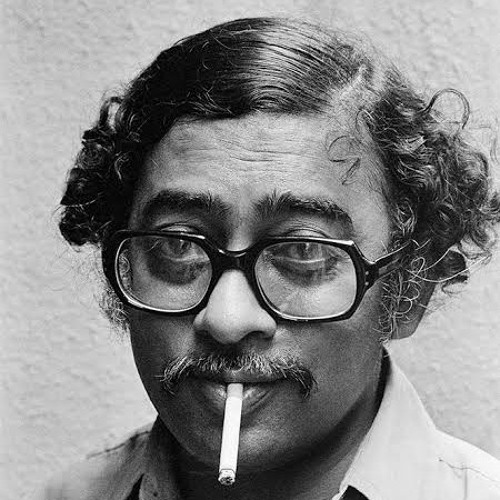
In honor of Vikram Smavat New Year, we present this work by one of modern India’s most evocative poets.
Dilip Chitre Indian 1938 – 2009
The house of my childhood stood empty On a grey hill All its furniture gone Except my grandmother’s grindstone And the brass figurines of her gods
After the death of all birds Bird-cries still fill the mind After the city’s erasure A blur still peoples the air In the colourless crack that comes before morning In a place where nobody can sing Words distribute their silence Among intricately clustered glyphs
My grandmother’s voice shivers on a bare branch I toddle around the empty house Spring and summer are both gone Leaving an elderly infant To explore the rooms of age
I invite the word walking its barren bark among the dogs. Everything is sad. If it crowns forehead and breasts with shining leaves a cold smile will blossom on the moon. Everything is sad. Later the sad dogs will eat the leaves and bark out words with glistening sounds. Everything is sad. A dog invites the hyacinths by the river. Everything is sad. With loony words, with doggerel arrows, with tiny toothy leaves the hyacinths wound the mute damsels. Everything is sad. The black grass grows with a quiet hum, but shiny edges caress the rhythm. Everything is sad. Behind the words the serpents laugh, deaf earth allows no sound. Everything is sad.
A heavenly bird barks in the sky to scare death away. The bird discovers it with with the flowers of night and seduces it with words of a dog and buries it with a cupful of earth. Everything is sad. I invite the earthbound word that cuts through life and mirrors and splits the echo of its image. Everything is sad. A play of words and barks.
Everything is sad. A javelin whooshes through the speeding wind in virile variations. Half a cup of earth silenced the music.
Everything is sad. Then the earth drank itself. Everything is sad. And when the time for death arrives place me before a mirror where I may see myself. Everything is sad.
We present this work in honor of the 45th anniversary of the poet’s death.
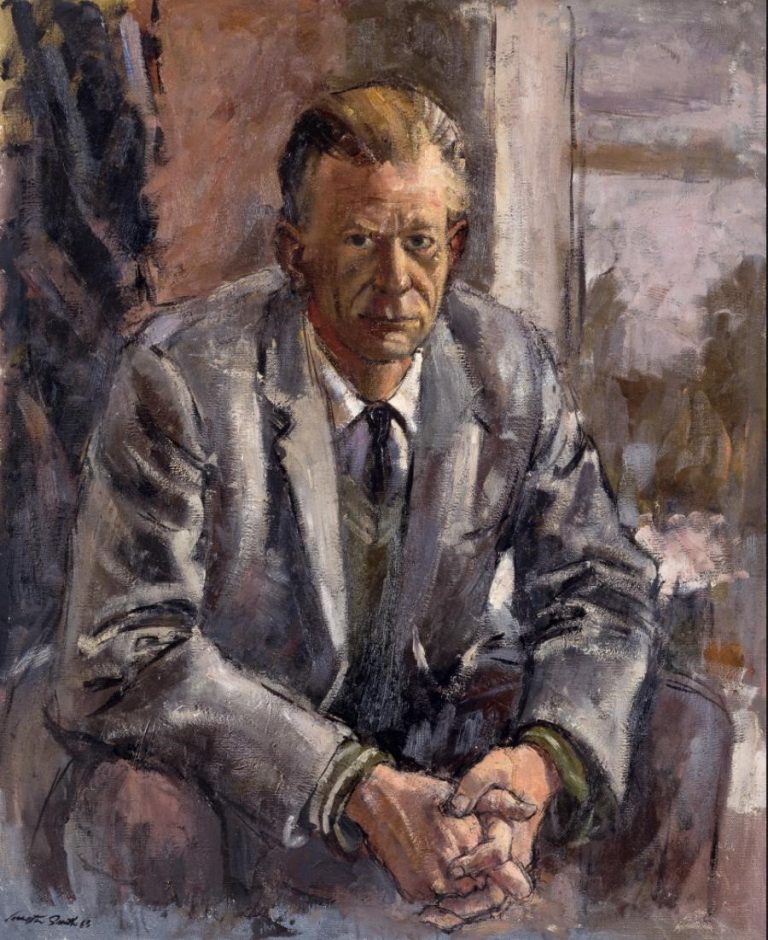
James McAuley Australian 1917 – 1976
My father and my mother never quarrelled. They were united in a kind of love As daily as the Sydney Morning Herald, Rather than like the eagle or the dove.
I never saw them casually touch, Or show a moment’s joy in one another. Why should this matter to me now so much? I think it bore more hardly on my mother,
Who had more generous feelings to express. My father had dammed up his Irish blood Against all drinking praying fecklessness, And stiffened into stone and creaking wood.
His lips would make a switching sound, as though Spontaneous impulse must be kept at bay. That it was mainly weakness I see now, But then my feelings curled back in dismay.
We present this work in honor of the 485th anniversary of the poet’s death.
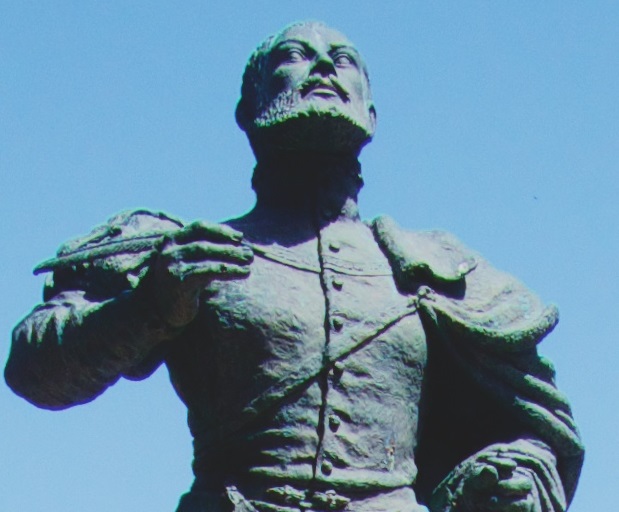
Garcilaso de la Vega Spanish 1501 – 1536
I Had I the sweet resounding lyre Whose voice could in a moment chain The howling wind’s ungoverned ire, And movement of the raging main; On savage hills the leopard rein,
II The lion’s fiery soul entrance, And lead along with golden tones The fascinated trees and stones In voluntary dance, Think not, think not, fair Flower of Gnide,
III It e’er should celebrate the scars, Dust raised, bloodshed, or laurels dyed Beneath the gonfalon of Mars; Or borne sublime on festal cars, The chiefs who to submission sank
IV The rebel German’s soul of soul, And forged the chains that now control The frenzy of the Frank. No, no! its harmonies should ring In vaunt of glories all thine own,
V A discord sometimes from the string Struck forth to make thy harshness known; The fingered chords should speak alone Of Beauty’s triumphs, Love’s alarms, And one who, made by thy disdain
VI Pale as a lily dipt in twain, Bewails thy fatal charms. Of that poor captive, too, contemned, I speak, his doom you might deploreIn Venus’ galliot-shell condemned
VII To strain for life the heavy oar. Through thee no longer as of yore He tames the unmanageable steed, With curb of gold his pride restrains, Or with pressed spurs and shaken reins
VIII Torments him into speed. Not now he wields for thy sweet sake The sword in his accomplished hand, Nor grapples like a poisonous snake, The wrestler on the yellow sand;
IX The old heroic harp his hand Consults not now, it can but kiss The amorous lute’s dissolving strings, Which murmur forth a thousand things Of banishment from bliss.
X Through thee, my dearest friend and best Grows harsh, importunate, and grave; Myself have been his port of rest From shipwreck and the yawning wave; Yet now so high his passions rave
XI Above lost reason ‘s conquered laws, That not the traveller ere he slays The asp, its sting, as he my face So dreads, or so abhors. In snows on rocks, sweet Flower of Gnide,
XII Thou wert not cradled, wert not born, She who has no fault beside Should ne’er be signalized for scorn; Else, tremble at the fate forlorn Of Anaxarete, who spurned
XIII The weeping Iphis from her gate, Who, scoffing long, relenting late, Was to a statue turned. Whilst yet soft pity she repelled, Whilst yet she steeled her heart in pride,
XIV From her friezed window she beheld Aghast, the lifeless suicide; Around his lily neck was tied What freed his spirit from her chains, And purchased with a few short sighs
XV For her immortal agonies, Imperishable pains. Then first she felt her bosom bleed With love and pity; vain distress! Oh what deep rigors must succeed
XVI This first sole touch of tenderness! Her eyes grow glazed and motionless, Nailed on his wavering corse, each bone Hardening in growth, invades her flesh, Which, late so rosy, warm, and fresh,
XVII Now stagnates into stone. From limb to limb the frost aspire, Her vitals curdle with the cold; The blood forgets its crimson fire, The veins that e’er its motion rolled;
XVIII Till now the virgin’s glorious mould Was wholly into marble changed, On which the Salaminians gazed, Less at the prodigy amazed, Than of the crime avenged.
XIX Then tempt not thou Fate’s angry arms, By cruel frown or icy taunt; But let thy perfect deeds and charms To poets’ harps, Divinest, grant Themes worthy their immortal vaunt;
XX Else must our weeping strings presume To celebrate in strains of woe, The justice of some signal blow That strikes thee to the tomb.



 Poets Corner