We present this work in honor of the poet’s 80th birthday.

Nigerian
1941 – 1995
There is a fire in me
Burns all night and day
Flares at Justice
Leaps in oppression
Glows warmly in beauty!
We present this work in honor of the poet’s 80th birthday.
There is a fire in me
Burns all night and day
Flares at Justice
Leaps in oppression
Glows warmly in beauty!

Waxen whores and young Anabaptists
cross paths beneath this window in the Tremol Hotel.
I sleep here.
I eat in this gold and hibiscus dining room.
Every night I dance with Zulita.
Every morning the man at the next table wishes me good day.
This is in the Tremol Hotel, beneath whose windows
the paths cross
of waxen whores and young Anabaptists.
But I have a soul as tender as marshmallows,
and my eyes flash on and off like the intermittent neon signs.
That’s why I love this hotel, this little rest, a locket of serenity.
Across the street, a sad sidewalk and a public clock drawn my eye each year,
and thereupon I invent a tenderness old and ripe.
In the Tremol Hotel, no one know me yet,
in spite of my familiarity with its doors and its swallows.
No one, maybe not even aviators,
can treasure as I do
these post-card memories.
We present this work in honor of the poet’s 75th birthday.

Rough, wet winds
parch my agonised face
as if salting the wound of
Bulhoek
Sharpeville
Soweto,
unbandage strip by strip
the dressings of Hope;
I wade my senses
through the mist;
I am still surviving
the traumas of my raped soil
alive and aware;
truths jump like a cat leaps for fish
at my mind;
I plod along
into the vortex
of a clear-borne dawn

The Moon’s the North Wind’s cooky.
He bites it, day by day,
Until there’s but a rim of scraps
That crumble all away.
The South Wind is a baker.
He kneads clouds in his den,
And bakes a crisp new moon that… greedy
North… Wind… eats… again!
In honor of German Unity Day, we present this work by one of Germany’s most celebratory poets.

Come, my soul, awake, ‘t is morning,
Day is dawning
O’er the earth, arise and pray;
Come, to Hime who made this splendour
Thou must render
All thy feeble pow’rs can pay.
Soul, thy incense also proffer;
Thou shouldst offer
Praise to Him, who from thy head
Kept afar the storms of sorrow,
And the morrow
Finds the night in peace hath fled.
Bid Him bless what thou art doing,
If pursuing
Some good aim; but if there lurks
Ill intent in thine endeavour,
May He ever
Thwart and turn thee from thy works.
From God’s glances shrink thou never,
Meet them ever;
Who submits him to His grace,
Finds that earth no sunshine knoweth
Such as gloweth
O’er his pathway all his days.
Wakenest thou again to sorrow,
Oh! then borrow
Strength from Him, whose sun-like might
On the mountain-summit tarries,
And yet carries
To the vales their mirth and light.
Pray that when thy life is closing,
Calm reposing
Thou mayst die, and not in pain;
That, the night of death departed,
Thou, glad-bearted,
Mayst behold the Sun again.
In honor of Gandhi Jayanti, we present this work by one of India’s most thoughtful poets.
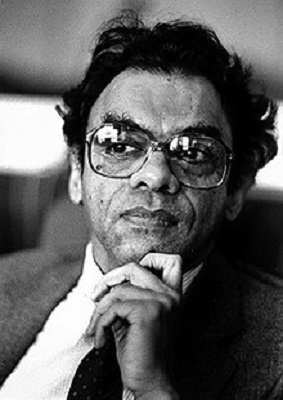
In Madurai,
city of temples and poets,
who sang of cities and temples,
every summer
a river dries to a trickle
in the sand,
baring the sand ribs,
straw and women’s hair
clogging the watergates
at the rusty bars
under the bridges with patches
of repair all over them
the wet stones glistening like sleepy
crocodiles, the dry ones
shaven water-buffaloes lounging in the sun
The poets only sang of the floods.
He was there for a day
when they had the floods.
People everywhere talked
of the inches rising,
of the precise number of cobbled steps
run over by the water, rising
on the bathing places,
and the way it carried off three village houses,
one pregnant woman
and a couple of cows
named Gopi and Brinda as usual.
The new poets still quoted
the old poets, but no one spoke
in verse
of the pregnant woman
drowned, with perhaps twins in her,
kicking at blank walls
even before birth.
He said:
the river has water enough
to be poetic
about only once a year
and then
it carries away
in the first half-hour
three village houses,
a couple of cows
named Gopi and Brinda
and one pregnant woman
expecting identical twins
with no moles on their bodies,
with different coloured diapers
to tell them apart.
We present this work in honor of China’s National Day.
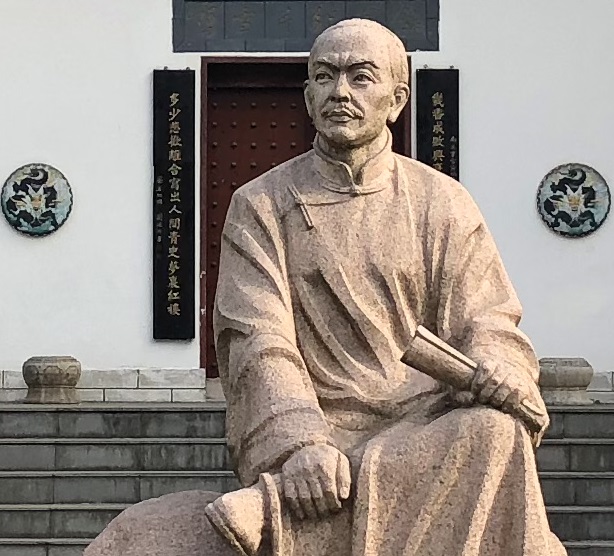
I gaze around in the west wind, sick at heart;
A sad season this of red smartweed and white reeds;
No sign is there of autumn by the bare fence round my plot.
Yet I dream of attenuated blooms in the frost.
My heart follows the wild geese back to the distant south,
Sitting lonely at dusk I hear pounding of washing blocks.
Who will pity me pining away for the yellow flowers?
On the Double Ninth Festival they will reappear.
We present this work in honor of the 130th anniversary of the poet’s death.

When ocean-clouds over inland hills
Sweep storming in late autumn brown,
And horror the sodden valley fills,
And the spire falls crashing in the town,
I muse upon my country’s ills—
The tempest bursting from the waste of Time
On the world’s fairest hope linked with man’s foulest crime.
Nature’s dark side is heeded now—
(Ah! optimist-cheer disheartened flown)—
A child may read the moody brow
Of yon black mountain lone.
With shouts the torrents down the gorges go,
And storms are formed behind the storm we feel:
The hemlock shakes in the rafter, the oak in the driving keel.

Alone, the wild goose refuses food and drink,
his calls searching for the flock.
Who feels compassion for that single shadow
vanishing in a thousand distant clouds?
You watch, even as it flies from sight,
its plaintive calls cutting through you.
The noisy crows ignore it:
the bickering, squabbling multitudes.
We present this work in honor of the poet’s 100th birthday.
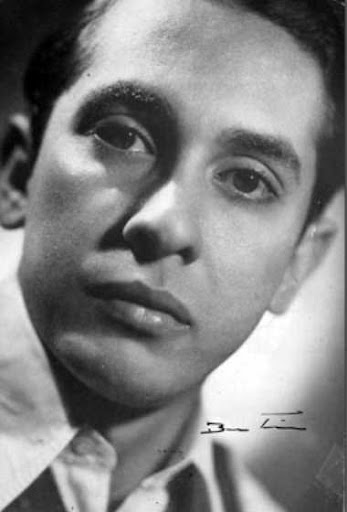
I will appoint things,
the sound heights that see play the wind,
the deep porches, screens closed shade and silence.
And the internal sacred,
the gloom that ply the dusty offices,
the wooden man, the night wood of my body when sleeping.
The poverty of the place,
and the dust where the footsteps of my father made a will,
the clear and decisive stone places,
bare shadow, always the same.
Not forgetting the piety of the fire,
in bad weather the distant home,
nor the joyful sacrament of rain,
the humble cup of the park.
Neither you wonderful wall,
noon and indigo skies and endless.
With the building of the summer look,
my love will remember the paths
to where they escape the greedy Sundays,
Mondays and return with bowed head.
I will appoint things, so slowly,
that when I lose the Paradise of the road,
and oblivion me turn into a dream,
I can call them suddenly with the dawn.
 Poets Corner