Kingdom of Rain

We present this work in honor of the South African holiday, Heritage Day.
09-24 Kozain
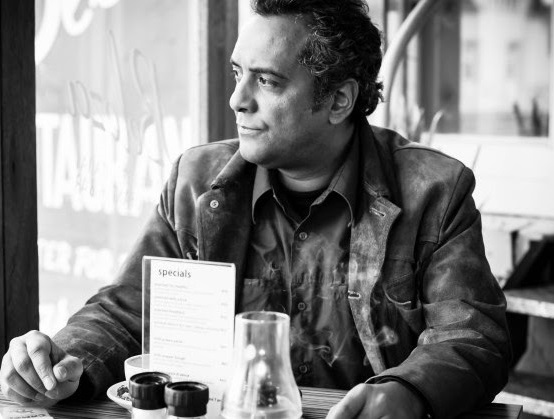
Rustum Kozain
South African
b. 1966

Somewhere in some dark decade
stands my father without work,
unknown to me and my brother
deep in the Paarl winter and a school holiday.
As the temperature drops, he,
my father, fixes a thermos of coffee,
buys some meat pies and we chug
up Du Toit’s Kloof Pass in his old 57 Ford,
where he wills the mountain – under cold cloud,
tan and blue rockface bright and wet with rain –
he wills these to open and let his children in,
even as he apologises –
my strict and angry fearsome father –
even as he apologises for his existence
then and there his whereabouts declared
to the warden or ranger in government
issue, ever-present around the next turn
or lazing in a jeep in the next lay-by:
“No sir, just driving. Yes, sir, my car.”

At the highest point of the pass
we stop to eat, and he, my father,
this strict and angry, fearsome father,
my father whom I love and his dark face,
he pries open a universe that strangely
he makes ours, that is no longer mine:
a wily old grey baboon, well-hid
against salt-and-pepper rock, eyeing us;
some impossibly magnificent bird of prey
rarely seen, racing to its nest as the weather turns.
And we are up there close I think
to my father’s God, the wind howling
and cloud rushing over us, awed
and small in that big car swaying in the gale.

Silence. A sudden still point
as the universe pauses, inhales
and gathers its grace.
Then, the silent, feather-like fall
of snowflakes as to us it grants
a brief bright kingdom
unseen by the ranger. And for some minutes
a car with three stunned occupants
rests on a mountain top outside the fast
ever-darkening turn of our growing up;
too brief to light the dark years
when I would learn:

how the bright, clear haunts of crab and trout
where we swim in summer
now in winter a brown rage over rock;
how mountain and pine and fynbos
or the mouse-drawn falcon of my veld;
the one last, mustard-dry koekemakranka
of summer that my father tosses through the air
to hit the ground and puff like a smoke bomb;
and once, also in summer somewhere,
a loquacious piet-my-vrou;
or the miraculous whirligig of waterhondjies
streaking across a tea-coloured pool
cradled by tan rock and fern-green fern;
my first and only owl,
large and mysterious
in a deep stand of pine,
big owl we never knew were there
until you swooped away, stirred by our voices;
how I too would be woken and learn
that this tree and bird, this world
the earth and this child’s home
already fell beyond his possessives.

And how, once north through the dry
Bushmanland with its black rock,
over a rise in the road, the sudden green
like the strange and familiar sibilants
in Keimoes and Kakamas.
And the rush of the guttural was the water
over rock at Augrabies.
The Garieb over rock at Augrabies,
at Augrabies where the boom swings down,
the gate-watch tight-lipped as a sermon:
“Die Kleurlingkant is vol”
as he waves through a car filled
with bronzed impatient white youth
laughing at us, at my father, my father
my silent father in whom a gaze grows distant
and the child who learns this pain past metaphor.
How like a baboon law and state
just turned its fuck-you arse on us
and ambled off.
A Breeze from the Land of Peace

We present this work in honor of the poet’s 95th birthday.

09-21 Moshiri
Fereydoon Moshiri
Persian
1926 – 2000


Indeed, if someday, someone asks me,
“During your time on Earth, what did you do?”
I’ll open my book of verse before him,
I’ll hold my head up, laughing and crying,
I’ll say that this seed is “newly sown,”
It needs time to come to fruition and bloom.

Under this vast cerulean sky,
With all my might, in very song,
I evoked the revered name of love.
Perhaps, by this weary voice,
An oblivious someone was awakened,
Somewhere in the four corners of this world.

I praised kindness,
I battled against wickedness.

I suffered the “wilting of a single stem of flower,”
I grieved the “death of a caged canary,”
And, for people’s sorrows,
I died a hundred times a night.

I’m not ashamed if at times,
When one ought to have screamed from deep within,
With Jesus-like patience,
I kept my silence.

If I were to arm myself with a sword,
To fight against the ignorant,
Blame me not for taking the road to love.
A sword in hand implies,
A man may meet his demise.

We were passing through a bleak road,
Where the darkness of ignorance was devastating!
My belief in humanity was my torch!
The sword was in devil’s hand!
Words were my only weapon on this battlefield!

Even if my poetry could not kindle a fire in anyone’s mind,
My heart, like firewood, burned from both sides.
Read a page from my book of verse, and you may say:
Can anyone burn worse than him?!

Many endless nights, I did not sleep,
To retell humanity’s message from man to man,
In the thorny land of animosity,
My words were a breeze from the land of peace.
But, perhaps, they should’ve been a mighty windstorm,
To uproot all this wickedness.

Our elders had advised us in the past:
“It is too late… too late…
The soul of the Earth is so dark,
Our strength, multiplied by hundred,
Is no more than a lonely cry in a desert so vast!”

“Another Noah, there must be,
Another great storm, too.”

“The world must be built anew,
New humans within it, too”

Yet, this patient, solitary man,
Carrying his backpack full of fervor,
Still strides along,
To draw a glimmer of light from the heart of this darkness,
He places the candle of a poem here and there,
He still hopes for the miracle that is man.


Translation by Franak Moshiri

The Last Day

We present this work in honor of the 50th anniversary of the poet’s death.

09-20 Seferis
Giorgos Seferis
Greek
1900 – 1971


The day was cloudy. No one could come to a decision;
a light wind was blowing. ‘Not a north-easter, the sirocco,’ someone said.
A few slender cypresses nailed to the slope, and, beyond, the sea
grey with shining pools.
The soldiers presented arms as it began to drizzle.
‘Not a north-easter, the sirocco,’ was the only decision heard.
And yet we knew that by the following dawn
nothing would be left to us, neither the woman drinking sleep at our side
nor the memory that we were once men,
nothing at all by the following dawn.

‘This wind reminds me of spring,’ said my friend
as she walked beside me gazing into the distance, ‘the spring
that came suddenly in the winter by the closed-in sea.
So unexpected. So many years have gone. How are we going to die?’

A funeral march meandered through the thin rain.

How does a man die? Strange no one’s thought about it.
And for those who thought about it, it was like a recollection from old chronicles
from the time of the Crusades or the battle of Salamis.
Yet death is something that happens: how does a man die?
Yet each of us earns his death, his own death, which belongs to no one else
and this game is life.

The light was fading from the clouded day, no one decided anything.
The following dawn nothing would be left to us, everything surrendered, even our hands,
and our women slaves at the springheads and our children in the quarries.
My friend, walking beside me, was singing a disjointed song:
‘In spring, in summer, slaves . . .’
One recalled old teachers who’d left us orphans.
A couple passed, talking:
‘I’m sick of the dusk, let’s go home,
let’s go home and turn on the light.’


Translation by Edmund Keeley

Pirate Story

We present this work in honor of International Talk Like a Pirate Day.

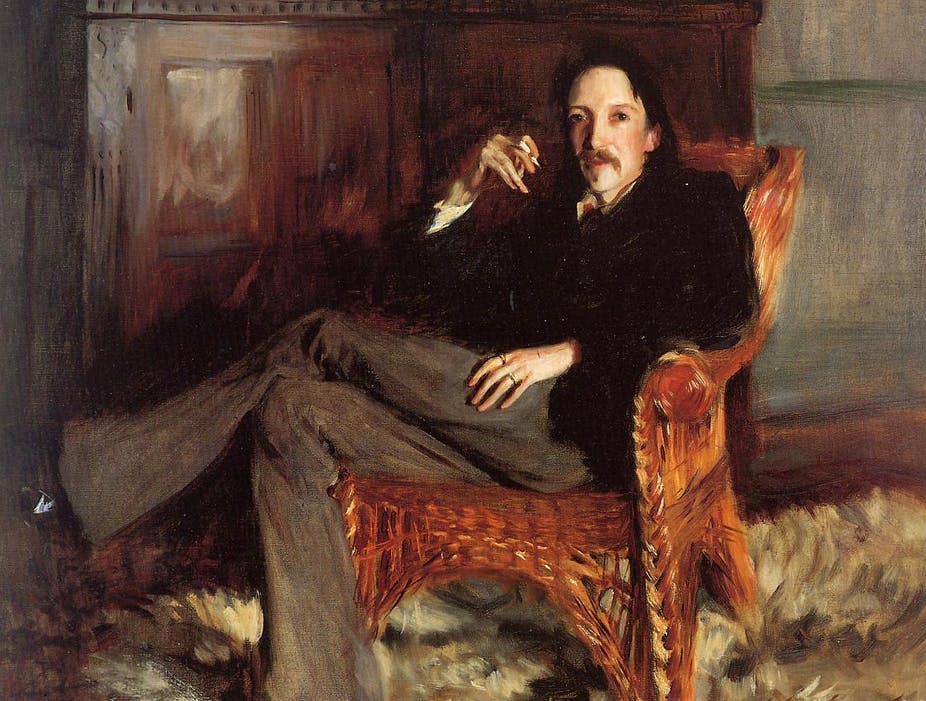
09-19 Stevenson
Robert Louis Stevenson
Scots
1850 – 1894


Three of us afloat in the meadow by the swing,
Three of us aboard in the basket on the lea.
Winds are in the air, they are blowing in the spring,
And waves are on the meadow like the waves there are at sea.

Where shall we adventure, to-day that we’re afloat,
Wary of the weather and steering by a star?
Shall it be to Africa, a-steering of the boat,
To Providence, or Babylon, or off to Malabar?

Hi! but here’s a squadron a-rowing on the sea—
Cattle on the meadow a-charging with a roar!
Quick, and we’ll escape them, they’re as mad as they can be,
The wicket is the harbour and the garden is the shore.

From Me to Death

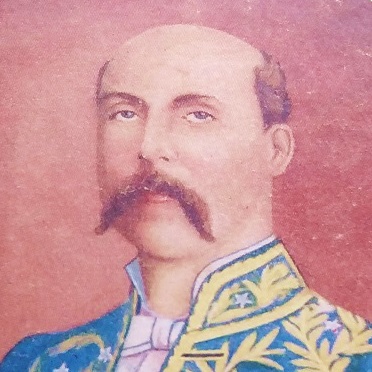
In honor of Chilean Independence Day, we present this work of independence by one of Chile’s great poets.

Guillermo Blest Gana
Chilean
1829 – 1904


I observed when you snatched viciously me away
my loved ones, and then I judged you:
relentless like misfortune, inexorable
like pain and cruel like the doubt…

But today that you, cold, mute, approach me
without hate and without love, neither sullen nor affable,
my spirit greets your majesty
of the unfathomable and your eternity.

I, without the impatience of the suicide,
neither the dread of the happy, nor the inert fear
of the criminal, I await your coming;

that equal to everyone’s luck is my fortune:
if nothing is expected of life,
something must be expected from death.

The Musical Ass

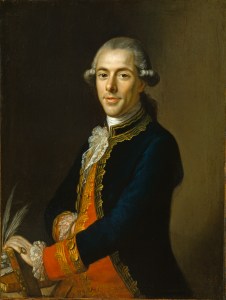
We present this work in honor of the 230th anniversary of the poet’s death.

Tomas de Iriarte y Oropesa
Spanish
1750 – 1791


The fable which I now present,
Occurred to me by accident:
And whether bad or excellent,
Is merely so by accident.

A stupid ass this morning went
Into a field by accident:
And cropped his food, and was content,
Until he spied by accident
A flute, which some oblivious gent
Had left behind by accident;
When, sniffling it with eager scent,
He breathed on it by accident,
And made the hollow instrument
Emit a sound by accident.
“Hurrah, hurrah!” exclaimed the brute,
“How cleverly I play the flute!”

A fool, in spite of nature’s bent,
May shine for once, by accident.

Pax Animae

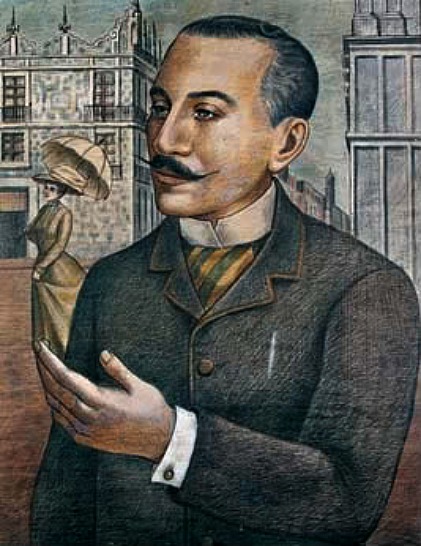
In honor of Mexican Independence Day, we present this work by one of Mexico’s most celebratory poets.

09-16 Najera
Manuel Gutiérrez Nájera
Mexican
1859 – 1895


Speak not a word of wild, blaspheming grief!
Be proud, be brave, though fallen in the strife,
And gaze, oh poet, with supreme disdain
On all the dark injustices of life!

Thou shalt not seek for constancy in love,
Nor aught eternal from frail mortals ask;
To rear sepuchral monuments on high
From all thy griefs, O artist, be thy task!
Chisel thy statues out of marble white,
Forms chaste of mien, though naked to the air;
And let speech slumber on their sculptured lips;
Let them stand deeply sad, yet silent there.

A name! A sounding echo on the air,
Fleeting and frail, its life a moment’s span!
A dreamer’s foolish idol! Name and fame!
This is the last sad vanity of man.
Why should we justice seek, or clemency.—
If our own comrades here deny our plea—
From the indifference, mute and icy-cold,
Of unknown men, to live in days to be?

Tardy compassion why should we implore
From strangers hid in shadows, one and all?
The echoes sleep within the darksome wood,
And no one, no one answers to our call.

The only consolation in this life
Is to remember happy hours and fair,
And lift our eyes on high to view the skies
When skies are blue or stars are shining there;

To flee the sea, and on the sleeping lake
Enjoy the water’s calm, the peaceful time;
To sleep—to dream—our wizard strong, the Dream,
Is a deceiver holy and sublime!

‘Tis true, alas, that in the honest breast
The fresh wound calls for vengeance and for strife;
But yet—forgive the evil they have done!
All suffer from the malady of life.

The very men who crown themselves with flowers
Are born to sorrow, and to perish, too.
If those you love the most betray your trust,
Forgive them, for they know not what they do!

Perhaps those instincts they inherited,
And they avenge unknowingly to-day
Races that gathered on their hapless heads
All griefs and hatreds ere they passed away.

Are thou perchance the judge—the sinless one?
Do justice and sweet mercy meet in thee?
Ah, who is not a fugitive, that bears
The weight of crimes unpunished, guiltily?

Who has not feigned to love, dared with false vows
Into a maiden’s holy soul to steal?
Who can be sure that he has never killed?
Who is the just man, that may justice deal?

Pity and pardon for all those that live!
So, full of love, in mild and gentle mood,
We shall be tender and compassionate,
And haply, haply, some time shall be good!

Friend, dost thou suffer? Seek thy sweetheart fair
In deathless beauty, free from pain and fear—
Live leaning on thy sadness, as of old
On young Cordelia leaned the wandering Lear.

See, far and farther ebbs the dying day!
How good it is to rest! In shade obscure
The woodland lulls us with a music soft;
Virgin the water is, the air is pure.

Weary, her eyes the light is closing now;
Sad murmors sound, and many a mournful sigh.
The night, descending, to the earth says, ‘Come!
‘Tis over. Go to sleep, and do not cry!’

To recollect—forgive—have loved, believed,
And had brief happiness our hearts to bless,
And soon, grown weary, to recline against
The snowy shoulder of forgetfulness!

To feel forevermore the tenderness
That warmed your youthful bosoms with its flame,
Receiving happiness, if it should come,
Like a glad visit from some beauteous dame;

To hold still hidden that which most we love—
Smiling forgiveness on our lips to keep—
Until at last, O earth! we come to thee
In the complete abandonment of sleep:

This ought to be the life of him who thinks
How transient all things are that meet his eyes,
And, wisely, stops before the wide expanse
Of falsehood’s ocean that around him lies.

Gather the flowers, while there are flowers to pluck;
Forgive the roses for their thorny guise!
Our sorrows also pass away and fly,
Flitting like swarms of dark-winged butterflies.

Love and forgive! Resist with courage strong
The wicked, the unjust, the cowardly.
The silent night, when it settles down,
Pensive and sad, is beautiful to see!

When sorrow dims my spirit, on the heights
I seek for calmness and for shining light.
Upon the frozen summits of my soul
Infinite pity spreads its hue of white.


Translated by Alice Stone Blackwell

The Leader and the Led

09-14 Osundare
Niyi Osundare
Nigerian
b. 1947


The Lion stakes his claim
To the leadership of the pack

But the Antelopes remember
The ferocious pounce of his paws

The hyena says the crown is made for him
But the Impalas shudder at his lethal appetite

The Giraffe craves a place in the front
But his eyes are too far from the ground

When the Zebra says it’s his right to lead
The pack points to the duplicity of his stripes

The Elephant trudges into the power tussle
But its colleagues dread his trampling feet

The warthog is too ugly
The rhino too riotous

And the pack thrashes around
Like a snake without a head

“Our need calls for a hybrid of habits”,
Proclaims the Forest Sage,

“A little bit of a Lion
A little bit of a Lamb

Tough like a tiger, compassionate like a doe
Transparent like a river, mysterious like a lake

A leader who knows how to follow
Followers mindful of their right to lead”

The Dentist and the Crocodile

We present this work in honor of the poet’s 105th birthday.

09-13 Dahl
Roald Dahl
Welsh
1916 – 1990


The crocodile, with cunning smile, sat in the dentist’s chair.
He said, “Right here and everywhere my teeth require repair.”
The dentist’s face was turning white. He quivered, quaked and shook.
He muttered, “I suppose I’m going to have to take a look.”
“I want you”, Crocodile declared, “to do the back ones first.
The molars at the very back are easily the worst.”
He opened wide his massive jaws. It was a fearsome sight—
At least three hundred pointed teeth, all sharp and shining white.
The dentist kept himself well clear. He stood two yards away.
He chose the longest probe he had to search out the decay.
“I said to do the back ones first!” the Crocodile called out.
“You’re much too far away, dear sir, to see what you’re about.
To do the back ones properly you’ve got to put your head
Deep down inside my great big mouth,” the grinning Crocky said.
The poor old dentist wrung his hands and, weeping in despair,
He cried, “No no! I see them all extremely well from here!”
Just then, in burst a lady, in her hands a golden chain.
She cried, “Oh Croc, you naughty boy, you’re playing tricks again!”
“Watch out!” the dentist shrieked and started climbing up the wall.
“He’s after me! He’s after you! He’s going to eat us all!”
“Don’t be a twit,” the lady said, and flashed a gorgeous smile.
“He’s harmless. He’s my little pet, my lovely crocodile.”