We present this work in honor of Galician Literature Day.
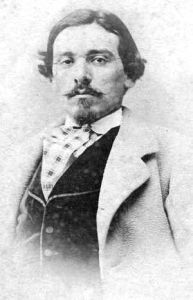
Eduardo Pondal Spanish 1835 – 1917
What unkempt beard!
What pallid colour!
What vestments soiled
By prolonged ailment!
Perhaps he is a scoundrel,
Perhaps he is a thief…
Dear mother, help me,
Help me for God’s sake;
Perhaps he is some impaired fellow
Who has taken leave of his senses.
O what a wild look
Full of dread and affliction!
I can not tell whether he frightens me,
Whether he moves me to compassion:
He resembles a pine tree thrashed by the wind,
He looks as if he were cast up by the sea of Niñons.
“Simple young girl:
Do not fear me,
I am not a tramp,
I am not a thief.
Daring hieroglyph
Of the dreamy bog
I carry on, and to myself a stranger
Abstruse enigma am I.
If I am crazy perhaps,
Love crazy am I.
That is why the good folk
Wherever I go
Say with admiration
Upon seeing my slovenliness,
‘He resembles a pine tree thrashed by the wind,
He looks as if he were cast up by the sea of Niñons.’
“The noble soul dared
Sleepless thoughts,
Turbulent ambition,
Ironhanded resolutions.
The turbid regiment
Of a thousand profound yearnings
Took away (as it did from Lucifer)
The original splendor.
Wise bards
Whom fateful law birthed
Dreamers and indolent
Partake of his nature.
That is why I do not
Know myself, no,
And the very trails
I tread exclaim:
‘He resembles a pine tree thrashed by the wind,
He looks as if he were cast up by the sea of Niñons.’”
When I think on the course I have run,
From my childhood itself to this day,
I tremble, and fain would I shun,
The remembrance its terrors array.
I marvel at struggles endured,
With a destiny frightful as mine,
At the strength for such efforts:—assured
Tho’ I am, ‘tis in vain to repine.
I have known this sad life thirty years,
And to me, thirty years it has been
Of suff’ring, of sorrow and tears,
Ev’ry day of its bondage I’ve seen.
But ‘tis nothing the past—or the pains,
Hitherto I have struggled to bear,
When I think, oh, my God! on the chains,
That I know I’m yet destined to wear.
Four neighborhoods recount the soul of the city. Utopian melody in four/four time; the birth cry of the disadvantaged, waking in an unattractive body. Reaction of libidinal chastity and the race of life’s routine. Outside these four neighborhoods there are only nests of straw to shelter the old eagles at the summit of the mountains, only bramble reeds to nourish the stray goats in the plains. Evasion assures the survival of chaos. (No plenitude escapes emptiness.) What will the hanging gardens say when their rotations are paralyzed, when water no longer flows under the norias, and under the grindstones of the mills.? Energy will be in a state of absolute grace. The wind yielding before the capricious pressure of the spheres. Blowing against the wishes of sailboats no longer.
II
The taste of the city is strange. A mix of kif, tobacco and mint. Only these drugs can braid the strands of insomnia. Time passes inexplicably. The wax of candles illuminating only their own circles. Logics crack under the weight of heretical slander. The militias of grammarians, of lawyers and illustrious engineers sharpen their theoretical arms. Ancestors in intensive care (revived, we imagine, with cooking gas mixed with fish manure).
III
At dawn the alleys and footpaths of the
Kingdom are deserted. The red of daybreak
No longer infects the ruins’
facades, receiving only a mute
Light from this red. (We fly over history
With red wings) Taken with fire, a thief
Has taught the phoenix to fill
The attics with onions, garlic, coconut,
Dry figs, black pepper
And raisins. (This dosage an
Effective remedy for unrequited
Love.) Reviving the burnt
ashes, the same thief demands
that the genealogical tree blessed by the
City drug itself only with its own
Unripe fruits.
Who dares hope for the withering of this
Tree? Who dares refute the crime
Of its secular age.
From closed to open,
The shutters of the door
Reaffirm the nostalgia of two beings separated.
Reaffirm that return is nothing but union.
Reaffirm that leaving is nothing but divorce.
We carry our dreams to the next sleep
Where the bed, inert and shivering with cold,
Hides its insomnia under the sheets.
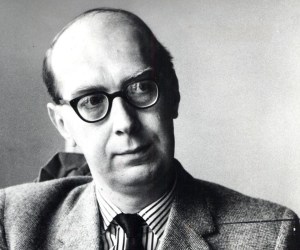
My mother, who hates thunder storms,
Holds up each summer day and shakes
It out suspiciously, lest swarms
Of grape-dark clouds are lurking there;
But when the August weather breaks
And rains begin, and brittle frost
Sharpens the bird-abandoned air,
Her worried summer look is lost,
And I her son, though summer-born
And summer-loving, none the less
Am easier when the leaves are gone
Too often summer days appear
Emblems of perfect happiness
I can’t confront: I must await
A time less bold, less rich, less clear:
An autumn more appropriate.
We present this work in honor of the poet’s 120th birthday.
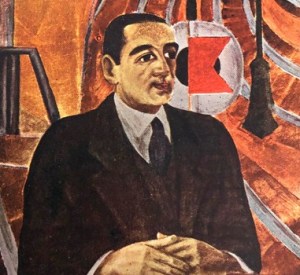
Manuel Maples Arce Mexican 1900 – 1981
I
To the workers of Mexico
Here’s my brutal
and multispirited
poem
to the new city.
O city all tense
with cables and with efforts,
all resounding
with motors and with wings.
Simultaneous explosion
of new theories,
a bit further
On the spatial plane
from Whitman and from Turner
and a bit closer
to Maples Arce.
The lungs of Russia
blow the wind
of social revolution toward us.
Literary zipper-robbers
will understand nothing
of this new sweaty
beauty of the century,
and the ripe
moons
that fell,
are this putrefaction
that reaches us
from intellectual sewage pipes.
Here’s my poem:
O city strong
and manifold,
made all of iron and of steel!
Docks. Inner harbors.
Cranes.
And the sexual fever
of industrial plants.
Metropolis:
Bodyguards of trams
that traverse the subversivist streets.
Window displays accost sidewalks,
and the sun, it sacks the avenues.
On the fringes of the tariffed
days of telephone posts
momentary landscapes file
through systems of elevator tubes.
Suddenly,
O the green
flash of her eyes!
Beneath the ingenuous shutters of the hour
pass red battalions.
The cannibal romanticism of Yankee music
has gone making its nests in the masts.
O international city!
Toward what remote meridian
cut that ocean liner?
I feel that everything moves away.
Aged dusks
float among the masonry of the scene.
Spectral trains that travel
toward far
away, panting with civilizations.
The upset multitude
sloshes musically in the streets.
And now, the bourgeois thieves, they will lie down to tremble
for the fortunes
that robbed the town,
but someone concealed beneath their dreams
the spiritual music staff of the explosive.
Here’s my poem:
Pennants of hurrahs into the wind,
inflamed heads of hair
and captive mornings in eyes.
O musical
city
all made of mechanical rhythms!
Tomorrow, perhaps,
only the vivid light of my verses
will illuminate the humiliated horizons.
II
This new profoundness of the scene
is a projection toward interior mirages.
The resounding crowd
today overruns the communal plazas
and the triumphal hurrahs
of obregonismo
reverberate from the façades to the sun.
O romantic girl
flare-up of gold!
Maybe between my hands
only living moments remained.
Landscapes dressed in yellow
fell asleep behind the windowpanes,
and the city, rapt,
has remained trembling in the rigging.
Applauses are that barrier.
—Oh God!
—Never fear, it’s the romantic wave of the multitudes.
Afterward, over the overflows of silence,
the Tarahumara night will go expanding.
Extinguish your shop windows.
Within the machinery of insomnia,
lust, are millions of eyes
that smear themselves on flesh.
A steel bird
has emprowed its aim toward a star
The port:
inflamed distances,
smoke of industrial plants.
Over clotheslines of music
her remembrance suns itself.
A transatlantic farewell leapt from the gunwale.
Motors sing
over the dead panorama.
III
The afternoon, riddled with windows,
floats on the wires of the telephone,
and between the
inverse crossings of the hour
the farewells of the machines hang. One morning his
wonderful youth
exploded
between my fingers,
and in the empty water
of the mirrors,
the forgotten faces were shipwrecked.
Oh the poor trade union city
scattered
with cheers and screams!
The workers
are red
and yellows.
There is a flourishing of pistols
after the springboard of the speeches,
and while the lungs
of the wind
are suppurated,
lost in the dark corridors of the music
some white bride leaves off.
IV
Among copses of silence
darkness licks the blood of dusk.
Fallen stars,
they are dead birds
in the dreamless water
of the mirror.
And the resounding
artilleries of the Atlantic
waned,
finally,
in the distance.
Over the rigging of autumn,
a nocturnal wind blows:
it is the wind of Russia,
of the great tragedies,
and the garden,
yellow,
founders in shadow.
Her recollection, sudden,
it crackles in muted interiors.
Her golden words
sift in my memory.
Rivers of blue shirts
overflow the floodgates of industrial plants,
and agitator trees
gesticulate their discourses on the sidewalk.
The strikers fling
insults and blows with stones,
and life, it is a tumultuous
conversion to the left.
On the edges of the pillow,
night, it is a precipice;
and insomnia,
it has remained rummaging in my brain.
From whom are those voices
that float in shadow?
And these trains that howl
to devastated horizons.
The soldiers
will spend this night in the inferno.
My God!
And from all this disaster
only a few white
pieces
of her recollection,
they have kept me within her hands.
V
The savage hordes of the night
lie down over the frightened city.
The bay,
flowering
with masts and moons,
spills
over the ingenuous
music score of her hands,
and the distant scream
of a steamboat,
toward the Nordic seas.
Goodbye
to the shipwrecked continent!
Between the wires of her name
remain feathers of birds.
Poor Celia Maria Dolores;
the scene is inside us.
Beneath hatchet blows of silence
iron architectures are devastated.
There are waves of blood and storm clouds of hatred.
Desolation.
The marijuana discourses
of legislators
splattered her remembrance with droppings,
but,
her tenderness has fallen headlong
on the multitudes of my soul.
Ocotlán
there, far away.
Voices.
Impacts peck about
trenches.
All night lust stoned
balconies under cover of a virginity.
Shrapnel
makes pieces of silence sound.
Resounding
and deserted streets,
they are rivers of shadow
that go into the sea,
and the sky, frayed,
is the new
flag
that flutters
over the city.
Noah’s flood is coming nearer!
The city is sinking little… by little
Birds flee
And water rises
On the steps of houses
Shops
The post office
Banks
Statues (of our immortal ancestors)
Temples
Wheat sacks
Maternity hospitals
The prison gate
The State House
The corridors of fortified barracks.
Birds are leaving
Slowly…
Slowly…
Geese on the water float
Furniture floats…
And a child’s toy…
And a gasp of a sad mother
Young women on the roofs waver!
Noah’s flood is coming nearer
Here are “the wise men” fleeing to the ship
The singers, the prince’s horseman, the usurers, the judge of judges
(And his Mamlouk…),
The sword bearer, the temple dancer
(She rejoiced when she picked up her wig…)
Tax collectors, weapons importers,
The princess’s lover in his radiant effeminate manner
Noah’s flood is coming nearer.
Here are the cowards fleeing to the ship
While I was…
The city’s youth were
Bridling the unruly horse of the water
Carrying water on both shoulders.
And racing time
They were building stone dams for themselves
Hoping to save the bosom of youth and civilization
Hoping to save…the homeland!
…the master of the Ark shouted at me—before the advent
Of quietude:
“Escape from a country…where the spirit is no longer!”
I said:
Blessed are those who ate its bread…
In days of prosperity
And turned their back on it
In times of adversity!
Glory to us, we who have stood
(God has obliterated our names!)
to defy destruction…
And seek refuge in a mountain that doesn’t die
(They call it ‘the people’!)
We refuse to flee…
And we refuse to wander!
My heart, knit with injuries
Cursed by commentaries
Is resting, now, on the city’s remains
A blossom bland
Still…
After it said “No” to the ship …
and loved the homeland
I do not like praises and honours
Nor did I fear disdain
I just stayed away.
My mind, clear water,
My body bound and tied
For three years in Chang’an.
I sing what I feel in songs
In straight words, undecorated.


 Poets Corner