Report

We present this work in honor of the Mexican holiday, Revolution Day.

Estrella del Valle
Mexican
b. 1971

Juliette Seven Five:
A country lies at the bottom of the maps,
between the nooks of lineups,
on the Mike Romeo One Nine frequency,
Ninety-two degrees west.
Seventeen degrees north.
With many of the seas that lash in its favor
or against it, depending on which side of the map you’re on.
A country with eternal depressions, blue mountains,
and incorporeal dreams above sea level.
A country with imperceptible people,
with kids, men, women who get lost when they are so young
who are at the intersection of the objective.
A country with thousands of migrants who try not to see each other while
they cross the line between sanity and the greatest country.
A country with a single chain of communication,
a single bank, a single army of God,
a single tiny family that manages the stage
of a tiny nation like its ambitions
and it has a king, albeit a little one.

And a huge royal chair.
Yes, yes, that’s huge.

Echo Seven One.
Over.

Translation by Toshiya Kamei

Because I Was Alone

We present this work in honor of the poet’s 100th birthday.

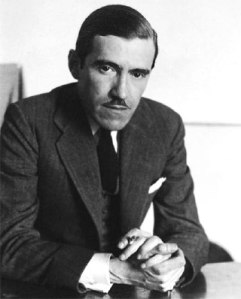
Rubén Bonifaz Nuño
Mexican
1923 – 2013


Because I was alone
I want to think of you as alone.
That you didn’t go, that you slept.
That you left me without leaving,
and that you needed me
to be able to be happy.

Anyway, I’ve recovered
my place in the world: you came back,
you became reachable

You give me back the time,
the pain, the ways, happiness,
the voice, the body, the soul,
life, and death, and what lives
beyond death.

You give me back everything
locked up in the appearance
of a woman, your self, the one I love.

You came back little by little, you woke
and weren’t surprised
to find me beside you.

And I could almost see the last step
of the secret you climbed
while sleeping, as you opened
—slowly, quietly—your eyes
inside my eyes that kept
the deathwatch over you.

Translation by Marlon L. Fick

Deer

We present this work in honor of the poet’s 105th birthday.

Juan José Arreola
Mexican
1918 – 2001


Outside space and time the deer wander, at once swift and languid, and no one knows whether their true place is in immobility or in movement; they combine the two in such a way that we are forced to place them in eternity.

Inert or dynamic, they keep changing the natural horizon, and they perfect our ideas of time, space, and the laws of moving bodies. Made expressly to solve the ancient paradox, they are at once Achilles and the tortoise, the bow and the arrow. They run without ever overtaking. They stop and something remains always outside them, galloping.

The deer cannot stand still, but moves forward like an apparition, whether it be among real trees or out of a grove in a legend: Saint Hubert’s stag bearing a cross between his antlers, or the doe that gives suck to Genevieve de Brabant. Wherever they are encountered, the male and the female compose the same fabulous pair.

Quarry without peer, all of us mean to take it, even if only with the eyes. And if Jan de Yespes tells us that what he pursued, when hunting, was so high, so high-he is not referring to the earthly dove, but to the deer: profound, unattainable, and in flight.

Translation by W.S. Merwin

the forgotten thought

We present this work in honor of the poet’s 105th birthday.

Alí Chumacero
Mexican
1918 – 2010


Think of your look and my oblivion
leaving the thought dilated
through your eyes, drowned
of his own living with your meaning;

then look at your oblivion that appears in me
Like a rose that gave space
slight prolongation and then out
the light itself that touches with its aroma,

is to give myself to you without further ado
that the fight of the body against the wind,
and with you dreaming of being so quiet

like a shipwrecked sea or vain attempt:
because since I can’t think of you,
I leave my thought forgotten in you.

Mexican Landscape

We present this work in honor of the poet’s 165th birthday.

Manuel José Othón
Mexican
1858 – 1906


Look at the landscape: vastness down below,
vastness on vastness in the sky. Between,
sapped at their footing by the wild ravine,
the high sierras rise, a distant show.

Look, where the grim half-burnt savannah broods:
gigantic block upon gigantic block,
torn by the earthquake from the living rock.
Never a track and never a path intrudes.

Adesolate and burning atmosphere,
studded with eagles, high, ethereal,
like nails on which unhurried hammers fall.

Tremendous darkness, and tremendous fear
and silence, interrupted if at all
by the triumphal gallop of the deer.

Translation by Timothy Ades

The Huntress

In honor of Cinco de Mayo, we present this work by one of the city of Puebla’s finest poets.

José Joaquín Pesado
Mexican
1801 – 1861


In hot career or ranging far and wide,
gentle huntress, you speed your onward way,
abandoning upon the gusty air
the tossing feather of your gallant hat.

Over brake and barrier, without pause,
panting, your impetuous courser bounds,
and across the arid torrents storms,
beating the boulders with his thudding hooves.

And before you, chaser of the wild,
the peopled mountain yields, and in its glass
the tarn exhibits you victorious.

The mob breaks forth in turbulent applause,
and to the sudden clamour of your name
the mighty forest, sonorous, made reply.

Translation by Samuel Beckett

from Death Without End

We present this work in honor of the 50th anniversary of the poet’s death.

José Gorostiza
Mexican
1901 – 1973


Filled with myself, walled up in my skin
by an inapprehensible god that is stifling me,
deceived perhaps
by his radiant atmosphere of light
that hides my drained
conscience,
my wings broken into splinters of air,
my listless groping through the mire;
filled with myself—gorged—I discover my essence
in the astonished image of water,
that is only an unwithering cascade,
a tumbling of angels fallen
of their own accord in pure delight,
that has nothing
but a whitened face
half sunken, already, like an agonized laugh
in the thin sheets of the cloud
and the mournful canticles of the sea—
more aftertaste of salt or cumulus whiteness
than lonely haste of foam pursued.
Nevertheless—oh paradox—constrained
by the rigor of the glass that clarifies it,
the water takes shape.
In the glass it sits, sinks deep and builds,
attains a bitter age of silences
and the graceful repose of a child smiling
in death, that deflowers
a beyond of disbanded
birds.
In the crystal snare that strangles it,
there, as in the water of a mirror,
it recognizes itself;
bound there, drop with drop,
the trope of foam withered in its throat.
What intense nakedness of water,
what water so strongly water,
is dreaming in its iridescent sphere,
already singing a thirst for rigid ice!
But what a provident glass—also—
that swells
like a star ripe with grain,
that flames in heroic promise
like a heart inhabited by happiness,
and that punctually yields up
to the water
a round transparent flower,
a missile eye that attains heights
and a window to luminous cries
over that smoldering liberty
oppressed by white fetters!

Translation by Rachel Benson

The Orange Trees

We present this work in honor of the 130th anniversary of the poet’s death.

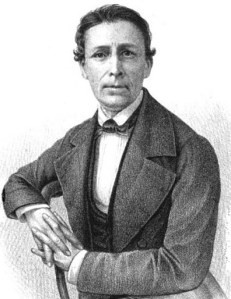
Ignacio Manuel Altamirano
Mexican
1834 – 1893


Come, embrace me, never remove
your arms from round my neck,
never hide your lovely face
from me,
don’t run away shyly.
Let our lips meet
In an endless, burning kiss.
Let the hours, slow and sweet,
Flow by just like this.
Doves fall silent
in green tamarind trees;
spikenards have exhausted
their supply of scents.
You’re growing languid;
your eyes close with fatigue,
and your bosom, sweet friend,
is trembling.
On the river bank
Everything droops and swoons;
The rosebays on the beach
Grow drowsy with the heat.
I’ll offer you repose
on this carpet of clover,
in the perfumed shade
of orange trees in bloom.

Translation by Enriqueta Carrington