When you were a kid we celebrated your graces and ups and downs; as a little man your ingenious good taste and daring. Now that you use your Cervantes, your French, your Péguy, everything you previously learned, heard and wrote in praise of tyranny, let us celebrate your crime.
We present this work in honor of the poet’s 105th birthday.
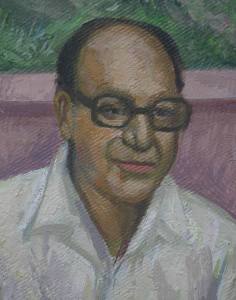
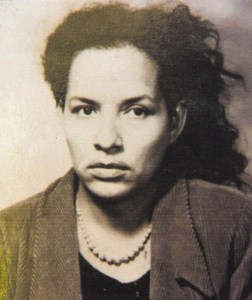
María Teresa Sánchez Nicaraguan 1918 – 1994
The children of God have no roof, and hungry, they wander like specters; and they are thirsty, and find no shade for their sun. The pride of small, despotic human gods
rages over them, who break the harmony of the wind with their noises.
Sow the deserts with wheat, sweeten the water of the seas; appease the wrath of God: he who has built the world can destroy it.
We present this work in honor of the Nicaraguan holiday, the Battle of San Jacinto.
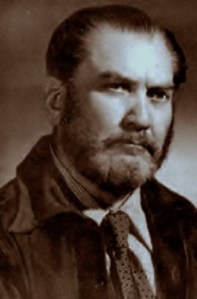
Salomón de la Selva Nicaraguan 1893 – 1959
You take the street on which the large church fronts And go some twenty blocks and up a hill And past the three-arch bridge until you come To Guadalupe, where the houses are No stately Spanish buildings, flat and lazy, As in the center of the town you see them — Heavy with some three centuries upon them, Accustomed to the sunlight and the earthquakes, To sudden dawns, long days and sudden sunsets, Half bored, you fancy, by these ways of nature — But little things, ugly almost, and frail, With low red roofs and flimsy rough-cut doors, A trifle better than an Indian hut, Not picturesque, just dreary commonplace — As commonplace and dreary as the flats Here, in your cities, where your poor folks live — And yet, you notice, glad the sun is shining, And glad a cooling wind begins to blow, Too glad, too purely, humbly glad to say it; And all the while afraid of the volcanoes, Holding their breath lest these should wake to crush them. Look through these doors and see the walls inside With holy pictures, saints and angels, there, Sold to my people, reverenced by them; Look through these doors and see the children, playing Or wrangling, just as children will elsewhere; Look through these doors and see the women, sewing, Setting their tables, doing the thousand things Hardly worth noticing, that women do Around their houses, meaning life to them. And if you listen you may hear them singing — Not anywhere are better songs than theirs. It’s nothing thrilling! Tourists do not care, And if you hire a common guide he’ll never Think of directing you, to see this mere Unhonored dailiness of people’s lives That is the soil the roots of beauty know.
Yet, if you wish to know my country — it’s there.
The old Cathedral that the Spaniards built, With hand-carved altars for two thousand saints; The ruined fortress where they say that Nelson, Who was a pirate then, lost his left eye Fighting a woman, all that tourists see — That’s what my country used to be, not now. The “dear” hotel, with palm-trees in the courtyard, And a self-playing piano drumming rags; The shops of German, English and French owners; The parlors of the ruling class, adorned With much the same bad taste as in New York — That’s not my country either! But the rows Of ugly little houses where men dwell, And women — all too busy living life To think of faking it — that is my country, My Nicaragua, mother of great poets. And when you see that, what? Just this: Despite Newspaper revolutions and so forth, The different climate and the different Traditions and the different grandfathers, My people are pretty much the same as yours: Folks with their worries and their hopes about them, Working for bread and for a something more That ever changes, hardly twice the same; Happy and sad, the very joy and sorrow Your people feel; at heart just plainly human: And that is worth the journey to find out.
When your eyes go to bed worn out with so much unending waiting when the smile once more comes back to us and vital still between us by that time over there beyond the old oak tree in that street which my dreams keep watch over today together we will remember we will talk of the smell of weariness we will retell each other the war.
So far, all over the world, women have survived it. Perhaps it was that our grandmothers were stoic or, that back then, they weren’t entitled to complain, still they reached old age wilting bodies but strong souls. Now, instead, dissertations are written on the subject. As early as thirty agony sets in, Foretelling the catastrophe.
A body is much more than the sum of its hormones. Menopausal or not a woman remains a woman, beyond the production of secretions or eggs. To miss a period does not imply the loss of syntax or coherence; it shouldn’t lead to hiding as a snail in a shell, nor provoke endless brooding. If depression sets in it won’t be a new occurrence, each menstrual cycle has come to us with tears and its load of irrational anger. There is no reason, then, to feel devalued: Get rid of tampons and sanitary napkins! Use them to light a bonfire in your garden! Be naked Dance the ritual of aging And survive Like so many Before you.
I had seen coconut trees and tamarinds and mangos the white sails drying in the sun the smoke of breakfast across the sky at dawn and fish jumping in the net and a girl in red who would go down to the shore and come up with a jug and pass behind a grove and appear and disappear and for a long time I could not sail without that image of the girl in red and the coconut trees and tamarinds and mangos that seemed to live only because she lived and the white sails were white only when she lay down in her red dress and the smoke was blue and the fish and the reflection of the fish were happy and for a long time I wanted to write a poem about that girl in red and couldn’t find the way to describe the strange things that fascinated me and when I told my friends they laughed but when I sailed away and returned I always passed the island of the girl in red until one day I entered the bay of her island and cast anchor and leaped to land and now I write these lines and throw them into the waves in a bottle because this is my story because I am gazing at coconut trees and tamarinds and mangos the white sails drying in the sun and the smoke of breakfast across the sky and time passes and we wait and wait and we grunt and she does not come with ears of corn the girl in red.
We present this work in honor of the poet’s 135th birthday.
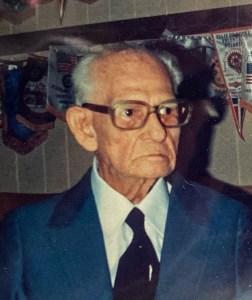
Salomón Ibarra Mayorga Nicaraguan 1887 – 1985
Hail to thee, Nicaragua! On thy land roareth the voice of the cannon no more, nor doeth the blood of brothers now stain thy glorious bicolor banner.
Let peace shine beautifully in thy sky, and nothing dimmeth thine immortal glory, for labor is thy well-earned laurel and honor is thy triumphal emblem, is thy triumphal emblem!
He wraps me in his fine beak and his wounding tongue.
Shakes me with the tireless beating of his wings. I pulse in his rushing heart. Sleep on the heights of his forest.
As a flower, I rest on the blinding brightness of his plumage.
My hummingbird hurls himself against the bell tower of my body. Rips petals from my flesh. Invents a song with the music of his unblinking eyes and the fierceness of his flight.
He flies through the garden.
Comes and goes among the flowered paths, searching for the abyss of bitter honey.
He dies and is reborn where frost falls, covering the world of my pollen.
When I woke up this morning I knew you were mortally wounded that I was too that our days were numbered our nights that someone had counted them without letting us know that more than ever I had to love you you had to love me. I inhaled your fragrance I watched you sleeping I ran the tips of my fingers over your skin remembered the friends whose quota was filled and are on the other side: the one who died a natural death the one who fell in combat the one they tortured in jail who kicked aside his death. I brushed your warmth with my lips: mortally wounded my love perhaps tomorrow and I loved you more than ever and you loved me as well.




 Poets Corner