In reality my loves are the strange box of a Polish doll The blonde’s eyes appearing fixed to her hips long after midnight the garret always singular to loosen a massive mane across her back, its strands thick and fine draping her otter-like chin Deliberately she’d peer out from the wall and nothing could be seen but the shadow of her breasts hidden beneath marmots of hair And lovely was her skin’s radiance at that unusual hour Her waist’s digressions easily discerned as bees through grass the window neither open nor closed What I saw, yellow like crystal, rose from sleepy thighs amassed in unseemly tourniquets Everything before me, a pale shimmer of hairs fanning delicately to reveal the pink or green skin I no longer know of hips a million centimeters from my gaze.
We present this work in honor of the 50th anniversary of the poet’s death.
Ogden Nash American 1902 – 1971
Belinda lived in a little white house, With a little black kitten and a little gray mouse, And a little yellow dog and a little red wagon, And a realio, trulio, little pet dragon.
Now the name of the little black kitten was Ink, And the little gray mouse, she called her Blink, And the little yellow dog was sharp as Mustard, But the dragon was a coward, and she called him Custard.
Custard the dragon had big sharp teeth, And spikes on top of him and scales underneath, Mouth like a fireplace, chimney for a nose, And realio, trulio, daggers on his toes.
Belinda was as brave as a barrel full of bears, And Ink and Blink chased lions down the stairs, Mustard was as brave as a tiger in a rage, But Custard cried for a nice safe cage.
Belinda tickled him, she tickled him unmerciful, Ink, Blink and Mustard, they rudely called him Percival, They all sat laughing in the little red wagon At the realio, trulio, cowardly dragon.
Belinda giggled till she shook the house, And Blink said Week! , which is giggling for a mouse, Ink and Mustard rudely asked his age, When Custard cried for a nice safe cage.
Suddenly, suddenly they heard a nasty sound, And Mustard growled, and they all looked around. Meowch! cried Ink, and Ooh! cried Belinda, For there was a pirate, climbing in the winda.
Pistol in his left hand, pistol in his right, And he held in his teeth a cutlass bright, His beard was black, one leg was wood; It was clear that the pirate meant no good.
Belinda paled, and she cried, Help! Help! But Mustard fled with a terrified yelp, Ink trickled down to the bottom of the household, And little mouse Blink strategically mouseholed.
But up jumped Custard, snorting like an engine, Clashed his tail like irons in a dungeon, With a clatter and a clank and a jangling squirm He went at the pirate like a robin at a worm.
The pirate gaped at Belinda’s dragon, And gulped some grog from his pocket flagon, He fired two bullets but they didn’t hit, And Custard gobbled him, every bit.
Belinda embraced him, Mustard licked him, No one mourned for his pirate victim Ink and Blink in glee did gyrate Around the dragon that ate the pyrate.
But presently up spoke little dog Mustard, I’d been twice as brave if I hadn’t been flustered. And up spoke Ink and up spoke Blink, We’d have been three times as brave, we think, And Custard said, I quite agree That everybody is braver than me.
Belinda still lives in her little white house, With her little black kitten and her little gray mouse, And her little yellow dog and her little red wagon, And her realio, trulio, little pet dragon.
Belinda is as brave as a barrel full of bears, And Ink and Blink chase lions down the stairs, Mustard is as brave as a tiger in a rage, But Custard keeps crying for a nice safe cage.
In honor of Shavout, we present this work by a poet with a unique Jewish perspective.
Dannie Abse Welsh 1923 – 2014
A kind of tune, heart in pilgrimage, yes, But reversed thunder as Herbert said? Herbert was right or we were April fools Last night when we beheld a sign. Behold! our Indian neighbor surely praying since every house across the road was dark except his own—his bedroom lit by volts, no doubt, of the thunderstruck eternal. Why else would those high surprising windows be raging steadily with sheet lightning?
Herbert, such prayer-power! You’d not credit these other, raving, more ancient gods summoned here by fervent invitation. How they swarmed in rudely, none so rampant as Agni—tawny hair, all gold teeth, long golden beard—whooping it up crazy in that attic crackling room, his crimson snorting horses and his dwarf golden car. These wild, drunken fire deities! Neighbour, we thought, oh cease praying do, for God’s sake.
And just in case called the bell-mad earthly fire brigade whose hoses curved and hushed so that the gods quit, disguised cleverly, of course, as tiny butterflies of fire or billowing out in cloaks of smoke and sacred steam. Now no more thunderstorms, only black debris of last night’s party. And so we godless ones give thanks to God For godless neighbors this April morning and for ladders more than rainbows, Herbert.
We present this work in honor of the 425th anniversary of the poet’s death.
Madeleine de l’Aubespine French 1546 – 1596
Let the earth cease its turning, suddenly, And the fixed stars travel the firmament; Let somber Saturn shine, benevolent; Jupiter rule the hosts beneath the sea;
Let Mars turn peaceful; Sun’s lush clarity Turn dim, then dark; grow motionless, outspent; Venus unloving; Mercury, content, Changeless; Moon square, no more a circle be;
Let fire weigh heavy and the earth weigh light; Water feel dry and warm; and let the flight Of fish go coursing, grazing through the sky,
Sooner than might another know my love. Born was I but to grant you all thereof; For you alone I live, and for you, die.
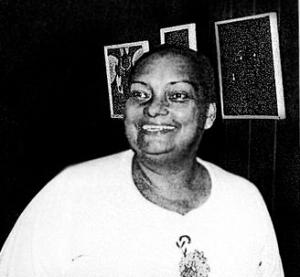
Ah sing a song a love fa meh contry small contry, big lite hope fa de po’, big headache fa de rich. Mo’ po’ dan rich in de worl mo’ peeple love fa meh contry
Fa meh contry name Nicaragua Fa meh peeple ah love dem all Black, Miskito, sumu, Rama, Mesitizo, So yuh see fa me, love poem complete ‘Cause ah love you too. Dat no mek me erase de moon An de star fran de firmament.
Only somehow wen ah remenba how yuh bussing yo ass to defend dis sunrise, an keep back de night fran fallin, ah know dat tomara we will have time fa walk unda de moon an stars. Dignify an free, sovereign Children a Sandino.
We present this work in honor of the 135th anniversary of the poet’s death.
Emily Dickinson American 1830 – 1886
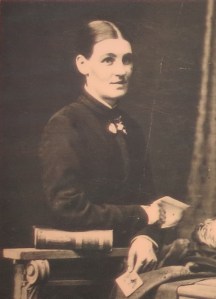
I went to heaven,— ‘Twas a small town, Lit with a ruby, Lathed with down. Stiller than the fields At the full dew, Beautiful as pictures No man drew. People like the moth, Of mechlin, frames, Duties of gossamer, And eider names. Almost contented I could be ‘Mong such unique Society.
Friends will quickly leave you Slight you and deceive you, Or will not believe you, If you have a wrong. Those who hurt will hate you, Enemies will slate you, And with crams disrate you, If you have a wrong. But if you are righted Those who coolly slighted Will be so delighted, Said so all along. But you then can show them That you would forego them, As too well you know them Since you’ve had a wrong. But your friends, God bless them I Take their hands and press them, You’ll cot have to guess them If you’ve had a wrong.
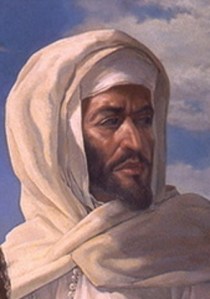
Friends, yesterday my beloved visited; it was the middle of Ramadan, and it was as if I had gathered honey and roses, but I was accused of breaking the fast— why shouldn’t I have done so, after so much solitude! Isn’t the sick person advised not to fast?
After the long drought, the storm makes its drum rumble; saber at the ready, lightning routs the defeated cavalry; while the wind, that intrepid rider, after a short rest is ready to rumble.
The downpour attacks, standard flying, victorious showers that have the torrents on the run, and wherever the eye turns my overflowing heart sees only green.
From the fields in bloom rises perfume— spring, a king with no rival, and restful shade have invented marvelous new clothes.
Joyous inventor, Spring dispenses his riches: roses, wild flowers, concerts of birdsong— in a festive garden where the bee gathers nectar among the roses.
Friends, yesterday my beloved visited; it was the middle of Ramadan, and it was as if I had gathered honey and roses, but I was accused of breaking the fast— why shouldn’t I have done so, after so much solitude! Isn’t the sick person advised not to fast?
Sad men frighten birds away. Down to their pensive foreheads descend the clouds and dissolve into an opaque drizzle. Flowers languish in the gardens of the sad men. Their precipices tempt death. Whereas the women that are within a woman are all born at the same time in front of the sad eyes of the sad men. The woman vessel again opens her belly and offers the sad man her redeeming milk. The woman child kisses with fervor his paternal, desolate widower’s hands. And she who walks silently in the house shines his black hours and patches up all the holes in his breast. There is another that lends to the sad man her two hands as if they were wings. But sad men are deaf to their music. There is no lonelier woman then, more sadly lonely, than she who wants to love a sad man.






 Poets Corner