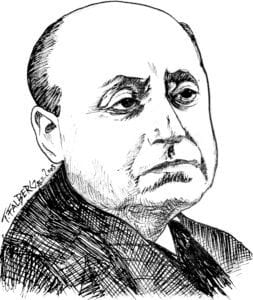
We present this work in honor of the poet’s 135th birthday.
Gottfried Benn German 1886 – 1956
The lone molar of a whore
who had died unknown
had a gold filling.
As if by silent agreement
the others had all fallen out.
But this one the morgue attendant knocked out
and pawned to go dancing.
For, he said,
only earth should return to earth.
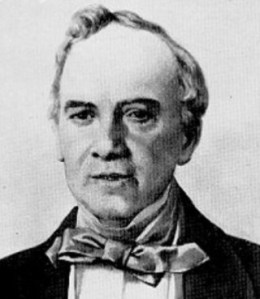
We present this work in honor of the poet’s 230th birthday.
Manuel Carpio Mexican 1791 – 1860
From a lofty peak how terrible to behold
The murky tempests far below,
And in the vast solitudes
The flash of the magnificent lightning.
Popocatepetel and Orizaba,
Crush the ground with their enormous massiveness,
And their cuspises of ice and lava
Are enveloped in a dense cloud.
There the deer, with antlered forhead,
Cross the woods with graceful bounds,
And among the pines and elevated cliffs
The waters dash in torrents.
How awe-inspiring are thine immense volcanoes
With their ponderous rocks ;
Among thy wooded mountains roar the tempest,
And their stormy summit is a crater.
Globules of fire are hurled from their mouths ;
Columns of smoke and grand flashes of fire ;
Burning sulphur, glowing sands,
Black pitch and calcined stones.
Then the foundation of the blue mountains
Trembles, and from this furnace
The rude and tremendous shaking
Extends for a hundred leagues around.
The great God of all nations said,
When distributing His treasures over the land,
“Let Mexico have silver and gold,”
And poured on thee His affluent gifts.
We present this work in honor of Dia de Andalucia.
Ibn Darraj Al-andalusi Arab Andalusian 958 – 1030
The wing of separation
Bore me away;
The fluttering heart was dismayed
And bore away her senses.
Had she but seen me,
When my soul was intent on speeding the journey by night,
When my sounding steps
Held converse with the demons of the desert—
When I wandered through the waste
In the shadows of night,
While the roar of the lion was heard
From his lair among the reeds—
When the brilliant Pleiades circled,
Like dark-eyed maidens in the green woods;
And the stars were borne round
Like wine-cups,
Filled by a fair maid
And served by a watchful attendant—
When the Milky Way
Was as the gray hairs of age
Upon the head of gloomy night;
And the ardor of my resolution,
And the piercer of darkness
Were equally terrible;
When the eyelids of the stars
Were closed for weariness—
Ah, then she had known
That fate itself obeyed my will
And that I was worthy of the favor of Ibn Aâ mir.
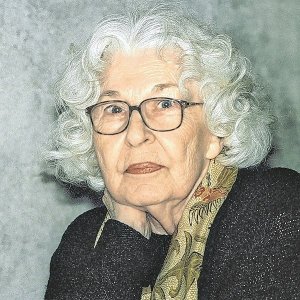
We present this work in honor of the poet’s 95th birthday.
Elisabeth Borchers German 1926 – 2013
Someone is silent
and you think he is speaking
and you answer
and speak well
and reveal yourself
layer by layer that you cannot
give you who is speaking
and it gets cold and colder
someone is silent
and you wait
for the silence
to all ends
and further
and the word does not carry
and you do not know
where the light is
the light and dark
someone is walking
and you think
he is walking well
and you follow him
and keep up with him
and do not go mad
someone is walking
and you think he is walking softly
on soft soles
and you pluck the softness
and leave the hard
and the ice crunches
and you say I can’t hear it
Once I thought that God has
A home near the clouds, full of glory—
Like a king has a castle in a children’s story.
With diamond bricks and gold the castle was made,
The base of its towers, ivory and crystal laid.
I thought that You sit on Your throne with pride.
While the Moon, a tiny glimmer on Your robe, rides.
The pattern of Your robe, the moonbeams draw.
A small jewel in Your crown, every star I saw.
Our sun was no more than a button on Your vest.
The sky, a small part of Your coat, so I guessed.
But no one has seen where You live or rest.
I thought that You did not want us to know.
I was so sad for this image of God here below.
My thoughts in prayer were out of fear, it’s true—
Of what a very angry God might do.
Prayer was like memorizing a lesson in school,
Reviewing geometry or math, without any rules.
Prayer was the punishment of a principal, who
Wanted answers to questions no one knew,
Or told you to form tenses of verbs no one used.
Then one night with my father, hand in hand,
We walked down a village road in our land.
There we saw a welcoming home.
I asked without waiting, “Whose is it, do you know?”
“It is God’s noble house,” my father replied.
“We can stay here awhile and pray inside.
We can pray here in quiet, beyond the sight of men,
We can make ourselves fresh and clean again.
We will talk with our conscience and learn what to do.”
“But does that angry God have a home here too?!”
To my question my father replied,
“Yes, God’s home is in our hearts, it is inside.
God’s house is covered with carpet soft and bright.
God is a mirror in our hearts full of light.
God is forgiving and hatred does not know. . .”
And suddenly I knew my love for this God would grow.
This familiar and kind God is mine, and will be—
A friend closer than myself to me.
Close to me as my very own life.
A good and an honored Friend
In Whom I delight.
We present this work in honor of the poet’s 130th birthday.
Mariano Brull Cuban 1891 – 1956
Just as soon as Mass is over,
Put our pious airs away;
And with luncheon in our baskets,
To the mountain! To the mountain!
To the mountain for the day!
Hark, the bells of glory ringing
From the belfries of the Spring!—
Sun and sky! — oh, what a blessing
After gloomy days, they bring!
How the water o’er the mill-wheel
Rumbles furious and fast,
Bursting through a thousand echoes
Until — there — ‘tis gone at last!
For the woods our hearts are hungry;
Every bird hears us reply;
Incense seems to sweep our bosoms—
To the mountain! To the mountain!
To the mountain, let us hie!
Every grotto holds a secret;
Every cleft its creed and rite;
On the slopes is scattered grandeur—
Hawthorn flowers and crags in sight!
On the peaks the wind is hymning,—
Heaven is nigh — the town, far down;
Ah, why should not human dwellings
All the free-world mountains crown?—
At the nightfall — with our baskets
Empty — to the town we haste;
All the mountains fill with shadows,—
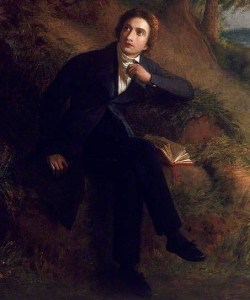
We present this work in honor of the 200th anniversary of the poet’s death.
John Keats English 1795 –1821
Bright star, would I were stedfast as thou art—
Not in lone splendour hung aloft the night
And watching, with eternal lids apart,
Like nature’s patient, sleepless Eremite,
The moving waters at their priestlike task
Of pure ablution round earth’s human shores,
Or gazing on the new soft-fallen mask
Of snow upon the mountains and the moors—
No—yet still stedfast, still unchangeable,
Pillow’d upon my fair love’s ripening breast,
To feel for ever its soft fall and swell,
Awake for ever in a sweet unrest,
Still, still to hear her tender-taken breath,
And so live ever—or else swoon to death.
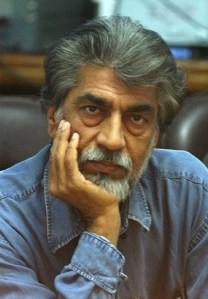
We present this work in honor of the poet’s 125th birthday.
Suryakant Tripathi Nirala Indian 1896 – 1961
On a vine in a lonely grove
Slept a fortune-filled Jasmine Blossom—
A pure, tender-bodied lass
Lost in dreams of love,
Eye closed, lax—in a leaf-bed
On a spring night;
In some far off land
Was the wind called Malaya
Who left this pining lover.
With grieving came the memory of sweet touch,
A memory of a moonlight-laved midnight,
A memory of his beloved’s trembling, tender form—
What then? The wind
Crossed lakes, rivers, groves,
Bush-creeper masses, deep mountain-woods,
Arrived where he had played
With the budding bloom.
She was sleeping,
How could she know of her lover’s coming?
The Nayak kissed her cheeks,
Cradel-like the vine-strand began to swing.
Even then she didn’t awaken,
Asked no pardon,
Wide slumber-curved eyes stayed shut,
Perhaps drunk with youth’s wine—
Who can say?
Brutal, the Nayak
Worked sheer barbarity—
With gusty blasts
Jerked the lovely, tender body around,
Crushed the round white cheeks;
The damsel started—
Turned a startled glance all around,
Spied her lover by her bed,
Smiled shyly—blossomed—
Having played the game of love
With the wooer.