Encounter

Elizaveta Polonskaya
Russian
1890 – 1969

Morning flew by in the usual way,
Up and down streets, it raced,
Unwinding the spring of an ongoing watch
That the night would wind up again.
A coat was fastened over the chest
With a clasp and a little chain,
Then a voice from the gut: “tayer yiddish kind,
Give to a beggar, Jewish daughter.”

From under her rags she studies me
With a tender, cunning old face,
A sentinel’s eye and a hookish nose,
And a black wig, parted smooth.

An ancient, yellowish hand
Grabs my sleeve, and the words
Of a language I don’t comprehend
Sound out, seizing my heart.

And there I stop, I cannot go on,
Though I know—I shouldn’t, I shouldn’t,
And drop a small coin in her open palm
And lift a thirsty heart to her face.

“Old woman, how did you, half-blind,
Pick me out among these strangers?
After all, I’m like them, the same as those—
Dull, alien, strange.”

“Daughter, dear, there are things about us
That no one can mistake.
Our girls have the saddest eyes,
And a slow languorous walk.

And they don’t laugh like the others—
Openly in their simplicity—
But beam behind clouds as the moon does,
Their sadness alive in their smiles.

Even if you lose your faith and kin,
A yid iz immer a yid!
And thus my blood sings in your veins,”
She says in her alien tongue.

That morning flew by in the usual way,
Up and down streets, it raced,
Unwinding the spring of an ongoing watch
That the night would wind up again.

Translation by Larissa Szporluk

Choose Life

We present this work in honor of the poet’s 125th birthday.

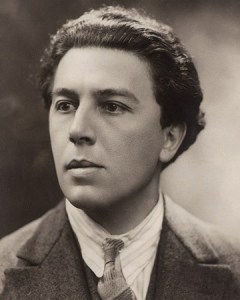
Andre Breton
French
1896 – 1966

Choose life instead of those prisms with no depth even if their colors are purer
Instead of this hour always hidden instead of these terrible vehicles of cold flame
Instead of these overripe stones
Choose this heart with its safety catch
Instead of that murmuring pool
And that white fabric singing in the air and the earth at the same time
Instead of that marriage blessing joining my forehead to total vanity’s
Choose life

Choose life with its conspiratorial sheets
Its scars from escapes
Choose life choose that rose window on my tomb
The life of being here nothing but being here
Where one voice says Are you there where another answers Are you there
I’m hardly here at all alas
And even when we might be making fun of what we kill
Choose life

Choose life choose life venerable Childhood
The ribbon coming out of a fakir
Resembles the playground slide of the world
Though the sun is only a shipwreck
Insofar as a woman’s body resembles it
You dream contemplating the whole length of its trajectory
Or only while closing your eyes on the adorable storm named your hand
Choose life

Choose life with its waiting rooms
When you know you’ll never be shown in
Choose life instead of those health spas
Where you’re served by drudges
Choose life unfavorable and long
When the books close again here on less gentle shelves
And when over there the weather would be better than better it would be free yes
Choose life

Choose life as the pit of scorn
With that head beautiful enough
Like the antidote to that perfection it summons and it fears
Life the makeup on God’s face
Life like a virgin passport
A little town like Pont-á-Mousson
And since everything’s already been said
Choose life instead

Translation by Zack Rogow and Bill Zavatsky

The Parakeets

We present this work in honor of the poet’s 70th birthday.

Alberto Blanco
Mexican
b. 1951

They talk all day
and when it starts to get dark
they lower their voices
to converse with their own shadows
and with the silence.

They are like everybody
—the parakeets—
all day chatter,
and at night bad dreams.

With their gold rings
on their clever faces,
brilliant feathers
and the heart restless
with speech…

They are like everybody,
—the parakeets—
the ones that talk best
have separate cages.

Translation by W.S. Merwin

The Dusky Swallows Will Return

We present this work in honor of the poet’s 185th birthday.

Gustavo Adolfo Bécquer
Spanish
1836 – 1870

The dusky swallows will return
To hang their nests beneath thy eaves,
And playing to their nestlings call
As once they called of old.

But those who checked their flight
To gaze upon the beauty and my joy,
Who learnt our names—Ah Love!
They—will return no more!

The twining honeysuckles once again
Shall scale thy garden walls;
And once again at eve, more beautiful,
Their flowers will unfold.

But those of yore, begemmed with dews
Whose drops we watched together
Tremble and fall like tears of bright day,
They—will return no more!

Once more within thine ears, the words
Of burning love shall sound,
And from its slumber deep, perchance
Thy heart will wake.

But spellbound, speechless, kneeling low,
As saints before their altars are adored,
As I have loved thee—oh! deceive thee not!
Thus shall none love thee more!

Translation by Mary A. Ward

Against Constancy

Earl of Rochester
English
1647 – 1680


Tell me no more of constancy,
The frivolous pretense
Of cold age, narrow jealousy,
Disease, and want of sense.

Let duller fools, on whom kind chance
Some easy heart has thrown,
Despairing higher to advance,
Be kind to one alone.

Old men and weak, whose idle flame
Their own defects discovers,
Since changing can but spread their shame,
Ought to be constant lovers.

But we, whose hearts do justly swell
With no vainglorious pride,
Who know how we in love excel,
Long to be often tried.

Then bring my bath, and strew my bed,
As each kind night returns;
I’ll change a mistress till I’m dead—
And fate change me to worms.

The Three Kingdoms of Nature

We present this work in honor of the 240th anniversary of the poet’s death.

Gotthold Ephraim Lessing
German
1729 – 1781

I sought, while drinking, to unfold
Why Nature’s kingdoms are threefold.
Both man and beast, they drink and love,
As each is gifted from above;
The dolphin, eagle, dog and flea,
In that they love and drink, agree.
In all that drink and love then, we
The first of these three kingdoms see.

The plants the second kingdom are,
But lower in creation far;
They do not love, but yet they drink,
When dripping clouds upon them sink;
Thus drinks the clover, thus the pine,
The aloe tree and branching vine,
In all that drink, but love not, we
The second of these kingdoms see.

The stony kingdom is the last,
Here diamonds with sand are classed;
No stone feels thirst, or soft desires,
No love, no draught its bosom fires.
In all that drink not, love not, we
The last of these three kingdoms see.
For without love, or wine, now own!
What wouldst thou be, oh Man? – A stone.

Translation by Alfred Bakersville

If Love is Chaste

We present this work in honor of the poet’s 400th birthday.

Sibylla Schwarz
German
1621 – 1638

If love is chaste, what bears adultery?
If love is good, and does no evil own,
How can its fire so many flames propone?
If love is joy, why’s it called cruelty?

Who love adores, sails on a lustful sea,
And lets himself into death’s net be sewn,
Which does not tear; he lives for sin alone,
Is stripped of virtue, worships vanity.

For life eternal totally he dies,
And sees his grief but when his grave he spies.
Whoever has been found in loving’s fit,

Let him hate love and flee it in all haste.
Does love taste sweet? Let him despise its taste.
Is love his bread? Let him feed dogs with it.

Translation by George C. Schoolfield

The Bride of Lazarus

Dulce Maria Loynaz
Cuban
1902 – 1997

You come to me at last, just as you were, with your ancient emotion and your unspoiled rose, Lazarus the straggler, a stranger to the fire of hope, forgetting disintegration even as it burned to dust, ashes, nothing more.

You return to me, in one piece and not even out of breath, with your great dream immune to the cold of the tomb, when already Martha and Mary, weary of waiting for miracles and plucking the leaves of twilight, have slowly descended the slope of all the Bethanies in silence.

You come, relying on no more hope than your own hope, no more miracle than your own miracle. Impatient and sure of finding me still yoked to the last kiss.

You come all flowers and new moon, quick to wrap me in your pent-up tides, in your stormy clouds, in your confused fragrances which I begin to recognize one by one.

You come still yourself, safe from time and distance, safe from silence, and bring me like a wedding gift the already-savored secret of death.

But here I am, a bride again, not knowing whether I rejoice or weep at your return, over the terrifying gift you give me, even over the joy which strikes me like a blow. I don’t know whether it is late or early to be glad. Truly, I don’t know; I no longer remember the color of your eyes.

Translation by Judith Kerman

Wolf

We present this work in honor of Losar.

Keki N. Daruwalla
Indian
b. 1937


Fire-lit
half silhouette and half myth
the wolf circles my past
treading the leaves into a bed
till he sleeps, black snout
on extended paws.
Black snout on sulphur body
he nudged his way
into my consciousness.
Prowler, wind-sniffer, throat-catcher,
his cries drew a ring
around my night;
a child’s night is a village
on the forest edge.
My mother said
his ears stand up
at the fall of dew
he can sense a shadow
move across a hedge
on a dark night;
he can sniff out
your approaching dreams;
there is nothing
that won’t be lit up
by the dark torch of his eyes.
The wolves have been slaughtered now.
A hedge of smoking gun-barrels
rings my daughter’s dreams.

On a Crimson Leaf

We present this work in honor of the poet’s 75th birthday.

Diana Bellessi
Argentine
b. 1946


Infinite mirror the waters of the night.
I listen to the call
of the first siriri-duck
migrating from the south.
Lilies in the still air intoxicate.
A crimson
leaf has fallen and floats on the river.
Might it be the one
that ha T’sui-p-‘in, prisoner in the women’s quarters,
wrote her poem on?
Sent forth to risk the river
in hopes someone in the world of men
may take it from the water.