Who are these people, impaled on sharp bamboo poles,
blood spurting from their bodies?
Marvels Ibn Battuta in the forests of Ma’bar.
So dark even by day,
or is the Sultan blind?
I catch a glimpse through his blind eyes
of a page of history,
flapping in the pale light of torches:
in this barbarous ritual,
who are these half-dead women and children,
their hands and feet ripped apart
one by one from their frail bodies?
Are they infidels or humans?
Who are these around me
that keep on drinking
despite the laws of sharia?
There is no one. There is nothing.
It’s all a bad dream.
None of this is happening today.
It was all a very long time ago—
the era of prehistoric beats of prey:
I am not a witness to it… Sultan,
allow me to leave;
it is time for my prayers.
The street is empty
as a monk’s memory,
and faces explode in the flames
like acorns—
and the dead crowd the horizon
and doorways.
No vein can bleed
more than it already has,
no scream will rise
higher than it’s already risen.
We will not leave!
Everyone outside is waiting
for the trucks and the cars
loaded with honey and hostages.
We will not leave!
The shields of light are breaking apart
before the rout and the siege;
outside, everyone wants us to leave.
But we will not leave!
Ivory white brides
behind their veils
slowly walk in captivity’s glare, waiting,
and everyone outside wants us to leave,
but we will not leave!
The big guns pound the jujube groves,
destroying the dreams of the violets,
extinguishing bread, killing the salt,
unleashing thirst
and parching lips and souls.
And everyone outside is saying:
“What are we waiting for?
Warmth we’re denied,
the air itself has been seized!
Why aren’t we leaving?”
Masks fill the pulpits and brothels,
the places of ablution.
Masks cross-eyed with utter amazement;
they do not believe what is now so clear,
and fall, astonished,
writhing like worms, or tongues.
We will not leave!
Are we in the inside only to leave?
Leaving is just for the masks,
for pulpits and conventions.
Leaving is just
for the siege-that-comes-from-within,
the siege that comes from the Bedouin’s loins,
the siege of the brethren
tarnished by the taste of the blade
and the stink of crows.
We will not leave!
Outside they’re blocking the exits
and offering their blessings to the impostor,
praying, petitioning
Almighty God for our deaths.
The art of losing isn’t hard to master;
so many things seem filled with the intent
to be lost that their loss is no disaster,
Lose something every day. Accept the fluster
of lost door keys, the hour badly spent.
The art of losing isn’t hard to master.
Then practice losing farther, losing faster:
places, and names, and where it was you meant
to travel. None of these will bring disaster.
I lost my mother’s watch. And look! my last, or
next-to-last, of three loved houses went.
The art of losing isn’t hard to master.
I lost two cities, lovely ones. And, vaster,
some realms I owned, two rivers, a continent.
I miss them, but it wasn’t a disaster.
– Even losing you (the joking voice, a gesture
I love) I shan’t have lied. It’s evident
the art of losing’s not too hard to master
though it may look like (Write it!) like disaster.
The most beautiful thing I leave is the light of the sun,
second are the shining stars and the face of the moon,
and cucumbers, and apples, and pears too.
A forge burns in my heart.
I am redder than dawn,
Deeper than seaweed,
More distant than gulls,
More hollow than wells.
But I only give birth
To seeds and to shells.
My tongue becomes tangled in words:
I no longer speak white,
Nor utter black,
Nor whisper gray of a wind-worn cliff,
Barely do I glimpse a swallow,
A shadow’s brief glimmer,
Or guess at an iris.
Where are the words,
The undying fire,
The final poem?
The source of life?
We present this work in honor of the 80th anniversary of the poet’s death.
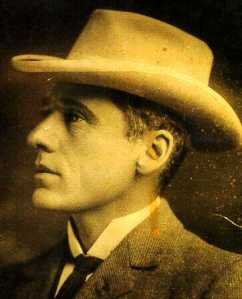
Banjo Paterson Australian 1864 – 1941
There was movement at the station, for the word had passed around
That the colt from old Regret had got away,
And had joined the wild bush horses – he was worth a thousand pound,
So all the cracks had gathered to the fray.
All the tried and noted riders from the stations near and far
Had mustered at the homestead overnight,
For the bushmen love hard riding where the wild bush horses are,
And the stock-horse snuffs the battle with delight.
There was Harrison, who made his pile when Pardon won the cup,
The old man with his hair as white as snow;
But few could ride beside him when his blood was fairly up-
He would go wherever horse and man could go.
And Clancy of the Overflow came down to lend a hand,
No better horseman ever held the reins;
For never horse could throw him while the saddle girths would stand,
He learnt to ride while droving on the plains.
And one was there, a stripling on a small and weedy beast,
He was something like a racehorse undersized,
With a touch of Timor pony – three parts thoroughbred at least –
And such as are by mountain horsemen prized.
He was hard and tough and wiry – just the sort that won’t say die –
There was courage in his quick impatient tread;
And he bore the badge of gameness in his bright and fiery eye,
And the proud and lofty carriage of his head.
But so slight and weedy, one would doubt his power to stay,
And the old man said, “That horse will never do
For a long and tiring gallop-lad, you’d better stop away,
Those hills are far too rough for such as you.”
So he waited sad and wistful – only Clancy stood his friend –
“I think we ought to let him come,” he said;
“I warrant he’ll be with us when he’s wanted at the end,
For both his horse and he are mountain bred.”
“He hails from Snowy River, up by Kosciusko’s side,
Where the hills are twice as steep and twice as rough,
Where a horse’s hoofs strike firelight from the flint stones every stride,
The man that holds his own is good enough.
And the Snowy River riders on the mountains make their home,
Where the river runs those giant hills between;
I have seen full many horsemen since I first commenced to roam,
But nowhere yet such horsemen have I seen.”
So he went – they found the horses by the big mimosa clump –
They raced away towards the mountain’s brow,
And the old man gave his orders, “Boys, go at them from the jump,
No use to try for fancy riding now.
And, Clancy, you must wheel them, try and wheel them to the right.
Ride boldly, lad, and never fear the spills,
For never yet was rider that could keep the mob in sight,
If once they gain the shelter of those hills.”
So Clancy rode to wheel them – he was racing on the wing
Where the best and boldest riders take their place,
And he raced his stockhorse past them, and he made the ranges ring
With stockwhip, as he met them face to face.
Then they halted for a moment, while he swung the dreaded lash,
But they saw their well-loved mountain full in view,
And they charged beneath the stockwhip with a sharp and sudden dash,
And off into the mountain scrub they flew.
Then fast the horsemen followed, where the gorges deep and black
Resounded to the thunder of their tread,
And the stockwhips woke the echoes, and they fiercely answered back
From cliffs and crags that beetled overhead.
And upward, ever upward, the wild horses held their sway,
Were mountain ash and kurrajong grew wide;
And the old man muttered fiercely, “We may bid the mob good day,
No man can hold them down the other side.”
When they reached the mountain’s summit, even Clancy took a pull,
It well might make the boldest hold their breath,
The wild hop scrub grew thickly, and the hidden ground was full
Of wombat holes, and any slip was death.
But the man from Snowy River let the pony have his head,
And he swung his stockwhip round and gave a cheer,
And he raced him down the mountain like a torrent down its bed,
While the others stood and watched in very fear.
He sent the flint stones flying, but the pony kept his feet,
He cleared the fallen timbers in his stride,
And the man from Snowy River never shifted in his seat –
It was grand to see that mountain horseman ride.
Through the stringybarks and saplings, on the rough and broken ground,
Down the hillside at a racing pace he went;
And he never drew the bridle till he landed safe and sound,
At the bottom of that terrible descent.
He was right among the horses as they climbed the further hill
And the watchers on the mountain standing mute,
Saw him ply the stockwhip fiercely, he was right among them still,
As he raced across the clearing in pursuit.
Then they lost him for a moment, where two mountain gullies met
In the ranges, but a final glimpse reveals
On a dim and distant hillside the wild horses racing yet,
With the man from Snowy River at their heels.
And he ran them single-handed till their sides were white with foam.
He followed like a bloodhound in their track,
Till they halted cowed and beaten, then he turned their heads for home,
And alone and unassisted brought them back.
But his hardy mountain pony he could scarcely raise a trot,
He was blood from hip to shoulder from the spur;
But his pluck was still undaunted, and his courage fiery hot,
For never yet was mountain horse a cur.
And down by Kosciusko, where the pine-clad ridges raise
Their torn and rugged battlements on high,
Where the air is clear as crystal, and the white stars fairly blaze
At midnight in the cold and frosty sky,
And where around The Overflow the reed beds sweep and sway
To the breezes, and the rolling plains are wide,
The man from Snowy River is a household word today,
And the stockmen tell the story of his ride.
Now is the time,
To climb up the mountain,
And reason against habit,
Now is the time.
Now is the time
To review the barren soil of nature,
Ruined by the winds of tyranny,
Now is the time.
Now is the time,
To commence the litany of hope,
Now is the time.
Now is the time,
To disentangle vilification,
That afflicts the planet of humanity apart,
Now is the time.
Now is the time,
To vomit the remains of fascism,
Back to the bucket of imperialism,
Now is the time.
Now is the time,
To give me roses,
Not to keep them,
For my grave to come,
Give them to me,
While my heart beats,
Give them today,
While my heart yearns for jubilee,
Now is the time.
Now is the time,
To treasure the thorns of slavery,
Spear them for my grave,
Keep them for the day to come,
Where my struggling body,
Will struggle no more,
Neither roses nor thorns,
Would affect it at rest,
Now is the time.
Now is the time,
To edify authentic action,
Against pre-conceived notions of prejudice,
Now is the time.
Now is the time,
To blot out pillars of Nazism,
Now is the time.
Now is the time,
To violate the eleventh commandment,
For today’s pain is tomorrow’s imminent comfort,
Now is the time,
Yes it is the time.
We present this work in honor of the 125th anniversary of the poet’s death.
Lady Jane Wilde Irish 1821 – 1896
He stands alone in the lordly hall
He, with the high, pale brow;
But never a one at the festival
Was half so great, I trow.
They kiss the hand, and they bend the knee,
Slaves to an earthly king!
But the heir of a loftier dynasty
May scorn that courtly ring.
They press, with false and flattering words,
Around the blood‐bought throne;
But the homage never yet won by swords
Is his—the Anointed One!
His sway over every nation
Extendeth from zone to zone;
He reigns as a god o’er creation
The universe is his own.
No star on his breast is beaming,
But the light of his flashing eye
Reveals, in its haughtier gleaming,
The conscious majesty.
For the Poet’s crown is the godlike brow
Away with that golden thing!
Your fealty was never yet due till now
We present this work in honor of the poet’s 90th birthday.
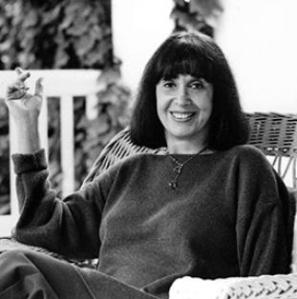
Judith Viorst American b. 1931
Mother doesn’t want a dog.
Mother says they smell,
And never sit when you say sit,
Or even when you yell.
And when you come home late at night
And there is ice and snow,
You have to go back out because
The dumb dog has to go.
Mother doesn’t want a dog.
Mother says they shed,
And always let the strangers in
And bark at friends instead,
And do disgraceful things on rugs,
And track mud on the floor,
And flop upon your bed at night
And snore their doggy snore.
Mother doesn’t want a dog.
She’s making a mistake.
Because, more than a dog, I think
She will not want this snake.
We present this work in honor of the 40th anniversary of the poet’s death.
Lourdes Casal Cuban 1938 – 1981
(for Salvador Ocasio)
Torn coat
dusty shoes
thin white hair
Strange gentleman’s stance
I think: This old man has a Unamuno head.
Trenches rather than furrows
line his olive face.
He speaks haltingly.
Moves his hands slowly.
Sixteen years, he says,
Bridgeport and sixteen years of his life.
Sixteen years without sun
for these colourless trousers
and this bitter weariness
that give his smile a steel hue.

 Poets Corner