There used to be fairies in Germany—
I know, for I’ve seen them there
In a great cool wood where the tall trees stood
With their heads high up in the air;
They scrambled about in the forest
And nobody seemed to mind;
They were dear little things (tho’ they didn’t have wings)
And they smiled and their eyes were kind.
What, and oh what were they doing
To let things like this?
How could it be? And didn’t they see
That folk were going amiss?
Were they too busy playing,
Or can they perhaps have slept,
That never they heard an ominous word
That stealthily crept and crept?
There used to be fairies in Germany—
The children will look for them still;
They will search all about till the sunlight slips out
And the trees stand frowning and chill.
“The flowers,” they will say, “have all vanished,
And where can the fairies be fled
That played in the fern?”—The flowers will return,
But I fear that the fairies are dead.
When I think on the course I have run,
From my childhood itself to this day,
I tremble, and fain would I shun,
The remembrance its terrors array.
I marvel at struggles endured,
With a destiny frightful as mine,
At the strength for such efforts:—assured
Tho’ I am, ‘tis in vain to repine.
I have known this sad life thirty years,
And to me, thirty years it has been
Of suff’ring, of sorrow and tears,
Ev’ry day of its bondage I’ve seen.
But ‘tis nothing the past—or the pains,
Hitherto I have struggled to bear,
When I think, oh, my God! on the chains,
That I know I’m yet destined to wear.
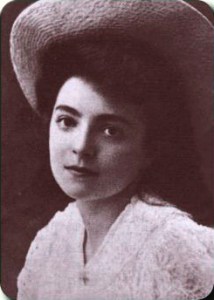
We present this work in honor of the 50th anniversary of the poet’s death.
Nelly Sachs German 1891 – 1970
If only I knew,
what your last look rested on.
Was it a stone that had already drunk
many last looks, until they fell in blindness
on the blind?
Or was it dirt,
earth enough to fill a shoe,
and already turned black
from so many good-byes
and from causing so much death?
Or was it your last road,
That brought you the farewell from all roads
You had walked on?
A puddle, a piece of mirroring metal,
the belt buckle of your enemy, perhaps,
or any other small fortune-teller
of heaven?
Or did this Earth, that doesn’t allow
anyone to depart from here unloved
send a bird-sign through the air,
reminding your soul so that it flinched
in its body burned with anguish?
Four neighborhoods recount the soul of the city. Utopian melody in four/four time; the birth cry of the disadvantaged, waking in an unattractive body. Reaction of libidinal chastity and the race of life’s routine. Outside these four neighborhoods there are only nests of straw to shelter the old eagles at the summit of the mountains, only bramble reeds to nourish the stray goats in the plains. Evasion assures the survival of chaos. (No plenitude escapes emptiness.) What will the hanging gardens say when their rotations are paralyzed, when water no longer flows under the norias, and under the grindstones of the mills.? Energy will be in a state of absolute grace. The wind yielding before the capricious pressure of the spheres. Blowing against the wishes of sailboats no longer.
II
The taste of the city is strange. A mix of kif, tobacco and mint. Only these drugs can braid the strands of insomnia. Time passes inexplicably. The wax of candles illuminating only their own circles. Logics crack under the weight of heretical slander. The militias of grammarians, of lawyers and illustrious engineers sharpen their theoretical arms. Ancestors in intensive care (revived, we imagine, with cooking gas mixed with fish manure).
III
At dawn the alleys and footpaths of the
Kingdom are deserted. The red of daybreak
No longer infects the ruins’
facades, receiving only a mute
Light from this red. (We fly over history
With red wings) Taken with fire, a thief
Has taught the phoenix to fill
The attics with onions, garlic, coconut,
Dry figs, black pepper
And raisins. (This dosage an
Effective remedy for unrequited
Love.) Reviving the burnt
ashes, the same thief demands
that the genealogical tree blessed by the
City drug itself only with its own
Unripe fruits.
Who dares hope for the withering of this
Tree? Who dares refute the crime
Of its secular age.
From closed to open,
The shutters of the door
Reaffirm the nostalgia of two beings separated.
Reaffirm that return is nothing but union.
Reaffirm that leaving is nothing but divorce.
We carry our dreams to the next sleep
Where the bed, inert and shivering with cold,
Hides its insomnia under the sheets.
My mother, who hates thunder storms,
Holds up each summer day and shakes
It out suspiciously, lest swarms
Of grape-dark clouds are lurking there;
But when the August weather breaks
And rains begin, and brittle frost
Sharpens the bird-abandoned air,
Her worried summer look is lost,
And I her son, though summer-born
And summer-loving, none the less
Am easier when the leaves are gone
Too often summer days appear
Emblems of perfect happiness
I can’t confront: I must await
A time less bold, less rich, less clear:
An autumn more appropriate.
We present this work in honor of the poet’s 415th birthday.
Sor Marcela de San Felix Spanish 1605 – 1687
Solemn and most enlighted conclave,
in each of whom sense, devotion,
and wisdom dwell in equal measure
(oh, may I steer clear of contention)—
for refreshments, dear nuns, I beseech you,
and I beseech your Reverences
—forgive me that I put you second,
But I have poetic license:
Loquitur cermina
tatius frasis sonat.
—To sum up, I beseech you all
for a minute now to heed me,
and heed a flood of tribulations,
and a reservoir of miseries;
indeed to an ocean of misfortunes
please lend compassionate ears.
I come, good mothers and fine ladies,
with a hurt that grieves me sore,
I suffer a great and mortal anguish
by an unheard-of offense;
never in all your lives have you heard
of a similar disgrace,
nor affliction thus shown abroad,
nor of rot on so many tongues.
Abundantiam malorum,
tacitum numquam.
You all recall that I am a poet
Of the highest—indeed bachelor’s—degree;
well-known as they are, I’ll not rehearse
my talents and qualities.
Elsewhere I’ve told of my lineage,
my descent and ancestry;
of my good father and of my mother’s
great deeds and nobility,
but somehow I forgot to tell—
and it’s certainly a fact
I saw with my own eyes—that they drowned
my old granny in a cask;
but let me get back to the topic at hand,
for such worldly things as these,
though they greatly glorify a man,
are full of vanity.
Vanitas humana,
Pessima infirmitas.
—Well, then, as I say, I told you all
on a certain festive evening,
of how I was a worthy student
suffering poverty.
Necesitas magna
caret lege.
Well, then, my poverty inspired me
to relate all of my needs
in this convent of goodly nuns—
or more aptly put, of beasts
who prove themselves far worse than vipers
in cruel severity.
I shan’t say this is true of all;
with decorum and decency
you’ll hear me speak of all the rest—
just three tormented me:
these were the nuns in charge of stores,
women most bloodthirsty,
they are a squadron of nunnydevils,
the very height of meanness.
I’m not a rash or daring man
and my tongue shall not pronounce
a single word not ministered
by the force of reason;
I’m not permitted to tell this tale
nor the beastly and cruel actions
these women, forged of iron, performed,
by the force of my ire and shame.
If you might have somewhere a drop
your Reverences could share,
then let’s have a sip, for my poor throat
has gone quite dry with rage.
Animum debilem
vinum corroborat.
I knew that, in this very convent,
festivities would be held
for the heavenly wedding feast
of an angel pledged to God;
therefore, because I knew full well
that on occasions like these
the blessed nuns enjoy performing
holy comedies
(I mean, the dialogues divine
in which lately they find some fun),
it seemed to me that I could surely
(given my wit and learning)
By writing a dramatic prologue
Escape from poverty,
And, at the very least could eat
For a day or two or three.
And then I thought the good secretary,
Senor Deficiency,
would be generous in this case and have
the house quite full indeed.
I left for the convent in a trice,
but oh! at the door I met
a lion, a savage Hircanian tiger:
I encounted, in short, a Marcela.
Approaching her ever so carefully,
I said with deference,
“Good mother, it is a happy chance
to run into your Reverence,
“because I have right here for you
just what you need, I know it.
Although my scholar’s hood is ragged,
I fancy myself a poet,
“and proud to be a disciple of
that fertile riberbank, Vega,
the many offspring of whose wit
gave Spain such grand resplendence.
“For you, a prologue I’ve composed
to accompany your fiesta,
and it is my wish that every nun
derive from it great pleasure.”
“Where have you put this prologue, then?”
she rejoined with a mouth of thistles,
all slantymouthed and droughtymouthed
and thornymouthed and splintered.
“Good Mother, I carry it at my breast;
here it is, your Reverence.”
“Show me the Prologue, good fellow; God keep you,
I’m off to chapel for terce.”
“Now, my good Mother,” I made reply,
“I beg you the charity
of giving me something, your Reverence,
for great is my poverty.”
“In Jesus’ name, my friend, see here!
far greater is our own need:
for the persons number forty and two
that this convent must house and feed;
“with a hundred thousand expenses to meet
And the scarcest revenue;
not a single penny do we collect,
and our debts are coming due.”
“I’m sure, good Mother, that it is so,”
I said, “but please see here,
for my poverty and my hunger too
have the very simplest cure:
“Give me no more than a nice broad bowl
of cabbage and lentils, stewed,
and you’ll have fulfilled all I could ask
with a deed most kind and good.”
“It surely would be good, in truth!”
each cabbage costs one whole penny,
six farthings each endive costs at the least,
and every measure of lentils
“—what with prices rising, and carried on up—
why it easily comes to fifty;
and then the grocer’s lds will want
a drink and a bit of luncheon.
“Mariana, is it not just as I say?
Since everything costs us more
than it’s worth, the good Lord Himself only knows
whether in fact God desires
“that nuns should be fed!” These words were said
by the first of her dear companions,
and sisters indeed they might have been,
both miserly and phlegmatic.
But the next nunnyverbiage,
Her second companion dear,
More merciful—though little enough—
Would restrain this sad affair:
“Mariana, please bring this poor lad a bite,
for upon the tablecloth
I left two leeks and most of an egg,
missing nought but its yolk.”
I have kept those for myself,
so I may save on my supper;
your Charity must not give it away—
I am going to close up the cupboard.
“Now I can see how little you know
of costs, your Charity:
with so little caution, oh spendthrift woman!
you give things aways for free.”
This was said by the serpent herself,
That harsh and sour Marclea.
Then I found myself somewhat
emboldened (for
to be right grants some permission),
and I said to her, “Then, Mother mine,
in a fiesta like yours here,
can there be nothing that is left over?
Not even a little pear,
“nor perhaps a morsel of boiled fish,
Nor a crust of bread today?”
“If fish or fruit has been left over,
or such things as you say,
“don’t you see, brother, I still must face
the greater part of Lent?”
And in it the Annunciation occurs;
But first Saint Joseph’s is spent;
“Holy Thursday, obligatory to serve
a good substantial meal;
the Resurrection; a hundred Apostles
from Easter to Christmastide;
the Cross of Mary and Saint Anne’s Day,
but first the Magdalene…”
and if I had not interrupted, she would
have recited the calendar then,
leaving aside neither female nor male,
on earth nor in highest heaven,
whom this stingy woman would fail
to include in her saints’ day planning.
She’d not fail to mention them, I mean;
the refectory they’d not enter,
save in the “Garland of Saints” read aloud,
or some other holy legend.
“But can it be,” was my retort,
“you’ve not even a bit of bread?”
Miss Empty-Pockets answered me,
“And how should we have it, friend?
“You see how expensive bread has become,
and seven whole measures won’t keep
the convent supplied with enough for its use
for even a single week;
“and we are, if indeed you do not know,
Plunged in the direst hardship.”
Then may it not soften (good Saint Bruno give aid)
by so much as a bit of water!
You three most miserable and cruel
and evil-hearted of ladies
that were ever described in bygone tales
or invented in stories:
may God give you a ravening appetite
and never let you fill it;
when you break bread, may every bite
stick fast in your gullet.
And may all the rest of your food
turn either salty or bitter,
may you find a thousand flies in your broth
and in your eggs find chiggers;
may bits of dirt fall from your figs
and a thousand worms from your raisins;
may you have ringworm upon your scalps
and on your hands have scabies;
and in your larders may you find
little mice aplenty.
And lest you take too great a part
in a speech so lengthy,
may not a molar or tooth remain
in the mouth of any nun;
may their bones stick out all over,
may they vomit and never be done,
and have cramps beyond all counting,
and tapeworms, and stitch in the side;
may all of you sicken at water,
so you go through gallons of wine;
may not a one be able to eat
simple olives or greens;
may everything be banished away
that brings you the slightest relief,
may you only digest medicinal jams
and nutmeg and dry biscuit;
and may all the nuns, at the top of their lungs,
shout that you’ve tried to kill them.
And so, were I not such a patient lad,
I’d spout more imprecations,
For a righteous anger requires of me
this impressive demonstration.
The train hadn’t stopped yet
I stood in the open doorway,
hoping you to come to the railway station
to await my arrival…
Like unknown places,
I saw many faces running backwards
Yet I couldn’t find
the sea of sweetness personified as your face
among them…
Nor the sunflower fields…
nor any trace of Mahendragiri,
that hallowed hill we knew so well.
Thinking
that you hadn’t come to receive me,
or that this wasn’t my destination
doubting… nervous,
I began to quietly get out of the way.
Suddenly,
from behind,
two strong hands — as if with a prankish intent,
entwined me, along with a loud chant
of the mantra of my name ‘Jaya!’
and covered me,
closing in on me like an opaque dark cloud
and turned me into a shower of rain.




 Poets Corner