In honor of Cinco de Mayo, we present this work by one of modern Mexico’s most heartfelt poets.
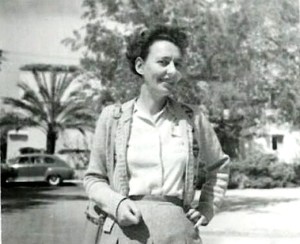
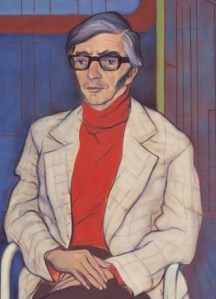
Margarita Michelena Mexican 1917 – 1998
for Efrain Huerta
You run through the night like a blind fountain,
Like a rich vein of sleeping music.
Your skin—simple forest of touch and dew—
Is the clear reef that limits your dream,
The place where the blood of tumultuous crests
Is met softly by the waiting shore.
—That lovely blood of yours, high and resplendent,
Wearing its necklace of music and sound
Through the hoisted rosebush of your veins.
Singing in the thirsty caverns of your pulse
Its elastic and burning score—.
In you, sleeping man, the world goes breathing,
The dawn is readied, and roses are invented.
Your children are raised up, imminent and beautiful.
They shine beneath your flesh, which asleep,
Is like a great transparent silence.
If you could see yourself on the summit of your dream…
You are not yourself certainly. You are more: a mirror
Of your deepest life, of the great hidden life
Which blind and powerful carries you
In your smallest gestures without anyone seeing it,
In the things you do when walking down the street
With your cruel suit and your eyes open.
Lost among resounding arrows of daylight
You are only a slight seed in the nothingness,
A weak despairing light
Which shines a moment
Between two infinite solitudes and runs toward death.
You feel how collapse already works in your bones.
Installing its irremediable darkness.
Behind the two gloomy vaults of your eyes.
You are always taking leave
Of the fleeting wonder of your flesh,
Looking at its devoured beauty,
Knowing your death grows and grows
Inside you, like an enclosed garden,
Like a dark apple, hanging,
From the tragic and beautiful
Branches of your veins.
And so you go, alone, alone, despairingly abandoned,
Like an infinite widower of your own body.
But when asleep you open like a rose
That is going to die, but that carries within,
In its cloister of active and blind love,
A sweet galaxy of beauty,
A close daughter of its perfume
Which at the same time its mother dies
Repeats her in color and architecture.
In dream your flesh disembarks
As upon an invulnerable continent.
There you can watch those unknown faces
Those that nightly model themselves in you,
That construct their dance and beauty,
The future column of their voices,
The desolate tower of their tears
And the loving snow of their teeth.
What eternity, what mysterious force
Inhabits you when you sleep,
While you are a quiet island
Lost in the ocean of your bed,
And in which musics and bonfires grow,
The infinite fingers of grass
And noisy armies of children
That demand your love and their disaster.
You are what declines, but also the eternal:
The seed in its place, separating itself,
The mystic darkness of the blood.
And there you are, victorious and defeated,
Burned by oils of mystery,
Possessed, undone, carried
By innumerable and future feet,
Your forehead crowned by dark angels,
Your hero’s shoulders wasted on the world
And your body filled with love and moans.
We present this work in honor of the poet’s 60th birthday.
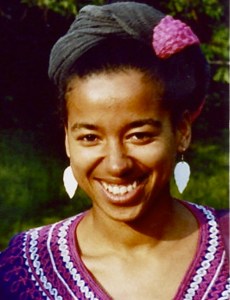
May Ayim German 1960 – 1996
i no longer wait
for the better times
midnight blue sky above us
silver stars upon it
hand in hand with you
along the river
trees right and left
desire in their branches
hope in my heart
i straighten up my room
i light a candle
i paint a poem
i no longer kiss my way
down your body
through your navel
into your dreams
my love in your mouth
your fire in my lap
pearls of sweat on my skin
i dress myself warmly
i paint my lips red
i talk to the flowers
i no longer listen
for a sign from you
take out your letters
look at your pictures
conversation with you
till midnight
visions between us
children smiling at us
i open the window wide
i tie my shoes tight
i get my hat
I no longer dream
in lonely hours
your face into time
your shadow is only
a cold figure
i pack the memories up
i blow the candle out
i open the door
i no longer wait
for the better times
i go out into the street
scent of flowers on my skin
umbrella in my hand
along the river
midnight blue sky above me
silver stars upon it
trees
left and right
desire in their branches
hope in my heart
We present this work in honor of the poet’s 120th birthday.
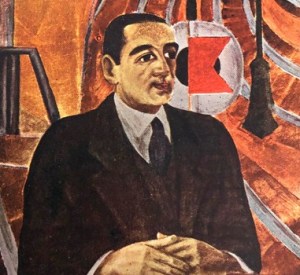
Manuel Maples Arce Mexican 1900 – 1981
I
To the workers of Mexico
Here’s my brutal
and multispirited
poem
to the new city.
O city all tense
with cables and with efforts,
all resounding
with motors and with wings.
Simultaneous explosion
of new theories,
a bit further
On the spatial plane
from Whitman and from Turner
and a bit closer
to Maples Arce.
The lungs of Russia
blow the wind
of social revolution toward us.
Literary zipper-robbers
will understand nothing
of this new sweaty
beauty of the century,
and the ripe
moons
that fell,
are this putrefaction
that reaches us
from intellectual sewage pipes.
Here’s my poem:
O city strong
and manifold,
made all of iron and of steel!
Docks. Inner harbors.
Cranes.
And the sexual fever
of industrial plants.
Metropolis:
Bodyguards of trams
that traverse the subversivist streets.
Window displays accost sidewalks,
and the sun, it sacks the avenues.
On the fringes of the tariffed
days of telephone posts
momentary landscapes file
through systems of elevator tubes.
Suddenly,
O the green
flash of her eyes!
Beneath the ingenuous shutters of the hour
pass red battalions.
The cannibal romanticism of Yankee music
has gone making its nests in the masts.
O international city!
Toward what remote meridian
cut that ocean liner?
I feel that everything moves away.
Aged dusks
float among the masonry of the scene.
Spectral trains that travel
toward far
away, panting with civilizations.
The upset multitude
sloshes musically in the streets.
And now, the bourgeois thieves, they will lie down to tremble
for the fortunes
that robbed the town,
but someone concealed beneath their dreams
the spiritual music staff of the explosive.
Here’s my poem:
Pennants of hurrahs into the wind,
inflamed heads of hair
and captive mornings in eyes.
O musical
city
all made of mechanical rhythms!
Tomorrow, perhaps,
only the vivid light of my verses
will illuminate the humiliated horizons.
II
This new profoundness of the scene
is a projection toward interior mirages.
The resounding crowd
today overruns the communal plazas
and the triumphal hurrahs
of obregonismo
reverberate from the façades to the sun.
O romantic girl
flare-up of gold!
Maybe between my hands
only living moments remained.
Landscapes dressed in yellow
fell asleep behind the windowpanes,
and the city, rapt,
has remained trembling in the rigging.
Applauses are that barrier.
—Oh God!
—Never fear, it’s the romantic wave of the multitudes.
Afterward, over the overflows of silence,
the Tarahumara night will go expanding.
Extinguish your shop windows.
Within the machinery of insomnia,
lust, are millions of eyes
that smear themselves on flesh.
A steel bird
has emprowed its aim toward a star
The port:
inflamed distances,
smoke of industrial plants.
Over clotheslines of music
her remembrance suns itself.
A transatlantic farewell leapt from the gunwale.
Motors sing
over the dead panorama.
III
The afternoon, riddled with windows,
floats on the wires of the telephone,
and between the
inverse crossings of the hour
the farewells of the machines hang. One morning his
wonderful youth
exploded
between my fingers,
and in the empty water
of the mirrors,
the forgotten faces were shipwrecked.
Oh the poor trade union city
scattered
with cheers and screams!
The workers
are red
and yellows.
There is a flourishing of pistols
after the springboard of the speeches,
and while the lungs
of the wind
are suppurated,
lost in the dark corridors of the music
some white bride leaves off.
IV
Among copses of silence
darkness licks the blood of dusk.
Fallen stars,
they are dead birds
in the dreamless water
of the mirror.
And the resounding
artilleries of the Atlantic
waned,
finally,
in the distance.
Over the rigging of autumn,
a nocturnal wind blows:
it is the wind of Russia,
of the great tragedies,
and the garden,
yellow,
founders in shadow.
Her recollection, sudden,
it crackles in muted interiors.
Her golden words
sift in my memory.
Rivers of blue shirts
overflow the floodgates of industrial plants,
and agitator trees
gesticulate their discourses on the sidewalk.
The strikers fling
insults and blows with stones,
and life, it is a tumultuous
conversion to the left.
On the edges of the pillow,
night, it is a precipice;
and insomnia,
it has remained rummaging in my brain.
From whom are those voices
that float in shadow?
And these trains that howl
to devastated horizons.
The soldiers
will spend this night in the inferno.
My God!
And from all this disaster
only a few white
pieces
of her recollection,
they have kept me within her hands.
V
The savage hordes of the night
lie down over the frightened city.
The bay,
flowering
with masts and moons,
spills
over the ingenuous
music score of her hands,
and the distant scream
of a steamboat,
toward the Nordic seas.
Goodbye
to the shipwrecked continent!
Between the wires of her name
remain feathers of birds.
Poor Celia Maria Dolores;
the scene is inside us.
Beneath hatchet blows of silence
iron architectures are devastated.
There are waves of blood and storm clouds of hatred.
Desolation.
The marijuana discourses
of legislators
splattered her remembrance with droppings,
but,
her tenderness has fallen headlong
on the multitudes of my soul.
Ocotlán
there, far away.
Voices.
Impacts peck about
trenches.
All night lust stoned
balconies under cover of a virginity.
Shrapnel
makes pieces of silence sound.
Resounding
and deserted streets,
they are rivers of shadow
that go into the sea,
and the sky, frayed,
is the new
flag
that flutters
over the city.
Noah’s flood is coming nearer!
The city is sinking little… by little
Birds flee
And water rises
On the steps of houses
Shops
The post office
Banks
Statues (of our immortal ancestors)
Temples
Wheat sacks
Maternity hospitals
The prison gate
The State House
The corridors of fortified barracks.
Birds are leaving
Slowly…
Slowly…
Geese on the water float
Furniture floats…
And a child’s toy…
And a gasp of a sad mother
Young women on the roofs waver!
Noah’s flood is coming nearer
Here are “the wise men” fleeing to the ship
The singers, the prince’s horseman, the usurers, the judge of judges
(And his Mamlouk…),
The sword bearer, the temple dancer
(She rejoiced when she picked up her wig…)
Tax collectors, weapons importers,
The princess’s lover in his radiant effeminate manner
Noah’s flood is coming nearer.
Here are the cowards fleeing to the ship
While I was…
The city’s youth were
Bridling the unruly horse of the water
Carrying water on both shoulders.
And racing time
They were building stone dams for themselves
Hoping to save the bosom of youth and civilization
Hoping to save…the homeland!
…the master of the Ark shouted at me—before the advent
Of quietude:
“Escape from a country…where the spirit is no longer!”
I said:
Blessed are those who ate its bread…
In days of prosperity
And turned their back on it
In times of adversity!
Glory to us, we who have stood
(God has obliterated our names!)
to defy destruction…
And seek refuge in a mountain that doesn’t die
(They call it ‘the people’!)
We refuse to flee…
And we refuse to wander!
My heart, knit with injuries
Cursed by commentaries
Is resting, now, on the city’s remains
A blossom bland
Still…
After it said “No” to the ship …
and loved the homeland
I do not like praises and honours
Nor did I fear disdain
I just stayed away.
My mind, clear water,
My body bound and tied
For three years in Chang’an.
I sing what I feel in songs
In straight words, undecorated.
Back then the masts on the houses were
like the masts of Columbus’ ships,
and every raven that stood on their tips,
heralded a different continent.
The knapsacks of travelers walked the streets
and the language of a foreign country
pierced the heatwave
like the blade of a cold knife.
How can the air of this small city
lift up so many
childhood memories, cast off loves,
rooms emptied out somewhere?
Like pictures blackening inside a camera
they turned—pure winter nights,
rainy summer nights across the sea,
and the grey mornings of the cities.
But footsteps beat behind your back,
the marching tune of a foreign army.
And it seems—if you just turn your head, in the sea
your city’s church is sailing.
We present this work in honor of the poet’s 100th birthday.
Edwin Morgan Scots 1920 – 2010
There were never strawberries
like the ones we had
that sultry afternoon
sitting on the step
of the open French window
facing each other
your knees held in mine
the blue plates in our laps
the strawberries glistening
in the hot sunlight
we dipped them in sugar
looking at each other
not hurrying the feast
for one to come
the empty plates
laid on the stone together
with the two forks crossed
and I bent towards you
sweet in that air
in my arms
abandoned like a child
from your eager mouth
the taste of strawberries
in my memory
lean back again
let me love you
let the sun beat
on our forgetfulness
one hour of all
the heat intense
and summer lightning
on the Kilpatrick hills





 Poets Corner