Because I cannot sleep
I make music at night.
I am troubled by the one
whose face has the color of spring flowers.
I have neither sleep nor patience,
neither a good reputation nor disgrace.
A thousand robes of wisdom are gone.
All my good manners have moved a thousand miles away.
The heart and the mind are left angry with each other.
The stars and the moon are envious of each other.
Because of this alienation the physical universe
is getting tighter and tighter.
The moon says, ‘How long will I remain
suspended without a sun?’
Without Love’s jewel inside of me,
let the bazaar of my existence be destroyed stone by stone.
O Love, You who have been called by a thousand names,
You who know how to pour the wine
into the chalice of the body,
You who give culture to a thousand cultures,
You who are faceless but have a thousand faces,
O Love, You who shape the faces
of Turks, Europeans, and Zanzibaris,
give me a glass from Your bottle,
or a handful of being from Your Branch.
Remove the cork once more.
Then we’ll see a thousand chiefs prostrate themselves,
and a circle of ecstatic troubadours will play.
Then the addict will be freed of craving.
and will be resurrected,
and stand in awe till Judgement Day.
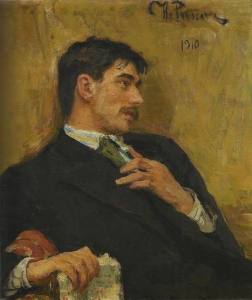
We present this work in honor of the 50th anniversary of the poet’s death.
Korney Chukovsky Russian 1882 – 1969
Part One
Bears went to the hike
A-riding on a bike.
Then came Tom-the-Cat,
Back-to-front he sat.
Spry mosquitoes drifted by
In a big balloon on high.
Lobsters looked like shrimps
On a dog that limps.
Wolves were mounted on a horse.
Lions drove in cars, of course.
Hares in pairs
Crammed in a tram.
Toad rode on a broom…
What a merry bunch!
Gingernuts they munch.
Suddenly a Titan
Crawls beneath the gate —
Whiskers meant to frighten,
Very stiff and straight.
Cock-the-Roach
Cock-the-Roach,
Cock-the-Roach the Great!!
Sharp and loud his shout rings out,
While his whiskers wave about:
“Don’t you worry, I shan’t hurry,
But I’ll gulp and gobble you!
That is true!
Oh, too true!
There’s no hope for you!”
Creatures rock and sway,
Fainting right away.
Such a dreadful flight!
Wolves eat wolves on sight.
Poor old Uncle Crock
Gulps a frog in shock,
And Mum Jumbo, all a-shake,
Sits on a hedgehog by mistake.
Only Lobsters feel all right —
In a pinch they love a fight.
It is true that back they wriggle,
Yet defiant whiskers wiggle.
Let the tyrant fear!
Let the giant hear!!
“Hey, you, listen!
We’re proud, too! We have whiskers just like you.
We can shout out louder, too.
So, Big Whiskers, off with you!”
Having made that clear
All move to the rear.
Then the Hippo loudly hails
Crocodiles and mighty Whales:
“The knight who with his might will fight
And put this horrid thing to flight
Shall find such favour in our eyes .
That two fat frogs shall be his prize —
And we’ll grant him a pine-cone
Of number one size…!”
“We don’t fear that monster.
No! Giants we can overthrow.
With our teeth,
With our tusks,
With our hooves we’ll bring him low
What a bold and happy throng!
To the fight they dash along.
But when they see those whiskers wave,
Oh, dear me!
Not a single beast is brave.
Oh, dear me!
Over hill, over dale, through the woods
they tear…
Cock-the-Roach’s whiskers gave them such
a scare!
To the scene the Hippo came
And his face went red with shame:
“Hey, you Bulls and Rhinos there
Don’t you dare hide in your lair!
Were you born
With no horn?
Toss him in the air!”
Bulls and Rhinos say: “Don’t blare!
Please speak softly. Do take care!
We would surely
Gore him sorely,
But horns are dear, like hide and hair,
And who will pay for wear and tear?”
How they shake and quake underneath the hedge
By the swampy lake, every nerve on edge!
Crocodiles in nettles hide their heads and skulk.
In a ditch Mum Jumbo settles down to sulk.
Creatures’ teeth rattle, so great are their fears —
Look at their shivering, quivering ears!
Every Monkey hops and skips,
Grabs his bags and packs his grips.
Falling into frantic fits
Each
One
Quits!
Sharks hate worry,
Scurry, hurry,
But their tails make quite a flurry,
Till the swish makes cuttle fish
Scuttle off
Like other fish.
Part Two
Cock-the-Roach was named the Victor Great and Grand,
King of Field and Forest, Lord of All the Land.
Ginger-Whiskers ruled-life was at its worst,
Birds and beasts were fooled. (May his name be cursed!)
He struts and rubs his yellow tummy
As he orders every Mummie:
“Bring your little ones to me.
I shall take them with my tea,
Or eat them up at supper!”
Oh, those wretched Beasts!
How they howl and growl!
They declare in every lair
That the glutton and his feasts
Are unfair and foul.
“Why! it breaks a mother’s heart
With her little one to part,
Chubby Jumbo, Baby Hare,
Or a cuddly Teddy Bear.
The rogue, the scoundrel! Oh, how cruel
To use our babes to make his gruel!!”
How they weep no words can tell.
Mummies bid their babes farewell.
Then one morning through the dew
Hopped and skipped a Kangaroo.
When he saw great Cock-the-Roach
Loud he shouted with reproach:
“Goodness! Do you think he’s strong?
Ha! Ha! Ha!
Think again, for you are wrong!
Ha! Ha! Ha!
Cock-the-Roach! Cock-the-Roach…
…He’s nothing but a brown cockroach!
That’s the horrid midget’s name —
If you obey him you’re to blame!
Haven’t you got claw and paw,
Fangs to tear and bite?
How could you bow down before
Such a tiny mite?”
But the Hippos now felt bad,
So they whispered:
“Are you mad?
Go away! Don’t make a fuss.
You will make things worse for us!”
Suddenly a wee bird flew
From the woods dark green and blue,
Flitting fast tas any arrow,
Such a perky little Sparrow!
“Cheep-peep-peep!
A-cheep-a-peep!”
How he nips! Oh, what a cheek!
For the cockroach in his beak
Dies without a single squeak.
His long ginger whiskers are hidden from view.
That giant, the tyrant has now got his due!
Oh, how happy, daft and daffy,
Act those creatures now they’ve heard!
They feel great, congratulating
Both themselves and that small bird.
Donkeys shout out: “Glory!” to
the Sparrow’s beak,
Braying out the story of their narrow
squeak.
Billy Goats with goatees sweep and
clean the street.
Rams set kettle-drums a-rattle.
Hoot-owls toot
as if in battle.
Crows in towers
caw for hours.
In the belfry scatty bats
Dance a reel
and wave their hats.
Mummie Jumbo, looking smart,
Skips in a jig with all her heart,
Till the Earth and Sky start rumbling —
Down the very Moon comes tumbling
And it sends poor Jumbo stumbling.
What a fuss the Beasts are making!
From the lake the Moon they’re raking.
They must nail it up on high
In its place to light the sky!
In honor of Diwali, we present this work by one of contemporary India’s most visionary poets.
Mamoni Raisom Goswani Indian 1942 – 2011
People say that
I excel in making wine.
I can turn the wine
which is brewed today
a hundred years old.
It can make people frenzied and wild
wine that I brew, drinking
I too am constantly intoxicated.
My fleshy breasts
Now sleeps like a dead river.
Intoxicated.
I now can turn this river into a sharp weapon.
The wine I brew
knows how to make
songs from stone, songs from ashes.
People despair to discover my mystery,
they smash their heads
against walls, iron pillars.
They scream, Ah! What is this boon
the heavens bestow upon her path.
How do I say
the way I have brewed
this mellow wine?
I have lain fainted
In the dark hall of sorrow!
In agony
I have whipped my own flesh
and have drunk my own blood.
I couldn’t
take off my clothes
in front of my lovers.
And I had a hundred lovers.
yet, I remained a virgin.
The women from the other
Bank of the river, scream
You are a sinner
You will earn a leper’s death!
My body, which is like
the supple bodies of barali-fish
that dance with the waves of the Red River!
My breasts—the Saramati Peak
in the Tuensang valley.
My mekhela is like
those branches of Rhododendron
which bloom in the Satoi Ranges!
The women from the
other bank of the river –
spit their venom
Oh hunted woman! Let your body
become a feast for
worms!
The Ladies with white hair
from the other bank of the river
Cry out with many voices!
Oh women, don’t gouge at her flesh!
Who knows, those men who
remain like your immediate shadow
would have tried the silky
skin of their own daughters!
Who knows, who knows!
Wise men say, whores are the generals
of the Wars!
Like rivers they lay their traps
Like mountains they protect
the innocent souls!
Oh women, abide by the
Songs of the monk!
Don’t gouge at the flesh of whores!
They know unknown
travelers and murky hunters!
Yes, wise men say, that whores are
the weary generals of the Wars!
My body turned into a skeleton;
my skin swung
loosely on the bones
like the hide of a beast
strung up by a butcher
on a long post
to dry!
The demon of misery
and sorrow
looking for my heart
raked my body with its nails!
Suddenly, I discovered the art of
making wine.
I could ford this
river of separation
which flows in the
guise of human life!
which has kept in its bosom
those ancient maps
of the kingdoms burnt into ashes.
Came floating the golden pitcher from the pages of Samhitas
and from the wombs of the Upanishadas
a heavenly voice cries out
Oh Lady, with the heavy breasts
Open! Open the Lid!…
Many days and many nights
I brewed wine—to open the lids of the golden pitcher
which came from the womb of the Upanishads
Alas, I failed!
drinking made me wild,
only failures drink like a fish!
Suddenly, the lid
opened.
Standing on the other side of
the river—
I saw the glittering
shards of my wine glasses
scattered in a thousand pieces.
If I flinch from the pain of the burning, believe not the doctrine that I have preached. — His words at the stake.
Bloody Mary’s venomous flames can curl;
They can shrivel sinew and char bone
Of foot, ankle, knee and thigh, and boil
Bowels, and drop his heart a cinder down;
And her soldiers can cry, as they hurl
Logs in the red rush: “This is her sermon.”
The sullen-jowled watching Welsh townspeople
Hear him crack in the fire’s mouth: they see what
Black oozing twist of stuff bubbles the smell
That tars and retches their lungs: no pulpit
Of his ever held their eyes so still,
Never, as now his agony, his wit.
An ignorant means to establish ownership
Of his flock! Thus their shepherd she seized
And knotted him into this blazing shape
In their eyes, as if such could have cauterized
The trust they turned towards him, and branded on
Its stump her claim, to outlaw question.
So it might have been: seeing their exemplar
And teacher burned for his lessons to black bits,
Their silence might have disowned him to her,
And hung up what he had taught with their Welsh hats:
Who sees his blasphemous father struck by fire
From heaven, might well be heard to speak no oaths.
But the fire that struck here, come from Hell even,
Kindled little heavens in his words
As he fed his body to the flame alive.
Words which, before they will be dumbly spared,
Will burn their body and be tongued with fire
Make paltry folly of flesh and this world’s air.
When they saw what annuities of hours
And comfortable blood he burned to get
His words a bare honouring in their ears,
The shrewd townsfolk pocketed them hot:
Stamp was not current but they rang and shone
As good gold as any queen’s crown.
Gave all he had, and yet the bargain struck
To a merest farthing his whole agony,
His body’s cold-kept miserdom on shrieks
He gave uncounted, while out of his eyes,
Out of his mouth, fire like a glory broke,
And smoke burned his sermon into the skies.
Nazhun al-Garnatiya bint al-Qulai’iya Arab Andalusian ? – c. 1100
Bless those wonderful nights,
And best of all,
Saturdays
If you had been there
You’d have seen us locked together
Under the chaperone’s sleepful eyes
Like the sun in the arms of the moon
Or a panting gazelle in the clasp of a lion.
We present this work in honor of the poet’s 100th birthday.
Doris Lessing English 1919 – 2013
When I look back I seem to remember singing.
Yet it was always silent in that long warm room.
Impenetrable, those walls, we thought,
Dark with ancient shields. The light
Shone on the head of a girl or young limbs
Spread carelessly. And the low voices
Rose in the silence and were lost as in water.
Yet, for all it was quiet and warm as a hand,
If one of us drew the curtains
A threaded rain blew carelessly outside.
Sometimes a wind crept, swaying the flames,
And set shadows crouching on the walls,
Or a wolf howled in the wide night outside,
And feeling our flesh chilled we drew together.
But for a while the dance went on –
That is how it seems to me now:
Slow forms moving calm through
Pools of light like gold net on the floor.
It might have gone on, dream-like, for ever.
But between one year and the next – a new wind blew?
The rain rotted the walls at last?
Wolves’ snouts came thrusting at the fallen beams?
It is so long ago.
But sometimes I remember the curtained room
And hear the far-off youthful voices singing.
We present this work in honor of the 50th anniversary of the poet’s death.
Jack Kerouac American 1922 – 1969
I took a stroll through Roxbury,
enlightenment was obtained, in a meaningless poetic sense.
Homeless men’s faces shout such agony,
they evoke images of tortured souls in a science fiction movie.
Concrete all perfectly disorganized,
like a tile floor at a government building smashed repeatedly by a disgruntled employee.
Cars rush by like ants in their endless toil,
sky leaks darkness upon artificial attempts to beat nature.
Trash lines the street like flaws litter my character.
Trash trucks come and collect these flaws,
take them out of view, so it doesn’t look dirty.
But although this takes it out of public concern,
the trash has to be taken somewhere.
You can’t just will the trash out of existence,
it has to be allowed to fester and decompose.
That’s why the trucks thake the trash off some forgotten highway,
to let it do it’s time removed from first impressions.
So God bless those trash trucks,
because with out them, there would still be the same amount of trash,
but people would be constantly reminded of what a trashy place this is.
Blow on, ye death-fraught whirlwinds! blow,
Around the rocks, and rifted caves;
Ye demons of the gulf below!
I hear you, in the troubled waves.
High on this cliff, which darkness shrouds
In night’s impenetrable clouds,
My solitary watch I keep,
And listen, while the turbid deep
Groans to the raging tempests, as they roll
Their desolating force, to thunder at the pole.
Eternal world of waters, hail!
Within thy caves my Lover lies;
And day and night alike shall fail,
Ere slumber lock my streaming eyes.
Along this wild untrodden coast,
Heap’d by the gelid hand of frost;
Thro’ this unbdounded waste of seas,
Where never sigh’d the vernal breeze;
Mine was the choice, in this terrific form,
To brave the icy surge, to shiver in the storm.
Yes! I am chang’d.—My heart, my soul,
Retain no more their former glow.
Hence, ere the black’ning tempests roll,
I watch the bark, in murmurs low,
(While darker low’rs the thick’ning gloom)
To lure the sailor to his doom;
Soft from some pile of frozen snow
I pour the syren-song of woe;
Like the sad mariner’s expiring cry,
As, faint and worn with toil, he lays him down to die.
Then, while the dark and angry deep
Hangs his huge billows high in air;
And the wild wind with awful sweep,
Howls in each fitful swell—beware!
Firm on the rent and crashing mast,
I lend new fury to the blast;
I mark each hardy cheek grow pale,
And the proud sons of courage fail;
Till the torn vessel drinks the surging waves,
Yawns the disparted main, and opes its shelving graves.
When Vengeance bears along the wave
The spell, which heav’n and earth appals;
Alone, by night, in darksome cave,
On me the gifted wizard calls.
Above the ocean’s boiling flood
Thro’ vapour glares the moon in blood:
Low sounds along the waters die,
And shrieks of anguish fill the sky;
Convulsive powers the solid rocks divide,
While, o’er the heaving surge, the embodied spirits glide.
Thrice welcome to my weary sight,
Avenging ministers of wrath!
Ye heard, amid the realms of night,
The spell that wakes the sleep of death.
Where Hecla’s flames the snows dissolve,
Or storms, the polar skies involve;
Where, o’er the tempest-beaten wreck,
The raging winds and billows break;
On the sad earth, and in the stormy sea,
All, all shall shudd’ring own your potent agency.
To aid your toils, to scatter death,
Swift, as the sheeted lightning’s force,
When the keen north-wind’s freezing breath
Spreads desolation in its course,
My soul within this icy sea,
Fulfils her fearful destiny.
Thro’ Time’s long ages I shall wait
To lead the victims to their fate;
With callous heart, to hidden rocks decoy,
And lure, in seraph-strains, unpitying, to destroy.