The Falls of the Chaudiere, Ottawa

We present this work in honor of Canada Day.
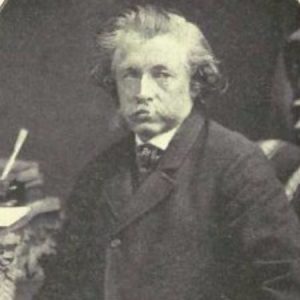
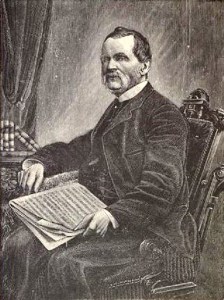
Charles Sangster
Canadian
1822 – 1893


I have laid my cheek to Nature’s, placed my puny hand in hers,
Felt a kindred spirit warming all the life-blood of my face,
Moved amid the very foremost of her truest worshippers,
Studying each curve of beauty, marking every minute grace;
Loved not less the mountain cedar than the flowers at its feet,
Looking skyward from the valley, open-lipped as if in prayer,
Felt a pleasure in the brooklet singing of its wild retreat,
But I knelt before the splendour of the thunderous Chaudiere.

All my manhood waked within me, every nerve had tenfold force,
And my soul stood up rejoicing, looking on with cheerful eyes,
Watching the resistless waters speeding on their downward course,
Titan strength and queenly beauty diademed with rainbow dyes.
Eye and ear, with spirit quickened, mingled with the lovely strife,
Saw the living Genius shrined within her sanctuary fair,
Heard her voice of sweetness singing, peered into her hidden life,
And discerned the tuneful secret of the jubilant Chaudiere:

‘Within my pearl-roofed shell,
Whose floor is woven with the iris bright,
Genius and Queen of the Chaudiere I dwell,
As in a world of immaterial light.

My throne, an ancient rock,
Marked by the foot of ages long-departed,
My joy, the cataract’s stupendous shock,
Whose roll is music to the grateful-hearted.

I’ve seen the eras glide
With muffled tread to their eternal dreams,
While I have lived in vale and mountain side,
With leaping torrents and sweet purling streams.

The Red-Man’s active life;
His love, pride, passions, courage, and great deeds;
His perfect freedom, and his thirst for strife;
His swift revenge, at which the memory bleeds:

The sanguinary years,
When sullen Terror, like a raging Fate,
Swept down the stately tribes like slaughtered deers,
And war and hatred joined to decimate

The remnants of the race,
And spread decay through centuries of pain-
No more I mark their sure, avenging pace,
And forests wave where war-whoops shook the plain.

Their deeds I envied not.
The royal tyrant on his purple throne,
I, in secluded grove or shady grot,
Had purer joys than he had ever known,

God made the ancient hills,
The valleys and the solemn wildernesses,
The merry-hearted and melodious rills,
And strung with diamond dews the pine-trees’ tresses;

But man’s hand built the palace,
And he that reigns therein is simply man;
Man turns God’s gifts to poison in the chalice
That brimmed with nectar in the primal plan.

Here I abide alone-
The wild Chaudiere’s eternal jubilee
Has such sweet divination in its tone,
And utters nature’s truest prophecy

In thunderings of zeal!
I’ve seen the Atheist in terror start,
Awed to contrition by the strong appeal
That waked conviction in his doubting heart:

‘Teachers speak throughout all nature,
From the womb of Silence born,
Heed ye not their words, O Scoffer?
Flinging back thy scorn with scorn!
To the desert spring that leapeth,
Pulsing, from the parched sod,
Points the famished trav’ler, saying-
‘Brothers, here, indeed, is God!’

From the patriarchal fountains,
Sending forth their tribes of rills,
From the cedar-shadowed lakelets
In the hearts of distant hills,
Whispers softer than the moonbeams
Wisdom’s gentle heart have awed,
Till its lips approved the cadence-
‘Surely here, indeed, is God!’

Lo! o’er all, the Torrent Prophet,
An inspired Demosthenes,
To the Doubter’s soul appealing,
Louder than the preacher-seas:
Dreamer! wouldst have nature spurn thee
For a dumb, insensate clod?
Dare to doubt! and these shall teach thee
Of a truth there lives a God!’

By day and night, for hours,
I watch the cataract’s impulsive leap,
Refreshed and gladdened by the cheering showers
Wrung from the passion of the seething deep.

Pleased when the buried waves
Emerge again, like incorporeal hosts
Rising, white-sheeted, from their gloomy graves,
As if the depths had yielded up their ghosts.

And when the midnight storm
Enfolds the welkin in its robe of clouds,
Through the dim vapours of the cauldron swarm
The sheeted spectres in their whitest shrouds,

By the lightning’s flash betrayed.
These gather from the insubstantial vapour
The lunar rainbows, which by them are made-
Woven with moonbeams by some starry taper,

To decorate the halls
Of my fair palace, whence I’m pained to see
Thy human brethren watch the waterfalls-
Not with such rev’rence as I’ve found in thee:

Too many with an eye
To speculation and the worldling’s dreams;
Others, who seek from nature no reply,
Nor read the oral language of the streams.

But of the few who loved
The beautiful with grateful heart and soul,
Who looked on nature fondly, and were moved
By one sweet glance, as by the mighty whole:

Of these, the thoughtful few,
Thou wert the first to seek the inner temple,
And stand before the Priestess. Thou wert true
To nature and thyself. Be thy example

The harbinger of times
When the Chaudiere’s imposing majesty
Will awe the spirits of the heartless mimes
To worship God in truth, with nature’s constancy.’

Still I heard the mellow sweetness of her voice at intervals,
Mingling with the fall of waters, rising with the snowy spray,
Ringing through the sportive current like the joy of waterfalls,
Sending up their hearty vespers at the calmy close of day.
Loath to leave the scene of beauty, lover-like I stayed, and stayed,
Folding to my eager bosom memories beyond compare;
Deeper, stronger, more enduring than my dreams of wood and glade,
Were the eloquent appeals of the magnificent Chaudiere.

E’en the solid bridge is trembling, whence I look my last farewell,
Dizzy with the roar and trampling of the mighty herd of waves,
Speeding past the rocky Island, steadfast as a sentinel,
Towards the loveliest bay that ever mirrored the Algonquin Braves.
Soul of Beauty! Genius! Spirit! Priestess of the lovely strife!
In my heart thy words are shrined, as in a sanctuary fair;
Echoes of thy voice of sweetness, rousing all my better life,
Ever haunt my wildest visions of the jubilant Chaudiere.
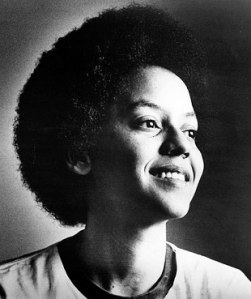
I Wrote a Good Omelet

Nikki Giovanni
American
b. 1943


I wrote a good omelet… and ate
a hot poem… after loving you
Buttoned my car… and drove my
coat home…in the rain…
after loving you
I goed on red… and stopped on
green…floating somewhere in between…
being here and being there…
after loving you
I rolled my bed… turned down
my hair… slightly
confused but… I don’t care…
Laid out my teeth… and gargled my
gown… then I stood
…and laid me down…
To sleep…
after loving you

Autumn, 1930

In honor of the Chilean holiday, the Feast of St. Peter and Paul, we present this work by one of the great Chilean poets of the 20th century.

Winétt de Rokha
Chilean
1892 – 1951


Beneath the white arch,
terrified of the blue winds,
I throw a glance
(like lips on their way to a kiss)
through the balustrade at the yellow ocean.

How it lives, the odour
of rosebush and orange after rain.

A cat — flower of the winter thistle —
electrifies itself, begins to sing;
flies look for smoke-blackened beams;
chickens cluck and shake out their underclothes;

and my heart, trying
to house its sorrow when all covering has been ripped to pieces,
goes barefoot, and blindly.

What Her Absence Means

Christy Brown
Irish
1932 – 1981


It means
no madcap delight will intrude
into the calm flow of my working hours
no ecstatic errors perplex
my literary pretensions.

It means
there will be time enough for thought
undistracted by brown peril of eye
and measured litany of routine deeds
undone by the ghost of a scent.

It means
my neglect of the Sonnets will cease
and Homer come into battle once more.
I might even find turgid old Tennyson
less of a dead loss now.

It means
there will be whole days to spare
for findings important to a man –
like learning to live without a woman
without altogether losing one’s mind.

It means
there is no one now to read my latest poem
with veiled unhurried eyes
putting my nerves on the feline rack
in silence sheer she – devil hell for me.

It means
there is no silly woman to tell me
‘Take it easy – life’s long anyway –
don’t drink too much – get plenty of sleep – ’
and other tremendous clichés.

It means
I am less interrupted now with love.

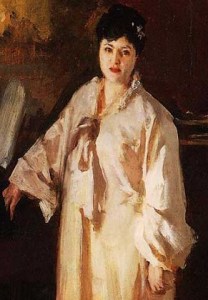
from The Daughter of Heaven

Judith Gautier
French
1845 – 1917


Oh! Daughter of Heaven, whom
we swear to serve faithfully! To the end
that you may accomplish the work
of your deified ancestors, never forget
the ten precepts which are the rule
of conduct of all sovereigns. As they
are engraved here on the precious jade,
it is my privilege to read them to you
this day in the hearing of all.

Fear Heaven.
Love the people.
Exalt the soul.
Cultivate the sciences.
Honour merit.
Listen to wise counsels.
Lessen taxes.
Mitigate the laws.
Spare the treasury.
Avoid the allurements of the senses!

Obeying these commands, one is sure
to follow in the right path.
But one must advance along this road
without turnings aside or falterings.
Oh! our Sovereign, be attentive
and anxious, as though each hour
of the day you carried a chalice filled
to the brim with water not one drop
must be spilled. Act thus, and then
your conduct will be just and
your dynasty endure eternally—
Ten thousand years!
Ten thousand years!

The Highwayman

Alfred Noyes
English
1880 – 1958


PART ONE

The wind was a torrent of darkness among the gusty trees.
The moon was a ghostly galleon tossed upon cloudy seas.
The road was a ribbon of moonlight over the purple moor,
And the highwayman came riding—
Riding—riding—
The highwayman came riding, up to the old inn-door.

He’d a French cocked-hat on his forehead, a bunch of lace at his chin,
A coat of the claret velvet, and breeches of brown doe-skin.
They fitted with never a wrinkle. His boots were up to the thigh.
And he rode with a jewelled twinkle,
His pistol butts a-twinkle,
His rapier hilt a-twinkle, under the jewelled sky.

Over the cobbles he clattered and clashed in the dark inn-yard.
He tapped with his whip on the shutters, but all was locked and barred.
He whistled a tune to the window, and who should be waiting there
But the landlord’s black-eyed daughter,
Bess, the landlord’s daughter,
Plaiting a dark red love-knot into her long black hair.

And dark in the dark old inn-yard a stable-wicket creaked
Where Tim the ostler listened. His face was white and peaked.
His eyes were hollows of madness, his hair like mouldy hay,
But he loved the landlord’s daughter,
The landlord’s red-lipped daughter.
Dumb as a dog he listened, and he heard the robber say—

“One kiss, my bonny sweetheart, I’m after a prize to-night,
But I shall be back with the yellow gold before the morning light;
Yet, if they press me sharply, and harry me through the day,
Then look for me by moonlight,
Watch for me by moonlight,
I’ll come to thee by moonlight, though hell should bar the way.”

He rose upright in the stirrups. He scarce could reach her hand,
But she loosened her hair in the casement. His face burnt like a brand
As the black cascade of perfume came tumbling over his breast;
And he kissed its waves in the moonlight,
(O, sweet black waves in the moonlight!)
Then he tugged at his rein in the moonlight, and galloped away to the west.

PART TWO

He did not come in the dawning. He did not come at noon;
And out of the tawny sunset, before the rise of the moon,
When the road was a gypsy’s ribbon, looping the purple moor,
A red-coat troop came marching—
Marching—marching—
King George’s men came marching, up to the old inn-door.

They said no word to the landlord. They drank his ale instead.
But they gagged his daughter, and bound her, to the foot of her narrow bed.
Two of them knelt at her casement, with muskets at their side!
There was death at every window;
And hell at one dark window;
For Bess could see, through her casement, the road that he would ride.

They had tied her up to attention, with many a sniggering jest.
They had bound a musket beside her, with the muzzle beneath her breast!
“Now, keep good watch!” and they kissed her. She heard the doomed man say—
Look for me by moonlight;
Watch for me by moonlight;
I’ll come to thee by moonlight, though hell should bar the way!

She twisted her hands behind her; but all the knots held good!
She writhed her hands till her fingers were wet with sweat or blood!
They stretched and strained in the darkness, and the hours crawled by like years
Till, now, on the stroke of midnight,
Cold, on the stroke of midnight,
The tip of one finger touched it! The trigger at least was hers!

The tip of one finger touched it. She strove no more for the rest.
Up, she stood up to attention, with the muzzle beneath her breast.
She would not risk their hearing; she would not strive again;
For the road lay bare in the moonlight;
Blank and bare in the moonlight;
And the blood of her veins, in the moonlight, throbbed to her love’s refrain.

Tlot-tlot; tlot-tlot! Had they heard it? The horsehoofs ringing clear;
Tlot-tlot; tlot-tlot, in the distance? Were they deaf that they did not hear?
Down the ribbon of moonlight, over the brow of the hill,
The highwayman came riding—
Riding—riding—
The red coats looked to their priming! She stood up, straight and still.

Tlot-tlot, in the frosty silence! Tlot-tlot, in the echoing night!
Nearer he came and nearer. Her face was like a light.
Her eyes grew wide for a moment; she drew one last deep breath,
Then her finger moved in the moonlight,
Her musket shattered the moonlight,
Shattered her breast in the moonlight and warned him—with her death.

He turned. He spurred to the west; he did not know who stood
Bowed, with her head o’er the musket, drenched with her own blood!
Not till the dawn he heard it, and his face grew grey to hear
How Bess, the landlord’s daughter,
The landlord’s black-eyed daughter,
Had watched for her love in the moonlight, and died in the darkness there.

Back, he spurred like a madman, shrieking a curse to the sky,
With the white road smoking behind him and his rapier brandished high.
Blood red were his spurs in the golden noon; wine-red was his velvet coat;
When they shot him down on the highway,
Down like a dog on the highway,
And he lay in his blood on the highway, with a bunch of lace at his throat.
. . .

And still of a winter’s night, they say, when the wind is in the trees,
When the moon is a ghostly galleon tossed upon cloudy seas,
When the road is a ribbon of moonlight over the purple moor,
A highwayman comes riding—
Riding—riding—
A highwayman comes riding, up to the old inn-door.

Over the cobbles he clatters and clangs in the dark inn-yard.
He taps with his whip on the shutters, but all is locked and barred.
He whistles a tune to the window, and who should be waiting there
But the landlord’s black-eyed daughter,
Bess, the landlord’s daughter,
Plaiting a dark red love-knot into her long black hair.

The Lake of the Thousand Isles

In honor of Discovery Day, we present this work by one of Canada’s greatest immigrant poets.

Evan MacColl
Canadian
1808 – 1898


Though Missouri’stide may majestic glide,
There’s a curse on the soil it laves;
The Ohio, too, may be fair, but who
Would sojourn in the land of slaves?
Be my prouder lot a Canadian cot
And the bread of a freeman’s toils;
Then hurrah for the land of the forests grand,
And the Lake of the Thousand Isles!
I would seek no wealth, at the cost of health,
‘Mid the city’s din and strife;
More I love the grace of fair nature’s face,
And the calm of a woodland life;
I would shun the road by ambition trod,
And the lore which the heart defiles;–
Then hurrah for the land of the forests grand,
And the Lake of the Thousand Isles!

O away, away! I would gladly stray
Where the freedom I love is found;
Where the pine and oak by the woodman’s stroke
Are disturbed in their ancient bound;
Where the gladsome swain reaps the golden grain,
And the trout from the stream beguiles;
Then hurrah for the land of the forests grand,
And the Lake of the Thousand Isles.

The Boy on the Moor

Annette von Droste-Hulshoff
German
1797 – 1848


How dreadful it is to go over the moor
When it is teeming with will o’ the wisps
And mists are whirling like phantoms
As brambles are hooking on bushes.
A pool springs up below each of his steps
When from the cleft it hisses and sings
How dreadful it is to go over the moor
When the reed beds are rustling in wind!

The child all atremble holds fast to his books
And runs as if he were hunted;
Hollowly whistles the wind o’er the plain-
What’s rustling there in the bushes?
The ghostly ditch digger it is
Who steals the best peat from the master;
Hu, hu, it sounds like a cow that is mad
As the boy ducks low in his fear.

From the bank, the stumps stare forth
The pines are eerily nodding
The boy runs on, pricking his ears,
Through gigantic grasses like spears;
And how it crumbles and crushes in there!
That is the unfortunate spinner
That is Leonore who is spinning enchanted
Winding her distaff there in the reeds.

Onwards, onwards, but always at speed
Onwards, as if it wanted to catch him;
By his feet it’s swirling and seething
It’s whistling under his soles
Like a tune set to haunt him;
That is the treacherous violinist;
That is the thieving fiddler, Knauf,
Who stole the marriage farthing.

The moor is breaking asunder, a sigh
Rises up from the cavernous gap;
Woe, woe, it is damned Margret who calls:
‘Ho, ho, my poor little soul’!
The boy leaps on like a wounded deer:
Were protecting angels not near him,
His whitened bones would later be found
By a digger in a dried up peat ditch.

Gradually, the ground becomes firmer
And there, next to the meadow,
The lamp flickers so homely.
The boy stands at the border;
Deeply he breathes, and back to the moor
Casts yet another horror struck look:
Yes, in the reeds, it was a terror,
How dreadful it was on the heath!

The Mooch o’ Life

C.J. Dennis
Australian
1876 – 1938


This ev’nin’ I was sittin’ wiv Doreen,
Peaceful an’ ‘appy wiv the day’s work done,
Watchin’, be’ind the orchard’s bonzer green,
The flamin’ wonder of the settin’ sun.

Another day gone by; another night
Creepin’ along to douse Day’s golden light;
Another dawning when the night is gone,
To live an’ love — an’ so life mooches on.

Times I ‘ave thought, when things was goin’ crook,
When ‘Ope turned nark an’ Love forgot to smile,
Of somethin’ I once seen in some old book
Where an ole sorehead arsts, “Is life worf w’ile?”

But in that stillness, as the day grows dim,
An’ I am sittin’ there wiv ‘er an’ ‘im—
My wife, my son! an’ strength in me to strive,
I only know — it’s good to be alive!

Yeh live, yeh love, yeh learn; an’ when yeh come
To square the ledger in some thortful hour,
The everlastin’ answer to the sum
Must allus be, “Where’s sense in gittin’ sour?”

Fer when yeh’ve come to weigh the good an’ bad —
The gladness wiv the sadness you ‘ave ‘ad —
Then ‘im ‘oo’s faith in ‘uman goodness fails
Fergits to put ‘is liver in the scales.

Livin’ an’ loving learnin’ day be day;
Pausin’ a minute in the barmy strife
To find that ‘elpin’ others on the way
Is gold coined fer your profit — sich is life.

I’ve studied books wiv yearnings to improve,
To ‘eave meself out of me lowly groove,
An’ ‘ere is orl the change I ever got:
“‘Ark at yer ‘eart, an’ you kin learn the lot.”

I gives it in — that wisdom o’ the mind —
I wasn’t built to play no lofty part.
Orl such is welkim to the joys they find;
I only know the wisdom o’ the ‘eart.

An’ ever it ‘as taught me, day be day,
The one same lesson in the same ole way:
“Look fer yer profits in the ‘earts o’ friends,
Fer ‘atin’ never paid no dividends.”

Life’s wot yeh make it; an’ the bloke ‘oo tries
To grab the shinin’ stars frum out the skies
Goes crook on life, an’ calls the world a cheat,
An’ tramples on the daisies at ‘is feet.

But when the moon comes creepin’ o’er the hill,
An’ when the mopoke calls along the creek,
I takes me cup o’ joy an’ drinks me fill,
An’ arsts meself wot better could I seek.

An’ ev’ry song I ‘ear the thrushes sing
That everlastin’ message seems to bring;
An’ ev’ry wind that whispers in the trees
Gives me the tip there ain’t no joys like these:

Livin’ an’ loving wand’rin’ on yeh way;
Reapin’ the ‘arvest of a kind deed done;
An’ watching in the sundown of yer day,
Yerself again, grown nobler in yer son.

Knowin’ that ev’ry coin o’ kindness spent
Bears interest in yer ‘eart at cent per cent;
Measurin’ wisdom by the peace it brings
To simple minds that values simple things.

An’ when I take a look along the way
That I ‘ave trod, it seems the man knows best,
Who’s met wiv slabs of sorrer in ‘is day,
When ‘e is truly rich an’ truly blest.

An’ I am rich, becos me eyes ‘ave seen
The lovelight in the eyes of my Doreen;
An’ I am blest, becos me feet ‘ave trod
A land ‘oo’s fields reflect the smile o’ God.

Livin’ an’ lovin’; learnin’ to fergive
The deeds an’ words of some un’appy bloke
Who’s missed the bus — so ‘ave I come to live,
An’ take the ‘ole mad world as ‘arf a joke.

Sittin’ at ev’nin’ in this sunset-land,
Wiv ‘Er in all the World to ‘old me ‘and,
A son, to bear me name when I am gone…
Livin’ an’ lovin’ — so life mooches on.