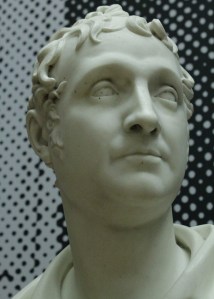
In honor of the Argentine holiday, National Flag Day, we present this work by Argentina’s most legendary author.
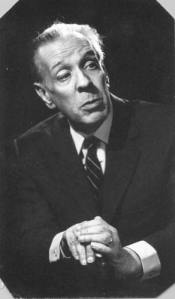
Jorge Luis Borges Argentine 1899 – 1986
Among these streets that deepen the red west
There must be one I’ve gone along not knowing
That that time, in that street, will have been my last—
Both unconcerned and unaware, obeying
The great Whoever-It-Is that sets a term,
A secret and inviolable end,
To every shadow, every dream and form
That ravels life and knits it up again.
And if for all there is a norm and measure,
A last time, a nevermore, and a forgetting,
Who can tell which visitor, departing,
Is one to whom we’ve said goodbye forever?
Beyond the greying window night is fading
And in the stack of books whose lopped shadow
Makes it seem taller on the dim-lit table,
There’s one we’ll never get around to reading.
There are on the Southside more than one ruined dooryard
With prickly pear and rubble masonry planters
Where I shall no more be allowed to enter
Than if it were a picture on a postcard.
There is a door that you have closed for good,
A mirror that waits in vain to hold your face;
A four-faced Janus guards your next crossroad
Though it seems you might go any of its ways.
In the midst of all your memories there is one
Faded away beyond recovering;
Neither the yellow moon nor the white sun
Will ever see you drinking from that spring.
Your voice will not recapture what the Persian
Said in his tongue of rose and nightingale
When you may wish at dusk, as the light disperses,
To say things that are unforgettable.
And the everflowing Rhône, and certain lake,
All that is present to me from the past,
Will sink like Carthage that the Roman took,
Destroyed with fire and with salt erased.
I believe I hear in the dawn the strenuously
Long murmur of a multitude departing.
They are what has loved me and forgotten.
Space, time, and Borges are deserting me.
We present this work in honor of National Dry Martini Day.
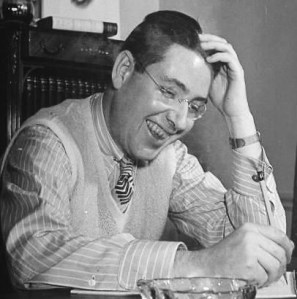
Ogden Nash American 1902 – 1971
There is something about a Martini,
A tingle remarkably pleasant;
A yellow, a mellow Martini;
I wish that I had one at present.
There is something about a Martini,
Ere the dining and dancing begin,
And to tell you the truth,
It is not the vermouth-
I think that perhaps it’s the gin.
There is something about an old-fashioned
That kindles a cardiac glow;
It is soothing and soft and impassioned
As a lyric by Swinburne or Poe.
There is something about an old-fashioned
When dusk has enveloped the sky,
And it may the ice,
Or the pineapple slice,
But I strong suspect it’s the rye.
There is something about a mint julep.
It is nectar imbibed in a dream,
As fresh as the bud of the tulip,
As cool as the bed of the stream.
There is something about a mint julep,
A fragrance beloved by the lucky.
And perhaps it’s the tint
Of the frost and the mint,
But I think it was born in Kentucky.
There is something they put in a highball
That awakens the torpidest brain,
That kindles a spark in the eyeball,
Gliding singing through vein after vein.
There is something they put in a highball
Which you’ll notice one day, if you watch;
And it may be the soda,
But judged by the odor,
I rather believe it’s the Scotch
Then here’s to the heartening wassail,
Wherever good fellows are found;
Be its mater instead of its vassal,
And order the glasses around.
For there’s something they put in the wassail
That prevents it from tasting like wicker;
Since it’s not tapioca,
Or mustard, or mocha,
I’m forced to conclude it’s the liquor.
Authors and actors and artists and such
Never know nothing, and never know much.
Sculptors and singers and those of their kidney
Tell their affairs from Seattle to Sydney.
Playwrights and poets and such horses’ necks
Start off from anywhere, end up at sex.
Diarists, critics, and similar roe
Never say nothing, and never say no.
People Who Do Things exceed my endurance;
God, for a man that solicits insurance!
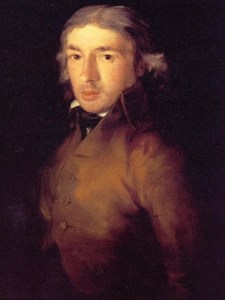
Yes! the pure friendship, that in kindly bonds
Our souls united, durable exists,
Illustrious Jovino! nor can time,
Nor distance, nor the mountains us between,
Nor stormy seas hoarse roaring, separate
Remembrance of thee from my memory.
The sound of Mars, that now sweet peace awhile
Suspends, has long unhappy silence placed
On my affection. Thou I know content
Livest in obscure delicious quietude,
For ever with untiring zeal inspired
To aid the public weal; of virtue e’er.
And talent, the protector and the friend.
These verses which I frame unpolish’d, free,
Though not corrected with thy learned taste,
In truth announce to thee my constant faith.
And so may Heaven but soon to me return
The hour again to see thee, and relate
Familiarly discoursing, to my view
Whatever of its varied scenes the world
Presented. From my native shores to those
Which bathes the Seine, blood-stain’d and turbulent;
The daring Briton’s, master of the sea,
To the bold Belgian’s; from the deep-flowing Rhine
To the high tops of Apennine snow-crown’d,
And that height further, which in burning smoke
Covers and ashes over Naples wide,
The different nations I have visited,
Acquiring useful knowledge, never gain’d
By learned reading in retired abodes.
For there we cannot see the difference great
Which climate, worship, arts, opinions,
And laws occasion. That is found alone,
If thou wouldst study man, in man himself.
Now the rough Winter, which augments the waves
Of Tiber, on his banks has me detain’d,
Inhabitant of Rome. O! that with thee
’Twere granted me to rove through her, to scan
The wonderful remains of glories past,
Which Time, whose force can naught resist, has spared!
Thou nursling of the Muses and the Arts,
Faithful oracle of bright history,
What learning thou wouldst give the affluent lip;
What images sublime, by genius fired,
In the great empire’s ruin thou wouldst find!
Fell the great city, which had triumph’d o’er
The nations the most warlike, and with her
Ended the Latin valour and renown.
And she who to the Betis from the Nile
Her eagles proudly bore, the child of Mars,
The Capitol with barbarous trophies deck’d,
Conducting to her car of ivory bound
Great kings subdued, amid the hoarse applause
Of wide-throng’d forums, and the trumpet’s sounds,
Who to the world gave laws, now horrible
Night covers her. She perish’d, nor expect
More tokens of her ancient worth to find.
Those mouldering edifices, which the plough
Breaks through in shapeless masses, once they were
Circuses, strong palaces, and theatres;
Proud arches, costly baths, and sepulchres;
Where thou mayst hear perchance, for so ’tis said,
In the deep silence of the gloomy shade,
A funeral lament, they only tell
The glory of the people of Quirinus.
And this to future races but remains
The mistress of the world, illustrious Rome!
This and no more remain’d? of all her arts
And dreaded power? What could not aught avail
Her virtue, wisdom, valour, all conjoin’d,
With such her opulence, the law severe
To mitigate, or stay the blows of fate?
Alas! if all is mortal—if to Time
Alike the strong wall and the tender flower
Must yield—if that will bronze and porphyry break,
Destroying them and burying in dust,
For whom so guards unhappy Avarice
His treasuries untouch’d? for whom foretells
Immortal fame, the adulation vile
That crimes and violence traitorous exalts?
For what so hastening to the tomb runs on
The human race, revengeful, envious,
And haughty? Why, if all that e’er exists,
And what man sees is all but ruins? all.
For never to return the hours fly past
Precipitate, and to their end but lead,
Of the most lofty empires of the earth,
The perishable splendour. The Deity,
That hidden animates the universe,
Alone eternal lives, and He alone
Is powerful and great.
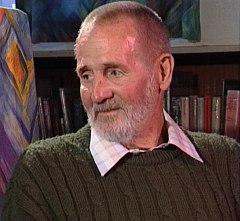
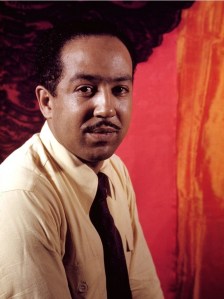
Let America be America again.
Let it be the dream it used to be.
Let it be the pioneer on the plain
Seeking a home where he himself is free.
(America never was America to me.)
Let America be the dream the dreamers dreamed—
Let it be that great strong land of love
Where never kings connive nor tyrants scheme
That any man be crushed by one above.
(It never was America to me.)
O, let my land be a land where Liberty
Is crowned with no false patriotic wreath,
But opportunity is real, and life is free,
Equality is in the air we breathe.
(There’s never been equality for me,
Nor freedom in this “homeland of the free.”)
Say, who are you that mumbles in the dark?
And who are you that draws your veil across the stars?
I am the poor white, fooled and pushed apart,
I am the Negro bearing slavery’s scars.
I am the red man driven from the land,
I am the immigrant clutching the hope I seek—
And finding only the same old stupid plan
Of dog eat dog, of mighty crush the weak.
I am the young man, full of strength and hope,
Tangled in that ancient endless chain
Of profit, power, gain, of grab the land!
Of grab the gold! Of grab the ways of satisfying need!
Of work the men! Of take the pay!
Of owning everything for one’s own greed!
I am the farmer, bondsman to the soil.
I am the worker sold to the machine.
I am the Negro, servant to you all.
I am the people, humble, hungry, mean—
Hungry yet today despite the dream.
Beaten yet today—O, Pioneers!
I am the man who never got ahead,
The poorest worker bartered through the years.
Yet I’m the one who dreamt our basic dream
In the Old World while still a serf of kings,
Who dreamt a dream so strong, so brave, so true,
That even yet its mighty daring sings
In every brick and stone, in every furrow turned
That’s made America the land it has become.
O, I’m the man who sailed those early seas
In search of what I meant to be my home—
For I’m the one who left dark Ireland’s shore,
And Poland’s plain, and England’s grassy lea,
And torn from Black Africa’s strand I came
To build a “homeland of the free.”
The free?
Who said the free? Not me?
Surely not me? The millions on relief today?
The millions shot down when we strike?
The millions who have nothing for our pay?
For all the dreams we’ve dreamed
And all the songs we’ve sung
And all the hopes we’ve held
And all the flags we’ve hung,
The millions who have nothing for our pay—
Except the dream that’s almost dead today.
O, let America be America again—
The land that never has been yet—
And yet must be—the land where every man is free.
The land that’s mine—the poor man’s, Indian’s, Negro’s, ME—
Who made America,
Whose sweat and blood, whose faith and pain,
Whose hand at the foundry, whose plow in the rain,
Must bring back our mighty dream again.
Sure, call me any ugly name you choose—
The steel of freedom does not stain.
From those who live like leeches on the people’s lives,
We must take back our land again,
America!
O, yes,
I say it plain,
America never was America to me,
And yet I swear this oath—
America will be!
Out of the rack and ruin of our gangster death,
The rape and rot of graft, and stealth, and lies,
We, the people, must redeem
The land, the mines, the plants, the rivers.
The mountains and the endless plain—
All, all the stretch of these great green states—
And make America again!
When the sheep are in the fauld, and the kye at hame,
And a’ the warld to rest are gane,
The waes o’ my heart fa’ in showers frae my e’e,
While my gudeman lies sound by me.
Young Jamie lo’ed me weel, and sought me for his bride;
But saving a croun he had naething else beside:
To make the croun a pund, young Jamie gaed to sea;
And the croun and the pund were baith for me.
He hadna been awa’ a week but only twa,
When my father brak his arm, and the kye was stown awa’;
My mother she fell sick, – and my Jamie at the sea –
And auld Robin Gray came a-courtin’ me.
My father couldna work, and my mother couldna spin;
I toiled day and night, but their bread I couldna win;
Auld Rob maintained them baith, and wi’ tears in his e’e
Said, ‘Jennie, for their sakes, O, marry me!’
My heart it said nay; I looked for Jamie back;
But the wind it blew high, and the ship it was a wrack;
His ship it was a wrack – Why didna Jamie dee?
Or why do I live to cry, Wae’s me!
My father urged me sair: my mother didna speak;
But she looked in my face till my heart was like to break:
They gi’ed him my hand, though my heart was in the sea;
Sae auld Robin Gray he was gudeman to me.
I hadna been a wife a week but only four,
When mournfu’ as I sat on the stane at the door,
I saw my Jamie’s wraith, – for I couldna think it he,
Till he said, ‘I’m come hame to marry thee.’
O, sair, sair did we greet, and muckle did we say;
We took but ae kiss, and we tore ourselves away:
I wish that I were dead, but I’m no like to dee;
And why was I born to say, Wae’s me!
I gang like a ghaist, and I carena to spin;
I daurna think on Jamie, for that wad be a sin;
But I’ll do my best a gude wife aye to be,
For auld Robin Gray he is kind unto me.