from The Iliad

Homer
Greek
c. 700 B.C. – ?


Unseen by these, the king his entry made:
And, prostrate now before Achilles laid,
Sudden (a venerable sight!) appears;
Embraced his knees, and bathed his hands in tears;
Those direful hands his kisses press’d, embrued
Even with the best, the dearest of his blood!

As when a wretch (who, conscious of his crime,
Pursued for murder, flies his native clime)
Just gains some frontier, breathless, pale, amazed,
All gaze, all wonder: thus Achilles gazed:
Thus stood the attendants stupid with surprise:
All mute, yet seem’d to question with their eyes:
Each look’d on other, none the silence broke,
Till thus at last the kingly suppliant spoke:

“Ah think, thou favour’d of the powers divine!
Think of thy father’s age, and pity mine!
In me that father’s reverend image trace,
Those silver hairs, that venerable face;
His trembling limbs, his helpless person, see!
In all my equal, but in misery!
Yet now, perhaps, some turn of human fate
Expels him helpless from his peaceful state;
Think, from some powerful foe thou seest him fly,
And beg protection with a feeble cry.
Yet still one comfort in his soul may rise;
He hears his son still lives to glad his eyes,
And, hearing, still may hope a better day
May send him thee, to chase that foe away.
No comfort to my griefs, no hopes remain,
The best, the bravest, of my sons are slain!
Yet what a race! ere Greece to Ilion came,
The pledge of many a loved and loving dame:
Nineteen one mother bore—Dead, all are dead!
How oft, alas! has wretched Priam bled!
Still one was left their loss to recompense;
His father’s hope, his country’s last defence.
Him too thy rage has slain! beneath thy steel,
Unhappy in his country’s cause he fell!
“For him through hostile camps I bent my way,
For him thus prostrate at thy feet I lay;
Large gifts proportion’d to thy wrath I bear;
O hear the wretched, and the gods revere!

“Think of thy father, and this face behold!
See him in me, as helpless and as old!
Though not so wretched: there he yields to me,
The first of men in sovereign misery!
Thus forced to kneel, thus grovelling to embrace
The scourge and ruin of my realm and race;
Suppliant my children’s murderer to implore,
And kiss those hands yet reeking with their gore!”

These words soft pity in the chief inspire,
Touch’d with the dear remembrance of his sire.
Then with his hand (as prostrate still he lay)
The old man’s cheek he gently turn’d away.
Now each by turns indulged the gush of woe;
And now the mingled tides together flow:
This low on earth, that gently bending o’er;
A father one, and one a son deplore:
But great Achilles different passions rend,
And now his sire he mourns, and now his friend.
The infectious softness through the heroes ran;
One universal solemn shower began;
They bore as heroes, but they felt as man.


Death Be Not Proud

We present this work in honor of Pentecost.

John Donne
English
1572 – 1631


Death be not proud, though some have called thee
Mighty and dreadfull, for, thou art not soe,
For, those, whom thou think’st, thou dost overthrow,
Die not, poore death, nor yet canst thou kill mee.
From rest and sleepe, which but thy pictures bee,
Much pleasure, then from thee, much more must flow,
And soonest our best men with thee doe goe,
Rest of their bones, and soules deliverie.
Thou art slave to Fate, Chance, kings, and desperate men,
And dost with poyson, warre, and sicknesse dwell,
And poppie, or charmes can make us sleepe as well,
And better then thy stroake; why swell’st thou then?
One short sleepe past, wee wake eternally,
And death shall be no more; death, thou shalt die.

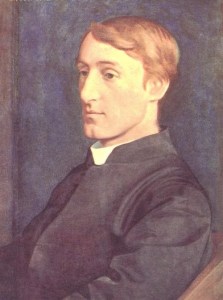
As Kingfishers Catch Fire

We present this work in honor of the 130th anniversary of the poet’s death.

Gerard Manley Hopkins
English
1844 – 1889


As kingfishers catch fire, dragonflies draw flame;
As tumbled over rim in roundy wells
Stones ring; like each tucked string tells, each hung bell’s
Bow swung finds tongue to fling out broad its name;
Each mortal thing does one thing and the same:
Deals out that being indoors each one dwells;
Selves — goes itself; myself it speaks and spells,
Crying What I do is me: for that I came.

I say more: the just man justices;
Keeps grace: that keeps all his goings graces;
Acts in God’s eye what in God’s eye he is —
Christ. For Christ plays in ten thousand places,
Lovely in limbs, and lovely in eyes not his
To the Father through the features of men’s faces.

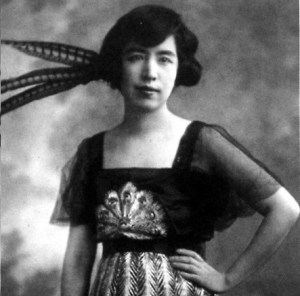
Stirred by Thoughts

In honor of Dragon Boat Day, we present his work from one of the genius poets of modern China.

Lü Bicheng
Chinese
1883 – 1943


Dark is our country—
I rejoice in the ray of dawn shooting up in the distance.
Who will sing loudly of women’s rights?
Joan of Arc.
Eight thousand feet of snow-capped waves—I am saddened by a sea of sin,
I look at East Asia in the stormy tide of the twentieth century.
If you hear mad words and weeping coming from my boudoir,
Don’t be surprised.
Isolated and confined,
Like the eternity of night.
Fettered and bound,
With no end in sight.
Knocking on Heaven’s door—no response,
How can I pour out my angry feelings?
Far and wide I summon the departed souls to no avail,
Nowhere to let out my hot-blooded zeal.
Alas, a frog at the bottom of a well; my wish always denied.
In vain emotions are stirred.

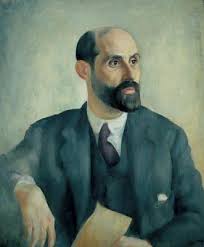
From Dreaming

Juan Ramón Jiménez
Spanish
1881 – 1958


– No, no!
and the dirtyneck boy starts crying and running
without getting away, in a moment, on the streets.
His hands,
he’s got something in his hands!
he doesn’t know what it is, but he runs to the dawn
With his hidden prize.
Endlessly beforehand, we know what his trophy is;
something ignored, that the soul keeps awake in us.
We almost start to glitter inside his gold
with extravagant nakedness…
– No, no!
and the dirtyneck boy starts crying and running
without getting away, in a moment, on the street.
The arm is strong, it could easily grab him…
The heart, also a beggar, lets him go.

Some Advice to Those Who Will Serve Time in Prison

Nazim Hikmet
Turkish
1902 – 1963


If instead of being hanged by the neck
you’re thrown inside
for not giving up hope
in the world, your country, your people,
if you do ten or fifteen years
apart from the time you have left,
you won’t say,
“Better I had swung from the end of a rope
like a flag” —
You’ll put your foot down and live.
It may not be a pleasure exactly,
but it’s your solemn duty
to live one more day
to spite the enemy.
Part of you may live alone inside,
like a tone at the bottom of a well.
But the other part
must be so caught up
in the flurry of the world
that you shiver there inside
when outside, at forty days’ distance, a leaf moves.
To wait for letters inside,
to sing sad songs,
or to lie awake all night staring at the ceiling
is sweet but dangerous.
Look at your face from shave to shave,
forget your age,
watch out for lice
and for spring nights,
and always remember
to eat every last piece of bread—
also, don’t forget to laugh heartily.
And who knows,
the woman you love may stop loving you.
Don’t say it’s no big thing:
it’s like the snapping of a green branch
to the man inside.
To think of roses and gardens inside is bad,
to think of seas and mountains is good.
Read and write without rest,
and I also advise weaving
and making mirrors.
I mean, it’s not that you can’t pass
ten or fifteen years inside
and more —
you can,
as long as the jewel
on the left side of your chest doesn’t lose it’s luster!

Reply to the Suit of Abu Jaafar

Hafsa Bint al-Hajj al-Rukuniyya
Arab Andalusian
1135 – 1191


Do not suppose it pleased the dell
That we should there together dwell
In happy union; truth to tell,
It showed us naught but petty spite.
The river did not clap, I fear,
For pleasure that we were so near,
The dove raised not his song of cheer
Save for his personal delight.

Think not such noble thoughts as you
Are worthy of; for if you do
You’ll very quickly find, and rue,
High thinking is not always wise.
I scarce suppose that yonder sky
Displayed its wealth of stars on high
For any reason, but to spy
On our romance with jealous eyes.

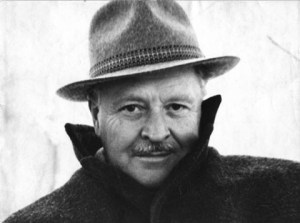
The Ploughman

We present this work in honor of Western Australia Day.

Patrick White
Australian
1912 – 1990


I saw a ploughman against the sky,
The wind of the sea in his horses’ manes,
And the share it was shod with gold;
Down to the sea, on the curve of the hill.
A foam of gulls in the furrow.
The ploughman walking behind his plough.
I heard the cry of the wave in the throats of the gulls,
Far off cry like the voice from a shell,
Yet beating down on me out of the trees,
Out of the net of the leafless trees.
I watched the ploughman stooping behind his plough.
As if Tune crouched on his shoulders there on the hill;
As if he had ploughed all yesterday, when the ships
Sailed fleecy into the harbour down below;
As if he had ploughed all the day before
When men were bright with steel in the valley.
With steel as bright as a winter sky
When the sun ebbs under the rim of the sea;
Ploughing, ploughing, ploughing the bones of
the centuries into the earth:
All pain yielded up in the sigh of the gulls;
Sorrow hid beneath poppy and dock,
To be soothed by the tremulous flame of the corn in spring.
The ploughman was singing, yet wordless his song,
For words are forgotten while thrushes’ notes linger
And music of water is graven in stone.
All is forgotten: the tramping of soldiers;
And proud white list of the clippers from China;
Only the ploughman remains as he follows
The plumed and glistening path of his furrow
Over the field that is strown with gulls.

Clare Coast 1710

Emily Lawless
Irish
1845 – 1913


See, cold island, we stand
Here to-night on your shore.
To-night, but never again;
Lingering a moment more.
See, beneath us our boat
Tugs at its tightening chain.
Holds out its sail to the breeze.
Pants to be gone again.
Off then with shouts and mirth,
Off with laughter and jests.
Mirth and song on our lips.
Hearts like lead in our breasts.

Death and the grave behind,
Death and a traitor’s bier;
Honour and fame before,
Why do we linger here?
Why do we stand and gaze,
Fools, whom fools despise,
Fools untaught by the years.
Fools renounced by the wise?

Heartsick, a moment more.
Heartsick, sorry, fierce.
Lingering, lingering on.
Dreaming the dreams of yore
Dreaming the dreams of our youth,
Dreaming the days when we stood
Joyous, expectant, serene,
Glad, exultant of mood.
Singing with hearts afire.
Singing with joyous strain.
Singing aloud in our pride,
We shall redeem her again
Ah, not to-night that strain,
Silent to-night we stand,
A scanty, a toil-worn crew.
Strangers, foes in the land
Gone the light of our youth.
Gone for ever, and gone
Hope with the beautiful eyes.
Who laughed as she lured us on
Lured us to danger and death.
To honour, perchance to fame,
Empty fame at the best,
Glory half dimmed with shame.
War-battered dogs are we.
Fighters in every clime.
Fillers of trench and of grave.
Mockers, bemocked by time.
War-dogs, hungry and grey,
Gnawing a naked bone,
Fighters in every clime.
Every cause but our own.

See us, cold isle of our love
Coldest, saddest of isles
Cold as the hopes of our youth.
Cold as your own wan smiles.
Coldly your streams outpour.
Each apart on the height.
Trickling, indifferent, slow,
Lost in the hush of the night.
Colder, sadder the clouds,
Comfortless bringers of rain;
Desolate daughters of air,
Sweep o’er your sad grey plain
Hiding the form of your hills.
Hiding your low sand duns;
But coldest, saddest, oh isle
Are the homeless hearts of your sons.

Coldest, and saddest there.
In yon sun-lit land of the south.
Where we sicken, and sorrow, and pine,
And the jest flies from mouth to mouth.
And the church bells crash overhead,
And the idle hours flit by.
And the beaded wine-cups clink.
And the sun burns fierce in the sky;
And your exiles, the merry of heart.
Laugh and boast with the best,
Boast, and extol their part.
Boast, till some lifted brow,
Crossed with a line severe.
Seems with displeasure to ask.
Are these loud braggarts we hear,
Are they the sons of the West,
The wept-for, the theme of songs.
The exiled, the injured, the banned.
The men of a thousand wrongs?

Fool, did you never hear
Of sunshine which broke through rain?
Sunshine which came with storm?
Laughter that rang of pain?
Boastings begotten of grief,
Vauntings to hide a smart.
Braggings with trembling lip.
Tricks of a broken heart?

Sudden some wayward gleam,
Sudden some passing sound,
The careless splash of an oar.
The idle bark of a hound,
A shadow crossing the sun,
An unknown step in the hall,
A nothing, a folly, a straw!
Back it returns all all
Back with the rush of a storm,
Back the old anguish and ill.
The sad, green landscape of home.
The small grey house by the hill.
The wide grey shores of the lake.
The low sky, seeming to weave
Its tender pitiful arms
Round the sick lone landscape at eve.
Back with its pains and its wrongs.
Back with its toils and its strife.
Back with its struggle and woe.
Back flows the stream of our life.
Darkened with treason and wrong.
Darkened with anguish and ruth,
Bitter, tumultuous, fierce,
Yet glad in the light of our youth.

So, cold island, we stand
Here to-night on your shore,
To-night, but never again,
Lingering a moment more.
See, beneath us our boat
Tugs at its tightening chain.
Holds out its sail to the breeze.
Pants to be gone again.
OfF then with shouts and mirth.
Off with laughter and jests.
Jests and song on our lips,
Hearts like lead in our breasts.