We present this work in honor of the poet’s 220th birthday.
James Clarence Mangan Irish 1803 – 1849
Long they pine in weary woe — the nobles of our land — Long they wander to and fro, proscribed, alas! and banned; Feastless, houseless, altarless, they bear the exie’s brand, But their hope is in the coming-to of Kathaleen Ny-Houlahan.
Think not her a ghastly hag, too hideous to be seen; Call her not unseemly names, our matchless Kathaleen; Young she is, and fair she is, and would be crowned a qeeen, Were the king’s son at home here with Kathaleen Ny-Houlahan.
Sweet and mild would look her face — Oh! none so sweet and mild — Could she crush the foes by whom her beauty is reviled; Woolen plaids would grace herself and robes of silk her child, If the king’s son were living here with Kathaleen Ny-Houlahan.
Sore disgrace it is to see the Arbitress of thrones Vassal to a Saxoneen of cold and hapless bones! Bitter anguish wrings our souls — with heavy sighs and groans We wait the Young Deliverer of Kathaleen Ny-Houlahan.
Let us pray to Him who holds life’s issues in His hands, Him who formed the mighty globe, with all his thousand lands; Girding them with sea and mountains, rivers deep, and strands, To cast a look of pity upon Kathaleen Ny-Houlahan.
He, who over sands and waves led Israel along — He who fed, with heavenly bread, that chosen tribe and throng; He who stood by Moses when his foes were fierce and strong, May He show forth His might in saving Kathaleen Ny-Houlahan.
I am cowering in an clock that does not let go of the evening The cage is tight No foetus can form in this narrow waist Every door I knock at There again a policeman arrives without a sneeze Squeezing me with words Breaking a twig With nowhere to graft it to Except on a branch that turned to letters of I love you
Where does it come from This water this question that grows takes root And without a father gives the answer A son
How can I get up with a clock That is in a coma And dive into the dusk
Like a dog I’m short legged The cats are watching And silence That carries the alphabet of suicide Doesn’t break out of me Until lips forsake “I love you” And the foetus is detached Under each poultice Point per point of my body A policeman is on his beat
We present this work in honor of the poet’s 250th birthday.
J.S. Anna Liddiard Irish 1773 – 1819
Death’s sleep soon flies;—They’ll wake again, To scorn past life, so full of pain! ‘Tis we that sleep—‘tis we that dream— Altho’ so much awake we seem; Awake! —alas! —one dream is Life, A Phantasma—a scene of strife— By folly led, by passions torn, Until we reach Life’s destined bourn!
We present this work in honor of the poet’s 100th birthday.
Fina Garcia Marruz Cuban 1923 – 2022
Who could say for sure? You see it as you pass by: eyes sinking into a broken, red dirt road; to the side, some painters’ shacks: tender blue doorways, smoky roof: the green runs to the back, lively as a hen, pecking at the wash, losing itself among blue distances.
No one lingers to look it over. You find it only when you leave for another place, when there’s no time.
They say the last flame will ignite in the ocean. In the belly of the whale that houses the forgotten myths, in its song, conjuring the return of the gods. But I stored away some matches to safeguard the flames of the earth.
We present this work in honor of the poet’s 125th birthday.
Vicente Aleixandre Spanish 1898 – 1984
What I do not want is to give you the words of day dreams. Not to spread the image with my lips on your face, nor with my kiss. I take the tip of your finger with pink nail, for my gesture, and, in this manner of airs, I give it back to you. From the grace and the lightsomeness of your pillow. And the heat of your exotic eyes. And the light of your secret breasts. Like the moon in the spring a window gives us yellow light, and a heart beat seems to flow back from you to me. It’s not that. Nor will it be. Your true sense has already given me the peace, the beautiful secret, the charming dimple, the lovely corner of your mouth and the weary morning.
We present this work in honor of the poet’s 150th birthday.
Walter de la Mare English 1873 – 1956
“Is there anybody there?” said the Traveller, Knocking on the moonlit door; And his horse in the silence champed the grass Of the forest’s ferny floor; And a bird flew up out of the turret, Above the Traveller’s head: And he smote upon the door again a second time; “Is there anybody there?” he said. But no one descended to the Traveller; No head from the leaf-fringed sill Leaned over and looked into his grey eyes, Where he stood perplexed and still. But only a host of phantom listeners That dwelt in the lone house then Stood listening in the quiet of the moonlight To that voice from the world of men: Stood thronging the faint moonbeams on the dark stair, That goes down to the empty hall, Hearkening in an air stirred and shaken By the lonely Traveller’s call. And he felt in his heart their strangeness, Their stillness answering his cry, While his horse moved, cropping the dark turf, ‘Neath the starred and leafy sky; For he suddenly smote on the door, even Louder, and lifted his head:– “Tell them I came, and no one answered, That I kept my word,” he said. Never the least stir made the listeners, Though every word he spake Fell echoing through the shadowiness of the still house From the one man left awake: Ay, they heard his foot upon the stirrup, And the sound of iron on stone, And how the silence surged softly backward, When the plunging hoofs were gone.
We present this work in honor of the poet’s 105th birthday.
Margaret Avison Canadian 1918 – 2007
The dervish dancer on the smoking steppes Unscrolled, into the level lava-cool Of Romish twilight, baleful hieroglyphs That had been civic architecture, The sculptured utterances of the Schools.
The Vikings rode the tasseled sea: Over their shoulders, running towards their boats, They had seen the lurking matriarchal wolves, Ducked their bright foreheads from the iron laurels Of a dark Scandinavian destiny, And chosen, rather, to be dwarfed to pawns Of the broad sulking sea.
And Lampman, when he prowled the Gatineau: Were the white vinegar of northern rivers, The stain of punkwood in chill evening air, The luminous nowhere past the gloomy hills, Were these his April cave— Sought as the first men, when the bright release Of sun filled them with sudden self-disdain At bone-heaps, rotting pelts, muraled adventures, Sought a more primitive nakedness?
The cave-men, Lampman, Lief, the dancing dervish, Envied the fleering wolf his secret circuit; But knew their doom to propagate, create, Their wild salvation wrapt within that white Burst of pure art whose only promise was Ferocity in them, thudding its dense Distracting rhythms down their haunted years.
We present this work in honor of the poet’s 80th birthday.
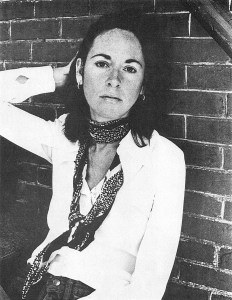
Louise Glück American b. 1943
In the first version, Persephone is taken from her mother and the goddess of the earth punishes the earth—this is consistent with what we know of human behavior,
that human beings take profound satisfaction in doing harm, particularly unconscious harm:
we may call this negative creation.
Persephone’s initial sojourn in hell continues to be pawed over by scholars who dispute the sensations of the virgin:
did she cooperate in her rape, or was she drugged, violated against her will, as happens so often now to modern girls.
As is well known, the return of the beloved does not correct the loss of the beloved: Persephone
returns home stained with red juice like a character in Hawthorne—
I am not certain I will keep this word: is earth “home” to Persephone? Is she at home, conceivably, in the bed of the god? Is she at home nowhere? Is she a born wanderer, in other words an existential replica of her own mother, less hamstrung by ideas of causality?
You are allowed to like no one, you know. The characters are not people. They are aspects of a dilemma or conflict.
Three parts: just as the soul is divided, ego, superego, id. Likewise
the three levels of the known world, a kind of diagram that separates heaven from earth from hell.
You must ask yourself: where is it snowing?
White of forgetfulness, of desecration—
It is snowing on earth; the cold wind says
Persephone is having sex in hell. Unlike the rest of us, she doesn’t know what winter is, only that she is what causes it.
She is lying in the bed of Hades. What is in her mind? Is she afraid? Has something blotted out the idea of mind?
She does know the earth is run by mothers, this much is certain. She also knows she is not what is called a girl any longer. Regarding incarceration, she believes
she has been a prisoner since she has been a daughter.
The terrible reunions in store for her will take up the rest of her life. When the passion for expiation is chronic, fierce, you do not choose the way you live. You do not live; you are not allowed to die.
You drift between earth and death which seem, finally, strangely alike. Scholars tell us
that there is no point in knowing what you want when the forces contending over you could kill you.
White of forgetfulness, white of safety—
They say there is a rift in the human soul which was not constructed to belong entirely to life. Earth
asks us to deny this rift, a threat disguised as suggestion— as we have seen in the tale of Persephone which should be read
as an argument between the mother and the lover— the daughter is just meat.
When death confronts her, she has never seen the meadow without the daisies. Suddenly she is no longer singing her maidenly songs about her mother’s beauty and fecundity. Where the rift is, the break is.
Song of the earth, song of the mythic vision of eternal life—
My soul shattered with the strain of trying to belong to earth—
What will you do, when it is your turn in the field with the god?




 Poets Corner