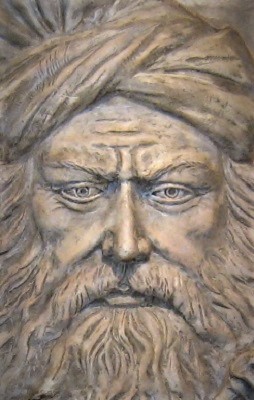
Persian
999 – 1072
A thin jug to a cup his head did bend
And a painful secret to her ear he did sigh;
I do not know what he told, what he said,
But I saw blood pouring down his eye.
A thin jug to a cup his head did bend
And a painful secret to her ear he did sigh;
I do not know what he told, what he said,
But I saw blood pouring down his eye.
We present this work in honor of the poet’s 75th birthday.
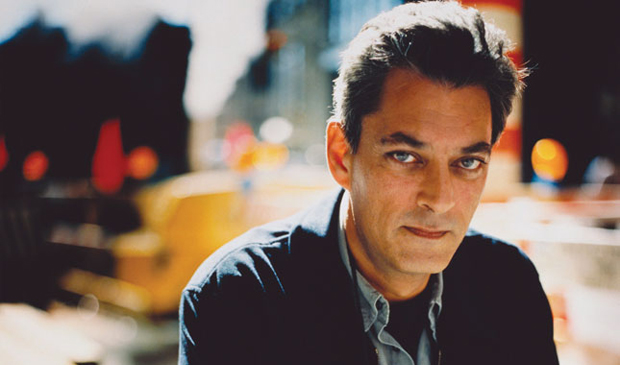
The name
never left his lips: he talked himself
into another body: he found his room again
in Babel.
It was written.
A flower
falls from his eye
and blooms in a stranger’s mouth.
A swallow
rhymes with hunger
and cannot leave its egg.
He invents
the orphan in tatters,
he will hold
a small black flag
riddled with winter.
It is spring,
and below his window
he hears
a hundred white stones
turn to raging phlox.

The new skirt, the vague gesture
cigarette in hand,
the daily inversion of time
intranscendent;
its emptiness pointing at us,
making us feel like parasites,
spider weaver of a useless web
that wraps and suffocates us.
We present this work in honor of Chinese New Year.

Along the road running west
The cicadas sing
And from the south too
So loudly it sounds like
A visitor approaching
How long the song lasts
From their fragile black wings
Yet my white shaggy head
Detects a note of gloom
As autumn’s heavy mists
Make flight unthinkable
And the wind grows stronger
Their song will be submerged
So too by my fellow man
I have been left here forgotten
No one shows the least regard
For the songs that yet
Would fill my heart
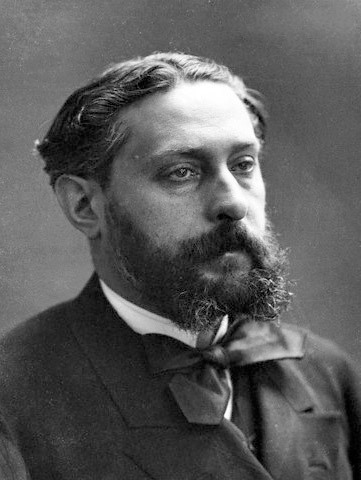
In this world all the flow’rs wither,
The sweet songs of the birds are brief;
I dream of summers that will last
Always!
In this world the lips touch but lightly,
And no taste of sweetness remains;
I dream of a kiss that will last
Always.
In this world ev’ry man is mourning
His lost friendship or his lost love;
I dream of fond lovers abiding
Always!
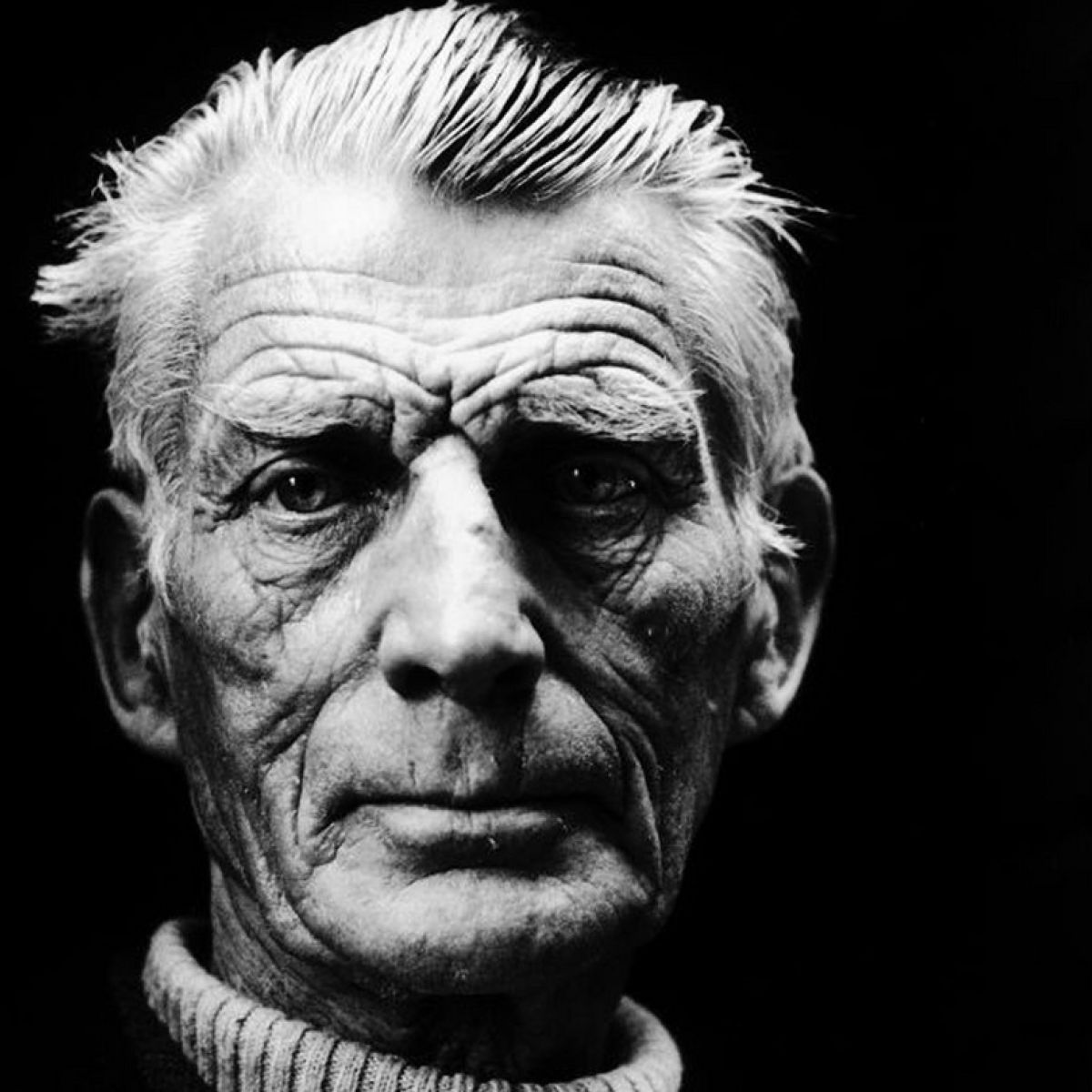
what would I do without this world faceless incurious
where to be lasts but an instant where every instant
spills in the void the ignorance of having been
without this wave where in the end
body and shadow together are engulfed
what would I do without this silence where the murmurs die
the pantings the frenzies towards succour towards love
without this sky that soars
above its ballast dust
what would I do what I did yesterday and the day before
peering out of my deadlight looking for another
wandering like me eddying far from all the living
in a convulsive space
among the voices voiceless
that throng my hiddenness
We present this work in honor of the 1,320th anniversary of the poet’s death.

From tomorrow ever
Shall I regard as brother
The twin-peaked mountain of Futagami-
I, daughter of man!
I would break off the branch
Of the flowering staggerbush
Growing on the rocky shore;
But no one says he lives
To whom I would show it!
We present this work in honor of the poet’s 45th birthday.

My attention
steps down from its center
like an oil stain.
Contradictory hand:
while it feigns snatching
specific objects,
its fingers count digressions.
Is to touch to have faith?
I attend to that shoe
that almost frees itself
from a young woman’s heel,
to the deaf-mute debates
on the TV in the back,
to the impatient tics of the light
and, just every so often,
to the time I have left.
We present this work in honor of the poet’s 190th birthday.
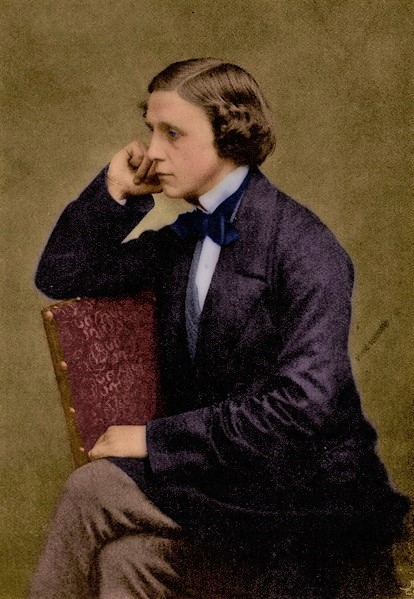
The sun was shining on the sea,
Shining with all his might:
He did his very best to make
The billows smooth and bright —
And this was odd, because it was
The middle of the night.
The moon was shining sulkily,
Because she thought the sun
Had got no business to be there
After the day was done —
“It’s very rude of him,” she said,
“To come and spoil the fun.”
The sea was wet as wet could be,
The sands were dry as dry.
You could not see a cloud, because
No cloud was in the sky:
No birds were flying overhead —
There were no birds to fly.
The Walrus and the Carpenter
Were walking close at hand;
They wept like anything to see
Such quantities of sand:
“If this were only cleared away,”
They said, “it would be grand!”
“If seven maids with seven mops
Swept it for half a year,
Do you suppose,” the Walrus said,
That they could get it clear?”
“I doubt it,” said the Carpenter,
And shed a bitter tear.
“O Oysters, come and walk with us!”
The Walrus did beseech.
“A pleasant walk, a pleasant talk,
Along the briny beach:
We cannot do with more than four,
To give a hand to each.”
The eldest Oyster looked at him,
But never a word he said:
The eldest Oyster winked his eye,
And shook his heavy head —
Meaning to say he did not choose
To leave the oyster-bed.
But four young Oysters hurried up,
All eager for the treat:
Their coats were brushed, their faces washed,
Their shoes were clean and neat —
And this was odd, because, you know,
They hadn’t any feet.
Four other Oysters followed them,
And yet another four;
And thick and fast they came at last,
And more, and more, and more —
All hopping through the frothy waves,
And scrambling to the shore.
The Walrus and the Carpenter
Walked on a mile or so,
And then they rested on a rock
Conveniently low:
And all the little Oysters stood
And waited in a row.
“The time has come,” the Walrus said,
“To talk of many things:
Of shoes — and ships — and sealing-wax —
Of cabbages — and kings —
And why the sea is boiling hot —
And whether pigs have wings.”
“But wait a bit,” the Oysters cried,
“Before we have our chat;
For some of us are out of breath,
And all of us are fat!”
“No hurry!” said the Carpenter.
They thanked him much for that.
“A loaf of bread,” the Walrus said,
“Is what we chiefly need:
Pepper and vinegar besides
Are very good indeed —
Now if you’re ready, Oysters dear,
We can begin to feed.”
“But not on us!” the Oysters cried,
Turning a little blue.
“After such kindness, that would be
A dismal thing to do!”
“The night is fine,” the Walrus said.
“Do you admire the view?”
“It was so kind of you to come!
And you are very nice!”
The Carpenter said nothing but
“Cut us another slice:
I wish you were not quite so deaf —
I’ve had to ask you twice!”
“It seems a shame,” the Walrus said,
To play them such a trick,
After we’ve brought them out so far,
And made them trot so quick!”
The Carpenter said nothing but
“The butter’s spread too thick!”
“I weep for you,” the Walrus said:
I deeply sympathize.”
With sobs and tears he sorted out
Those of the largest size,
Holding his pocket-handkerchief
Before his streaming eyes.
“O Oysters,” said the Carpenter,
“You’ve had a pleasant run!
Shall we be trotting home again?”
But answer came there none —
And this was scarcely odd, because
They’d eaten every one.
We present this work in honor of Australia Day.

The horses were ready, the rails were down,
But the riders lingered still
One had a parting word to say,
And one had his pipe to fill.
Then they mounted, one with a granted prayer,
And one with a grief unguessed.
“We are going,” they said, as they rode away
“Where the Pelican builds her nest!”
They had told us of pastures wide and green,
To be sought past the sunset’s glow;
Of rifts in the ranges by opal lit;
And gold “neath the river’s flow.
And thirst and hunger were banished words
When they spoke of that unknown West;
No drought they dreaded, no flood they feared,
Where the pelican builds her nest!
The creek at the ford was but fetlock deep
When we watched them crossing there;
The rains have replenished it thrice since then,
And thrice has the rock lain bare.
But the waters of Hope have flowed and fled,
And never from blue hill’s breast
Come back – by the sun and the sands devoured
Where the pelican builds her nest!
 Poets Corner