We present this work in honor of the 210th anniversary of the poet’s death.
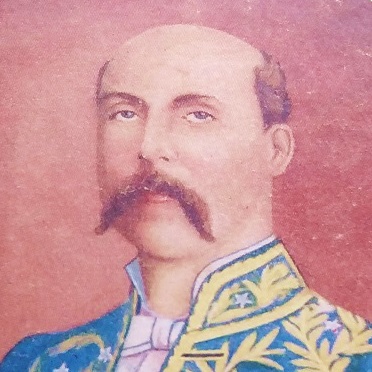
Heinrich von Kleist German 1777 – 1811
When the War-wheel storms, Men shout at the strife and take up arms, Men, who cherish hearts in their breasts, Hearts that the God of Love designed best.
They can surely rob me of nothing, I say, Not that peace, which has held its sway, Nor that innocence, or in God that faith, Which forbids all terror, as well as hate.
Not the deep shade of the maple tree will they impede, My source of comfort in the cornfield, Not even harass the Nightingale’s oration,
We present this work in honor of the poet’s 160th birthday.
Archibald Lampman Canadian 1861 – 1899
The leafless forests slowly yield To the thick-driving snow. A little while And night shall darken down. In shouting file The woodmen’s carts go by me homeward-wheeled, Past the thin fading stubbles, half concealed, Now golden-gray, sowed softly through with snow, Where the last ploughman follows still his row, Turning black furrows through the whitening field. Far off the village lamps begin to gleam, Fast drives the snow, and no man comes this way; The hills grow wintry white, and bleak winds moan About the naked uplands. I alone Am neither sad, nor shelterless, nor gray, Wrapped round with thought, content to watch and dream.
Oh God of mercy! Enlighten my mind a moment Of the vast universe, you are life, you are glory, you are sun; To each planet from your invisible Being descends an impalpable ray – goodness, greatness, love.
Eternal that ray is the focus of mysterious light, The fruitful fount of what always is said to emanate. Happy the one that walks lit by God in the world, not whipped by the terrible, searing storm.
This is what I want to sing. Between the applauses, the century’s genius curses your name. And another tower of Babel begins. Oh! Never in the heavens will it touch the proud head; It leaves not doubt, rather a sad, barren pain.
What haughty and ignorant pride with sage smoke that insults your glory and the nothing here below stand-offish? Denied, he toils; but only to know the reach always that the effort is in vain that attempts to sweep you up in his action.
The so fertile field to offered science returns without you in a desert. Only the man never progressed;
In vain he shouts and endeavors in his sterile pride Breaking your altars and erasing your name among farces.
Oh God of mercy! Enlighten my mind a moment Of the vast universe, you are life, you are glory, you are sun; Give to the world the prestigious sight of your ineffable Being, And achieve, under your protection, thrust your nascent splendor.
Your divine breath dissipates the ominous storm; Do not leave this century to its blindness and terrible ambition. Progress, hopes… everything! Ay! All of the new in the nothingness, If you do not avoid, it will return to bury us! What horror!
My lyre divulges that the triumphs that some receive; Their ancient greatness false and the lie of illusion; Here they vegetate. More what they reach for? Only shadows; Never managing to lift themselves up from the dust.
It is an inviolable law. Those that you, in your wisdom chose, If at the weight they succumb to your noble and excelling mission, They will be like the lost ship in the tempestuous sea, It is a birth that falles in the waves from the winging north. Happy he that is pious and obedient to your law as shown And the fool does not affir, That the gas and the phosphorus brighten more than your eternal blaze…
We present this work in honor of the 130th anniversary of the poet’s death.
Arthur Rimbaud French 1854 – 1891
One fine morning, in the country of a very gentle people, a magnificent man and woman were shouting in the public square. “My friends, I want her to be queen!” “I want to be queen!” She was laughing and trembling. He spoke to their friends of revelation, of trials completed. They swooned against each other.
In fact they were regents for a whole morning as crimson hangings were raised against the houses, and for the whole afternoon, as they moved toward groves of palm trees.
We present this work in honor of the 130th anniversary of the poet’s death.
Herman Melville American 1819 – 1891
When ocean-clouds over inland hills Sweep storming in late autumn brown, And horror the sodden valley fills, And the spire falls crashing in the town, I muse upon my country’s ills— The tempest bursting from the waste of Time On the world’s fairest hope linked with man’s foulest crime.
Nature’s dark side is heeded now— (Ah! optimist-cheer disheartened flown)— A child may read the moody brow Of yon black mountain lone. With shouts the torrents down the gorges go, And storms are formed behind the storm we feel: The hemlock shakes in the rafter, the oak in the driving keel.
We present this work in honor of International Talk Like a Pirate Day.
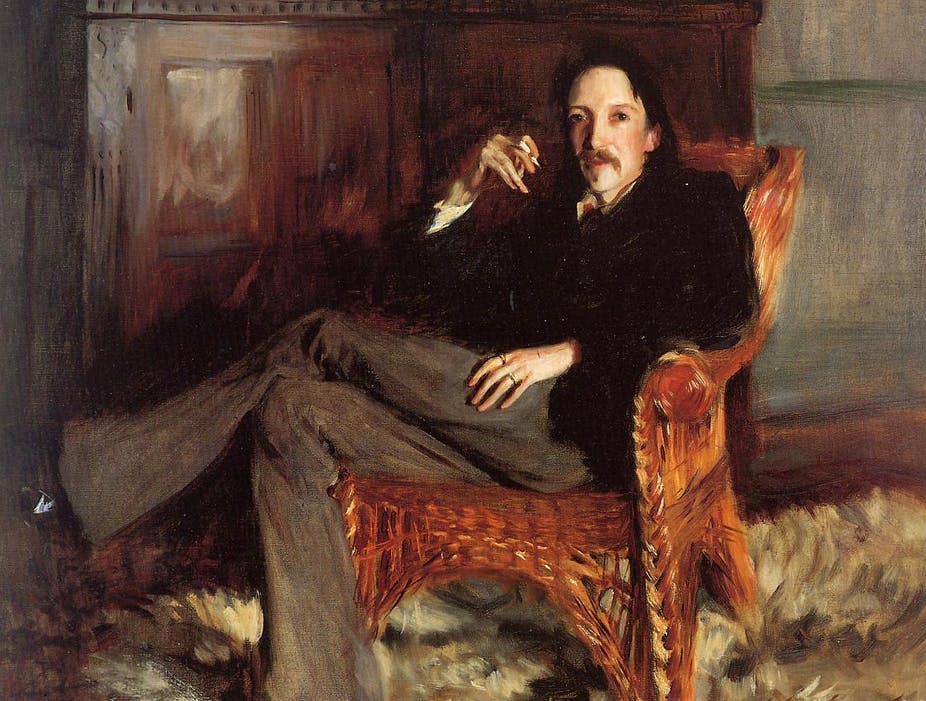
Robert Louis Stevenson Scots 1850 – 1894
Three of us afloat in the meadow by the swing, Three of us aboard in the basket on the lea. Winds are in the air, they are blowing in the spring, And waves are on the meadow like the waves there are at sea.
Where shall we adventure, to-day that we’re afloat, Wary of the weather and steering by a star? Shall it be to Africa, a-steering of the boat, To Providence, or Babylon, or off to Malabar?
Hi! but here’s a squadron a-rowing on the sea— Cattle on the meadow a-charging with a roar! Quick, and we’ll escape them, they’re as mad as they can be, The wicket is the harbour and the garden is the shore.
In honor of Chilean Independence Day, we present this work of independence by one of Chile’s great poets.
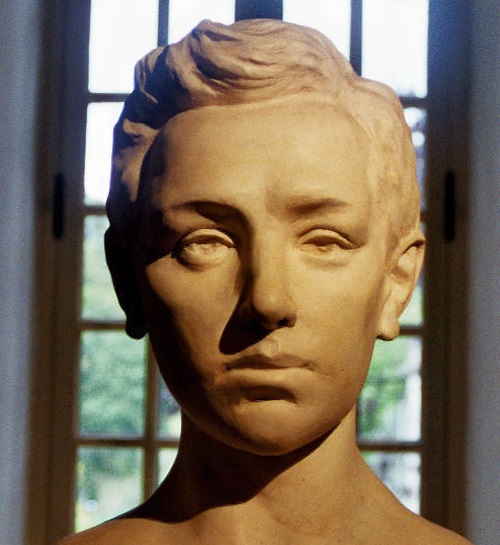
Guillermo Blest Gana Chilean 1829 – 1904
I observed when you snatched viciously me away my loved ones, and then I judged you: relentless like misfortune, inexorable like pain and cruel like the doubt…
But today that you, cold, mute, approach me without hate and without love, neither sullen nor affable, my spirit greets your majesty of the unfathomable and your eternity.
I, without the impatience of the suicide, neither the dread of the happy, nor the inert fear of the criminal, I await your coming;
that equal to everyone’s luck is my fortune: if nothing is expected of life, something must be expected from death.
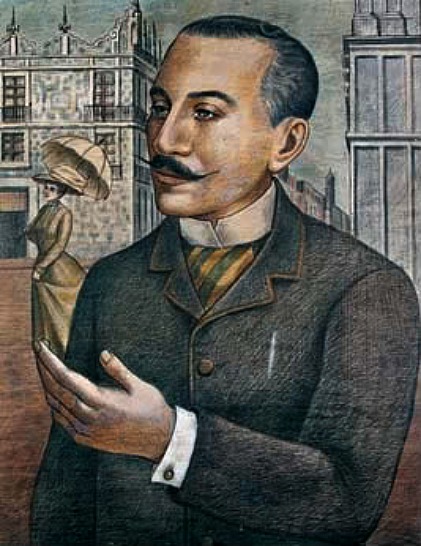
In honor of Mexican Independence Day, we present this work by one of Mexico’s most celebratory poets.
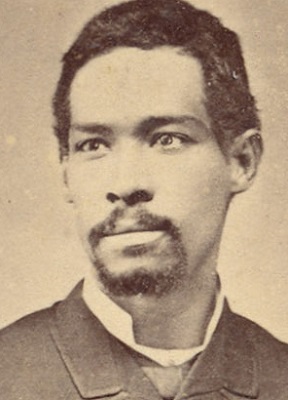
Manuel Gutiérrez Nájera Mexican 1859 – 1895
Speak not a word of wild, blaspheming grief! Be proud, be brave, though fallen in the strife, And gaze, oh poet, with supreme disdain On all the dark injustices of life!
Thou shalt not seek for constancy in love, Nor aught eternal from frail mortals ask; To rear sepuchral monuments on high From all thy griefs, O artist, be thy task! Chisel thy statues out of marble white, Forms chaste of mien, though naked to the air; And let speech slumber on their sculptured lips; Let them stand deeply sad, yet silent there.
A name! A sounding echo on the air, Fleeting and frail, its life a moment’s span! A dreamer’s foolish idol! Name and fame! This is the last sad vanity of man. Why should we justice seek, or clemency.— If our own comrades here deny our plea— From the indifference, mute and icy-cold, Of unknown men, to live in days to be?
Tardy compassion why should we implore From strangers hid in shadows, one and all? The echoes sleep within the darksome wood, And no one, no one answers to our call.
The only consolation in this life Is to remember happy hours and fair, And lift our eyes on high to view the skies When skies are blue or stars are shining there;
To flee the sea, and on the sleeping lake Enjoy the water’s calm, the peaceful time; To sleep—to dream—our wizard strong, the Dream, Is a deceiver holy and sublime!
‘Tis true, alas, that in the honest breast The fresh wound calls for vengeance and for strife; But yet—forgive the evil they have done! All suffer from the malady of life.
The very men who crown themselves with flowers Are born to sorrow, and to perish, too. If those you love the most betray your trust, Forgive them, for they know not what they do!
Perhaps those instincts they inherited, And they avenge unknowingly to-day Races that gathered on their hapless heads All griefs and hatreds ere they passed away.
Are thou perchance the judge—the sinless one? Do justice and sweet mercy meet in thee? Ah, who is not a fugitive, that bears The weight of crimes unpunished, guiltily?
Who has not feigned to love, dared with false vows Into a maiden’s holy soul to steal? Who can be sure that he has never killed? Who is the just man, that may justice deal?
Pity and pardon for all those that live! So, full of love, in mild and gentle mood, We shall be tender and compassionate, And haply, haply, some time shall be good!
Friend, dost thou suffer? Seek thy sweetheart fair In deathless beauty, free from pain and fear— Live leaning on thy sadness, as of old On young Cordelia leaned the wandering Lear.
See, far and farther ebbs the dying day! How good it is to rest! In shade obscure The woodland lulls us with a music soft; Virgin the water is, the air is pure.
Weary, her eyes the light is closing now; Sad murmors sound, and many a mournful sigh. The night, descending, to the earth says, ‘Come! ‘Tis over. Go to sleep, and do not cry!’
To recollect—forgive—have loved, believed, And had brief happiness our hearts to bless, And soon, grown weary, to recline against The snowy shoulder of forgetfulness!
To feel forevermore the tenderness That warmed your youthful bosoms with its flame, Receiving happiness, if it should come, Like a glad visit from some beauteous dame;
To hold still hidden that which most we love— Smiling forgiveness on our lips to keep— Until at last, O earth! we come to thee In the complete abandonment of sleep:
This ought to be the life of him who thinks How transient all things are that meet his eyes, And, wisely, stops before the wide expanse Of falsehood’s ocean that around him lies.
Gather the flowers, while there are flowers to pluck; Forgive the roses for their thorny guise! Our sorrows also pass away and fly, Flitting like swarms of dark-winged butterflies.
Love and forgive! Resist with courage strong The wicked, the unjust, the cowardly. The silent night, when it settles down, Pensive and sad, is beautiful to see!
When sorrow dims my spirit, on the heights I seek for calmness and for shining light. Upon the frozen summits of my soul Infinite pity spreads its hue of white.
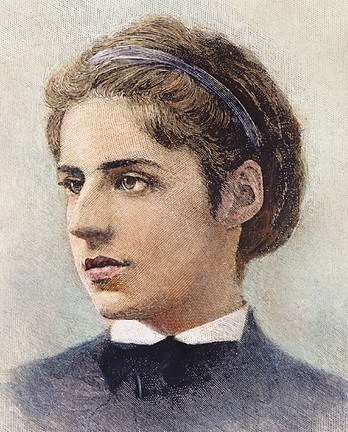
Not while the snow-shroud round dead earth is rolled, And naked branches point to frozen skies.— When orchards burn their lamps of fiery gold, The grape glows like a jewel, and the corn A sea of beauty and abundance lies, Then the new year is born. Look where the mother of the months uplifts In the green clearness of the unsunned West, Her ivory horn of plenty, dropping gifts, Cool, harvest-feeding dews, fine-winnowed light; Tired labor with fruition, joy and rest Profusely to requite. Blow, Israel, the sacred cornet! Call Back to thy courts whatever faint heart throb With thine ancestral blood, thy need craves all. The red, dark year is dead, the year just born Leads on from anguish wrought by priest and mob, what undreamed-of morn? For never yet, since on the holy height, The Temple’s marble walls of white and green Carved like the sea-waves, fell, and the world’s light Went out in darkness,—never was the year Greater with portent and with promise seen, Than this eve now and here. Even as the Prophet promised, so your tent Hath been enlarged unto earth’s farthest rim. To snow-capped Sierras from vast steppes ye went, Through fire and blood and tempest-tossing wave, For freedom to proclaim and worship Him, Mighty to slay and save. High above flood and fire ye held the scroll, Out of the depths ye published still the Word. No bodily pang had power to swerve your soul: Ye, in a cynic age of crumbling faiths, Lived to bear witness to the living Lord, Or died a thousand deaths. In two divided streams the exiles part, One rolling homeward to its ancient source, One rushing sunward with fresh will, new heart. By each the truth is spread, the law unfurled, Each separate soul contains the nation’s force, And both embrace the world. Kindle the silver candle’s seven rays, Offer the first fruits of the clustered bowers, The garnered spoil of bees. With prayer and praise Rejoice that once more tried, once more we prove How strength of supreme suffering still is ours For Truth and Law and Love.



 Poets Corner