My father is “having fun” cleaning the floor he uses the plugged in sink as a bucket wears rags on his feet and shimmies to a cleaning beat he asks me to read the label on the bottle for him he wants our floor to shine and laughs when (surprise) it does this is how I will remember him moonwalking across our kitchen floor rags under his feet “that’s how my mother taught me” he says “but I never take any note it takes me forty years to do what she say”
I am cowering in an clock that does not let go of the evening The cage is tight No foetus can form in this narrow waist Every door I knock at There again a policeman arrives without a sneeze Squeezing me with words Breaking a twig With nowhere to graft it to Except on a branch that turned to letters of I love you
Where does it come from This water this question that grows takes root And without a father gives the answer A son
How can I get up with a clock That is in a coma And dive into the dusk
Like a dog I’m short legged The cats are watching And silence That carries the alphabet of suicide Doesn’t break out of me Until lips forsake “I love you” And the foetus is detached Under each poultice Point per point of my body A policeman is on his beat
They say the last flame will ignite in the ocean. In the belly of the whale that houses the forgotten myths, in its song, conjuring the return of the gods. But I stored away some matches to safeguard the flames of the earth.
We present this work in honor of the Tunisian holiday, Martyrs’ Day.
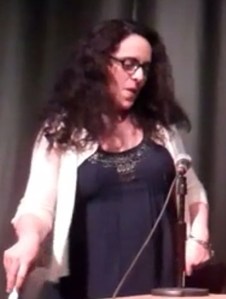
Samia Ouederni Tunisian b. 1980
Do not fill their voices with smoky air because shut mouths of despair are blocking their spit, their revived viruses, their weaknesses to tell the story when the noise of a rolling stone is swearing at god. Shall I, at least, say that memory is decayed that history is dismayed; that past is dead deeds and mythological dates are the land’s seeds as the sheep have forgotten about the wolf’s teeth clacking? Shall I say that Eternity means not a Calvin Klein’s perfume but looms above their hats and doom denying all celebrity? Or will you forget someday that trees have their leaves to be lost over heartless pebbles and frost? I have learnt from history that dam-builders will be forever damned. When the water will rise with the people’s tears, it will spare none. Shall I tell about a woman’s cry amid sounds and swear-words? Or loudly my voice will tell of female shapes whose bodies have been displaced for time and space in fashion magazines? Can I turn on a TV pretending to re-appropriate history or will its waves bring about voiceless shouts? Now, when writing is fired by scientific neutrality that cries: “I AM THE WORLD!” Can I, at last, see purged tongues laying down their sandals and feet with no chance even to cheat or tell what their hearts hide? Will I be hanged when they will understand?
An abandoned ride at a fair, challenging the elements.
Everyone stops at the bull and says I can do this. Everyone, without exception, has confidence in their heels and they mount the electric violence of its back. They’re still confident when the movement begins, as if a powerful, invisible hand has slipped a token into the machine without warning. The metallic click cuts through the sound, a tiny bulldozer flattening the silence. Then everything begins, and there’s no way to keep the body straight, that form we once thought we dominated but that now reveals itself to us as if it has been waiting its turn biting its nails since it was given a name.
If I were a mouse I would rather lose my tail in the trap than miss out on my cheese.
We present this work in honor of the poet’s 100th birthday.
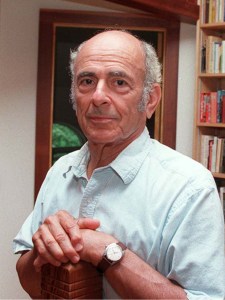
Louis Simpson American 1923 – 2012
A siren sang, and Europe turned away From the high castle and the shepherd’s crook. Three caravels went sailing to Cathay On the strange ocean, and the captains shook Their banners out across the Mexique Bay.
And in our early days we did the same. Remembering our fathers in their wreck We crossed the sea from Palos where they came And saw, enormous to the little deck, A shore in silence waiting for a name.
The treasures of Cathay were never found. In this America, this wilderness Where the axe echoes with a lonely sound, The generations labor to possess And grave by grave we civilize the ground.
I know what the sea tells the desert And the words of high palm trees through gesturing The sound of the sands praising when water flows The fear of the spikes harvested them scythes of strangers And the thirsty seed reveals to me If he gets high, he is free And if the wind whispers in the wide open I realized her grandfather’s shiver In the ecstasy of the passions I know what was silenced from the sighs of the mute when it complains to me about the burden it bears And the blame of the dead The disillusions of the alive It is the heartbreak of History The most glorious names And it went on to pick up the tracks In the desperation of darkness
In honor of St. Joseph’s Day, we present this work by one of today’s most spirited Colombian poets.
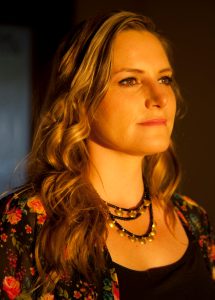
Andrea Cote-Botero Colombian b. 1981
Also remember, María, four in the afternoon in our scorched port. Our port that was more a stranded bonfire or a wasteland or a lightning flash. Remember the burning ground, us girls scratching the earth’s back as if to disinter the green meadow. The lot where they were serving the snack, our plate brimming with onions salted by my mother, fished by my father. But despite all that, you know well, we would have liked to invite God to preside at our table, God but without a word without miracles and only so you would know, María, that God is everywhere as well as in your plate of onions although it makes you cry.
But above all remember me and the wound, before they grazed from my hands in the wheatfield of onions to make from our bread the hunger of all our days so that now that you no longer remember and the bad seed feeds the wheatfield of the missing I discover you, María, which is not your fault nor the fault of your forgetting, for this is the time and this its task.



 Poets Corner