We present this work in honor of the Canadian holiday, National Aboriginal Day.
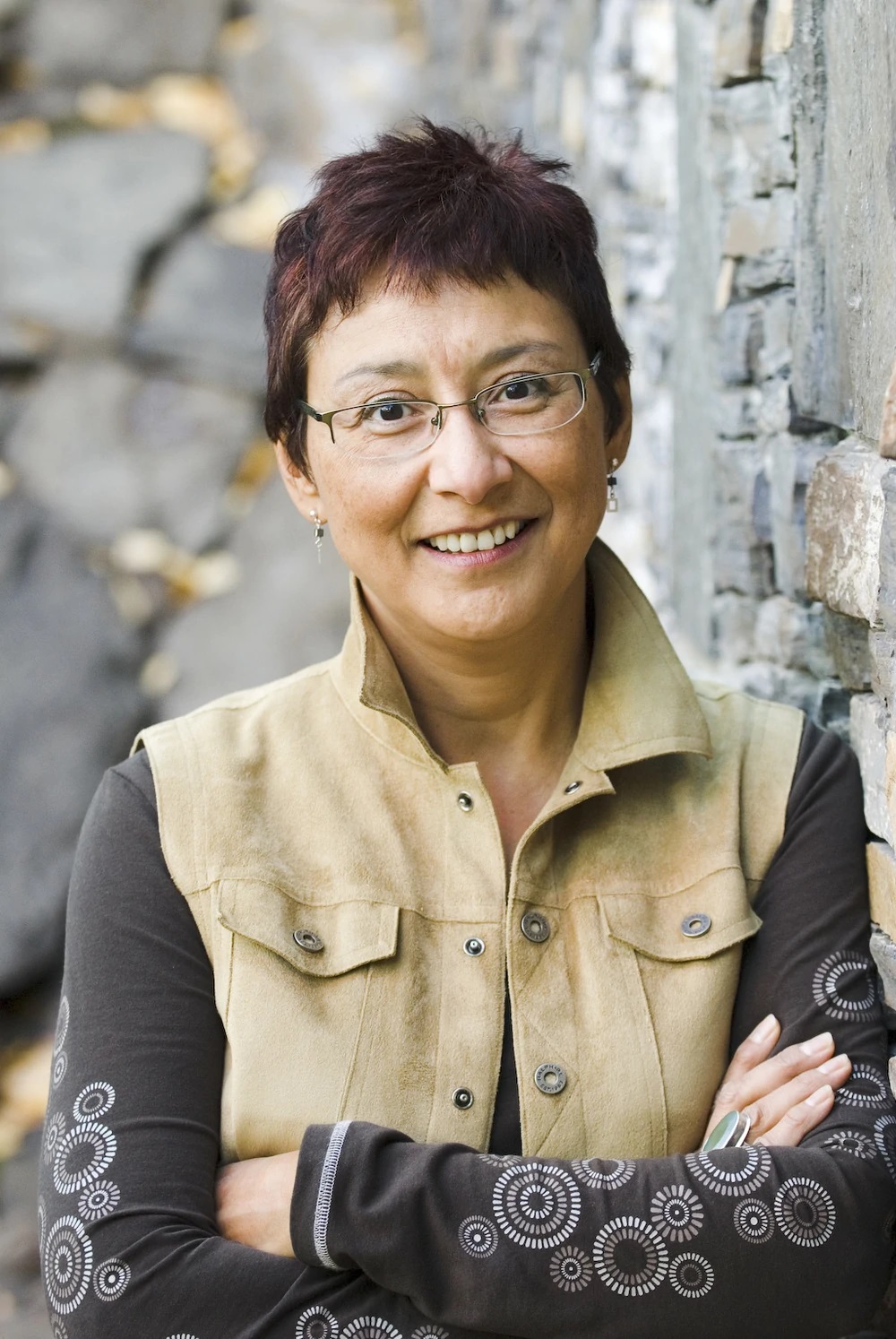
Marilyn Dumont
Canadian
b. 1955
Betty, if I set out to write this poem about you it might turn out instead to be about me or any one of my female relatives it might turn out to be about this young native girl growing up in rural Alberta in a town with fewer Indians than ideas about Indians in a town just south of the ‘Aryan Nations’
It might turn out to be about Anna Mae Aquash, Donald Marshall, or Richard Cardinal, it might even turn out to be about our grandmothers beasts of burden in the fur trade skinning, scraping, pounding, packing left behind for ‘British Standards of Womanhood,’ left for white-melting-skinned women, not bits-of-brown women left here in this wilderness, this colony.
Betty, if I start to write a poem about you it might turn out to be about hunting season instead about ‘open season’ on native women it might turn out to be about your face young and hopeful staring back at me hollow now from a black and white page it might be about the ‘townsfolk’ (gentle word) townsfolk who ‘believed native girls were easy’ and ‘less likely to complain if a sexual proposition led to violence’
We present this work in honor of the poet’s 30th birthday.
Elvira Sastre
Spanish
b. 1992
If you had met me pure, without a bad conscience, without sorrow in my dreams, without bites from others rooted in my shoulders.
Would you have bathed me in the morning light, licked the sleep from my eyes, stroked my insomnia, caressed my wrinkled hands with your teeth?
And if I had dressed up in something to look like you, if I had lied to you telling you my truths, if I had told you that you were the only one and not the first.
Would you have undressed me with your eyes closed and your expert hands, kissed me while I told you about my life, placed your name and mine on a pedestal and made this a love between equals?
And if I had sold myself as the love of your life,
if I had bought you as the love of mine.
Would we have fallen in love like someone who loves herself loving the one she loves?
We present this work in honor of the South African holiday, Youth Day.
Ingrid Jonker South African 1933 – 1965
I am with those who abuse sex because the individual doesn’t count with those who get drunk against the abyss of the brain against the illusion that life once was good or had beauty or sense against the garden parties of falsehood against the silence that beats into the temples with those who poor and old race against death the atom-bomb of the days and in shacks count the last flies on the walls with those stupefied in institutions shocked with electric currents through the cataracts of the senses with those who have been depraived of their hearts like the light out of the robot of safety with those coloured, african dispossessed with those who murder because every death confirms anew the lie of life And please forget about justice it doesn’t exist about brotherhood it’s deceit about love it has no right
The banner of your body floats in the Brandenburg wind. An old woman wants to come in, I can see her through the door, her red felt hand pressing in vain on the latch, scraps of her cries come at me like the barbaric song of a violin mending the night; I’m going to slip a rose under the door a black-blooded rose, maybe she’ll go away? And I could wallow in the bramble hammock but her voice hiccups: Ophelia My name is Ophelia, open the door, O-phe-lia… —What do I care about her grotesque distortions What lie will she bring me? Why doesn’t she extend it to me through the sheets of sand the way she extends her name… Ophelia Ophelia, her shadow ricochets in the aura of my dusk. Ophelia, her voice grates like a leper’s rattle, philia, figlia…
A world there is for those in love with mines of precious stones, But bards select a different world as setting for their thrones. The bird who eats love’s magic grain lives on another plane — His nest beyond both worlds, ignoring riches, scorning fame.
Here I will never hear the cuckoo’s call. Here trees will never wear the shtreimel-snow. Yet here in the pine’s shade I can hear all My childhood, brought to life from long ago.
The needles chiming: Once upon a time “Home” was the word I gave to snow, not sand, And the brook-fettering ice- a greenish rime Of my song’s language in a foreign land.
Perhaps the voyaging birds alone who find Their own route hanging between the sky and earth, Know how I pine between two lands of birth.
In you I was transplanted, O my pine. In you I branched into myself and grew Where disparate landscapes split one root in two.




 Poets Corner