In honor of Allegiance Day, we present this work by one of modern Morocco’s finest poets.
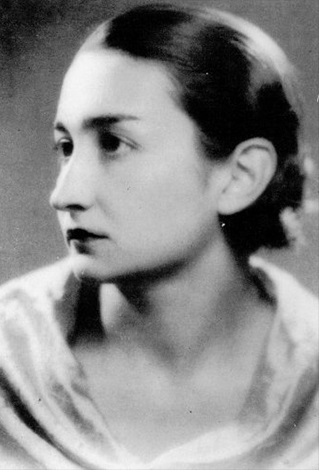
Fatiha Morchid Moroccan b. 1958
I rise from under the ruins Climb my pride And reach to the surface… The zenith of pain From memory I build up a fortress …and from monotony. I wrap myself in expectations from above Before I resume… My falling.
I love this body of mine that has lived life, its hip flask outline, its softness of water, the spurting of hair that crowns my cranium, the crystal glass of a face, its delicate base that ascends faultless from shoulders and collarbone.
I love my back, gullible to turned-off stars, my revealed hills, fountains of the chest that provide the first sustenance of the species. Coming out of the ribs, mobile waist overflowing and warm vessel of my stomach.
I love the moon curve of my hips, moulded by alternate pregnancies, the vast roundness of the wave of my gluteals, and my legs and feet, foundations and support of the temple.
I love the handful of dark petals, the hidden fleece that stores the dawning mystery of paradise, the humid cavity where blood flows and living water shoots out.
This hurting body of mine that gets sick, that festers, that coughs, that perspires, secretes moods, feces, saliva, and that gets tired, exhausted, and withers.
Living body, link that assures the infinite chain of successive bodies. I love this body made of the purest mud: seed, root, sap, flower, and fruit.
We present this work in honor of the poet’s 90th birthday.
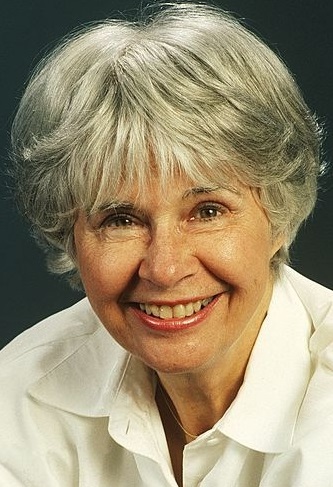
Delia Domínguez Chilean b. 1931
Tomorrow, a God I don’t know will offer me salvation if I don’t blindfold my soul as your shadow passes by.
Tomorrow, a mist will rise from the cornfields and we’ll know another season is upon us because our clothing will stick to our ribs, and you’ll depart forever like those visitors from the city who don’t know the sense of belonging or the scent of rotting leaves —or even less— the desolation of the hillsides after an infernal rain.
Tomorrow I’ll be silent, turned toward my solitary pillow like a schoolgirl punished in the farthest corner of the world, while the nettles at the back of the garden will open their milky buttons in the midst of this silence when it’s all much too late.
We present this work in honor of the 25th anniversary of the poet’s death.
May Ayim German 1960 – 1996
what should the last words be fare-well see you again sometime somewhere? what should the last deeds be a last letter a phone call a soft song? what should the last wish be forgive me forget me not I love you? what should the last thought be thank you? thank you
We present this work in honor of the 70th anniversary of the poet’s death.
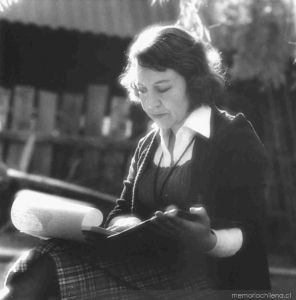
Winétt de Rokha Chilean 1892 – 1951
A cave, with stalactites and stalagmites, all white, like the index finger of the morning. A tapestry, blood-spattered, repetitive, my slipper but one seed in the watermelon.
Every eye doubles itself in the little mirrors of my toe-nails; my arms fall, lift themselves, and fall again through autumn.
The word becomes a butterfly of the night, bats its wings, stops, opens itself to unforeseen pearls — catches at an echo that rolls slowly away, dividing and dividing again, and chases after its own flight like the mane of a comet as it dissolves.
We present this work in honor of the 115th anniversary of the poet’s death.
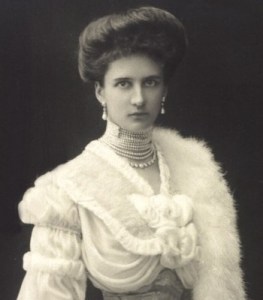
Princess Mathilde of Bavaria German 1877 – 1906
The withered leaves of Autumn, in golden whirlpools light, Were dancing in the sunshine of Summer’s dying day, And yet their dancing seemed to me their agonizing flight From darkness and oblivion, and mouldering decay.
The hag that sweeps the pavement, with ruthless broom unkind, Swept up the joyful dancers, and, muttering at their play, She caught the helpless beings, as many as she could find, And, mingled with the dust and filth, she swept them all away.





 Poets Corner