The Mooch o’ Life

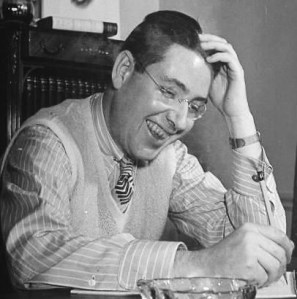
C.J. Dennis
Australian
1876 – 1938


This ev’nin’ I was sittin’ wiv Doreen,
Peaceful an’ ‘appy wiv the day’s work done,
Watchin’, be’ind the orchard’s bonzer green,
The flamin’ wonder of the settin’ sun.

Another day gone by; another night
Creepin’ along to douse Day’s golden light;
Another dawning when the night is gone,
To live an’ love — an’ so life mooches on.

Times I ‘ave thought, when things was goin’ crook,
When ‘Ope turned nark an’ Love forgot to smile,
Of somethin’ I once seen in some old book
Where an ole sorehead arsts, “Is life worf w’ile?”

But in that stillness, as the day grows dim,
An’ I am sittin’ there wiv ‘er an’ ‘im—
My wife, my son! an’ strength in me to strive,
I only know — it’s good to be alive!

Yeh live, yeh love, yeh learn; an’ when yeh come
To square the ledger in some thortful hour,
The everlastin’ answer to the sum
Must allus be, “Where’s sense in gittin’ sour?”

Fer when yeh’ve come to weigh the good an’ bad —
The gladness wiv the sadness you ‘ave ‘ad —
Then ‘im ‘oo’s faith in ‘uman goodness fails
Fergits to put ‘is liver in the scales.

Livin’ an’ loving learnin’ day be day;
Pausin’ a minute in the barmy strife
To find that ‘elpin’ others on the way
Is gold coined fer your profit — sich is life.

I’ve studied books wiv yearnings to improve,
To ‘eave meself out of me lowly groove,
An’ ‘ere is orl the change I ever got:
“‘Ark at yer ‘eart, an’ you kin learn the lot.”

I gives it in — that wisdom o’ the mind —
I wasn’t built to play no lofty part.
Orl such is welkim to the joys they find;
I only know the wisdom o’ the ‘eart.

An’ ever it ‘as taught me, day be day,
The one same lesson in the same ole way:
“Look fer yer profits in the ‘earts o’ friends,
Fer ‘atin’ never paid no dividends.”

Life’s wot yeh make it; an’ the bloke ‘oo tries
To grab the shinin’ stars frum out the skies
Goes crook on life, an’ calls the world a cheat,
An’ tramples on the daisies at ‘is feet.

But when the moon comes creepin’ o’er the hill,
An’ when the mopoke calls along the creek,
I takes me cup o’ joy an’ drinks me fill,
An’ arsts meself wot better could I seek.

An’ ev’ry song I ‘ear the thrushes sing
That everlastin’ message seems to bring;
An’ ev’ry wind that whispers in the trees
Gives me the tip there ain’t no joys like these:

Livin’ an’ loving wand’rin’ on yeh way;
Reapin’ the ‘arvest of a kind deed done;
An’ watching in the sundown of yer day,
Yerself again, grown nobler in yer son.

Knowin’ that ev’ry coin o’ kindness spent
Bears interest in yer ‘eart at cent per cent;
Measurin’ wisdom by the peace it brings
To simple minds that values simple things.

An’ when I take a look along the way
That I ‘ave trod, it seems the man knows best,
Who’s met wiv slabs of sorrer in ‘is day,
When ‘e is truly rich an’ truly blest.

An’ I am rich, becos me eyes ‘ave seen
The lovelight in the eyes of my Doreen;
An’ I am blest, becos me feet ‘ave trod
A land ‘oo’s fields reflect the smile o’ God.

Livin’ an’ lovin’; learnin’ to fergive
The deeds an’ words of some un’appy bloke
Who’s missed the bus — so ‘ave I come to live,
An’ take the ‘ole mad world as ‘arf a joke.

Sittin’ at ev’nin’ in this sunset-land,
Wiv ‘Er in all the World to ‘old me ‘and,
A son, to bear me name when I am gone…
Livin’ an’ lovin’ — so life mooches on.
Limits

In honor of the Argentine holiday, National Flag Day, we present this work by Argentina’s most legendary author.

Jorge Luis Borges
Argentine
1899 – 1986


Among these streets that deepen the red west
There must be one I’ve gone along not knowing
That that time, in that street, will have been my last—
Both unconcerned and unaware, obeying

The great Whoever-It-Is that sets a term,
A secret and inviolable end,
To every shadow, every dream and form
That ravels life and knits it up again.

And if for all there is a norm and measure,
A last time, a nevermore, and a forgetting,
Who can tell which visitor, departing,
Is one to whom we’ve said goodbye forever?

Beyond the greying window night is fading
And in the stack of books whose lopped shadow
Makes it seem taller on the dim-lit table,
There’s one we’ll never get around to reading.

There are on the Southside more than one ruined dooryard
With prickly pear and rubble masonry planters
Where I shall no more be allowed to enter
Than if it were a picture on a postcard.

There is a door that you have closed for good,
A mirror that waits in vain to hold your face;
A four-faced Janus guards your next crossroad
Though it seems you might go any of its ways.

In the midst of all your memories there is one
Faded away beyond recovering;
Neither the yellow moon nor the white sun
Will ever see you drinking from that spring.

Your voice will not recapture what the Persian
Said in his tongue of rose and nightingale
When you may wish at dusk, as the light disperses,
To say things that are unforgettable.

And the everflowing Rhône, and certain lake,
All that is present to me from the past,
Will sink like Carthage that the Roman took,
Destroyed with fire and with salt erased.

I believe I hear in the dawn the strenuously
Long murmur of a multitude departing.
They are what has loved me and forgotten.
Space, time, and Borges are deserting me.

A Drink With Something In It

We present this work in honor of National Dry Martini Day.

Ogden Nash
American
1902 – 1971


There is something about a Martini,
A tingle remarkably pleasant;
A yellow, a mellow Martini;
I wish that I had one at present.
There is something about a Martini,
Ere the dining and dancing begin,
And to tell you the truth,
It is not the vermouth-
I think that perhaps it’s the gin.

There is something about an old-fashioned
That kindles a cardiac glow;
It is soothing and soft and impassioned
As a lyric by Swinburne or Poe.
There is something about an old-fashioned
When dusk has enveloped the sky,
And it may the ice,
Or the pineapple slice,
But I strong suspect it’s the rye.

There is something about a mint julep.
It is nectar imbibed in a dream,
As fresh as the bud of the tulip,
As cool as the bed of the stream.
There is something about a mint julep,
A fragrance beloved by the lucky.
And perhaps it’s the tint
Of the frost and the mint,
But I think it was born in Kentucky.

There is something they put in a highball
That awakens the torpidest brain,
That kindles a spark in the eyeball,
Gliding singing through vein after vein.
There is something they put in a highball
Which you’ll notice one day, if you watch;
And it may be the soda,
But judged by the odor,
I rather believe it’s the Scotch

Then here’s to the heartening wassail,
Wherever good fellows are found;
Be its mater instead of its vassal,
And order the glasses around.
For there’s something they put in the wassail
That prevents it from tasting like wicker;
Since it’s not tapioca,
Or mustard, or mocha,
I’m forced to conclude it’s the liquor.

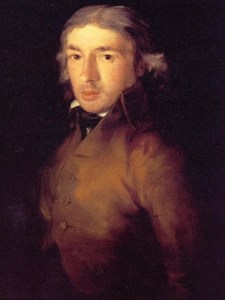
Epistle to Don Gaspar de Jovellanos, Sent from Rome

Leandro Fernández de Moratín
Spanish
1760 – 1828


Yes! the pure friendship, that in kindly bonds
Our souls united, durable exists,
Illustrious Jovino! nor can time,
Nor distance, nor the mountains us between,
Nor stormy seas hoarse roaring, separate
Remembrance of thee from my memory.

The sound of Mars, that now sweet peace awhile
Suspends, has long unhappy silence placed
On my affection. Thou I know content
Livest in obscure delicious quietude,
For ever with untiring zeal inspired
To aid the public weal; of virtue e’er.
And talent, the protector and the friend.

These verses which I frame unpolish’d, free,
Though not corrected with thy learned taste,
In truth announce to thee my constant faith.
And so may Heaven but soon to me return
The hour again to see thee, and relate
Familiarly discoursing, to my view
Whatever of its varied scenes the world
Presented. From my native shores to those
Which bathes the Seine, blood-stain’d and turbulent;
The daring Briton’s, master of the sea,
To the bold Belgian’s; from the deep-flowing Rhine
To the high tops of Apennine snow-crown’d,
And that height further, which in burning smoke
Covers and ashes over Naples wide,
The different nations I have visited,
Acquiring useful knowledge, never gain’d
By learned reading in retired abodes.
For there we cannot see the difference great
Which climate, worship, arts, opinions,
And laws occasion. That is found alone,
If thou wouldst study man, in man himself.

Now the rough Winter, which augments the waves
Of Tiber, on his banks has me detain’d,
Inhabitant of Rome. O! that with thee
’Twere granted me to rove through her, to scan
The wonderful remains of glories past,
Which Time, whose force can naught resist, has spared!
Thou nursling of the Muses and the Arts,
Faithful oracle of bright history,
What learning thou wouldst give the affluent lip;
What images sublime, by genius fired,
In the great empire’s ruin thou wouldst find!
Fell the great city, which had triumph’d o’er
The nations the most warlike, and with her
Ended the Latin valour and renown.
And she who to the Betis from the Nile
Her eagles proudly bore, the child of Mars,
The Capitol with barbarous trophies deck’d,
Conducting to her car of ivory bound
Great kings subdued, amid the hoarse applause
Of wide-throng’d forums, and the trumpet’s sounds,
Who to the world gave laws, now horrible
Night covers her. She perish’d, nor expect
More tokens of her ancient worth to find.

Those mouldering edifices, which the plough
Breaks through in shapeless masses, once they were
Circuses, strong palaces, and theatres;
Proud arches, costly baths, and sepulchres;
Where thou mayst hear perchance, for so ’tis said,
In the deep silence of the gloomy shade,
A funeral lament, they only tell
The glory of the people of Quirinus.
And this to future races but remains
The mistress of the world, illustrious Rome!
This and no more remain’d? of all her arts
And dreaded power? What could not aught avail
Her virtue, wisdom, valour, all conjoin’d,
With such her opulence, the law severe
To mitigate, or stay the blows of fate?

Alas! if all is mortal—if to Time
Alike the strong wall and the tender flower
Must yield—if that will bronze and porphyry break,
Destroying them and burying in dust,
For whom so guards unhappy Avarice
His treasuries untouch’d? for whom foretells
Immortal fame, the adulation vile
That crimes and violence traitorous exalts?
For what so hastening to the tomb runs on
The human race, revengeful, envious,
And haughty? Why, if all that e’er exists,
And what man sees is all but ruins? all.
For never to return the hours fly past
Precipitate, and to their end but lead,
Of the most lofty empires of the earth,
The perishable splendour. The Deity,
That hidden animates the universe,
Alone eternal lives, and He alone
Is powerful and great.

Dark Where Loneliness Hides

We present this work in honor of the South African holiday, Youth Day.

Tatamkhulu Afrika
South African
1920 – 2002


Cat’s small child cries
in the dark where loneliness hides.
Cat’s small child beats
its breast in the soft
furriness of its need.

Cats don’t beat their breasts,
cats yell with lust
in the dark where loneliness hides?
Is it I, then, that cries,
mad child running wild?

Is it I that lies
in the dark where loneliness hides,
that listens as the wild geese wing
past short of the stars,
rime my roof with their dung?

Cat’s mewling, sky’s
sibilances, these
are the thieves of my ease?
What else waits
in the dark where loneliness hides?

My song has a crooked spine.
Should I break a bone
as I straighten it?
Or birth its crookedness in
the dark where loneliness hides?

Lord Ullin’s Daughter

We present this work in honor of the 175th anniversary of the poet’s death.

Thomas Campbell
Scots
1777 – 1844


A chieftain, to the Highlands bound,
Cries, “Boatman, do not tarry!
And I’ll give thee a silver pound
To row us o’er the ferry!”—

“Now, who be ye, would cross Lochgyle,
This dark and stormy weather?”
“O, I’m the chief of Ulva’s isle,
And this, Lord Ullin’s daughter.—

“And fast before her father’s men
Three days we’ve fled together,
For should he find us in the glen,
My blood would stain the heather.

“His horsemen hard behind us ride;
Should they our steps discover,
Then who will cheer my bonny bride
When they have slain her lover?”—

Out spoke the hardy Highland wight,—
“I’ll go, my chief—I’m ready:—
It is not for your silver bright;
But for your winsome lady:

“And by my word! the bonny bird
In danger shall not tarry;
So, though the waves are raging white,
I’ll row you o’er the ferry.”—

By this the storm grew loud apace,
The water-wraith was shrieking;
And in the scowl of heaven each face
Grew dark as they were speaking.

But still as wilder blew the wind,
And as the night grew drearer,
Adown the glen rode armèd men,
Their trampling sounded nearer.—

“O haste thee, haste!” the lady cries,
“Though tempests round us gather;
I’ll meet the raging of the skies,
But not an angry father.”—

The boat has left a stormy land,
A stormy sea before her,—
When, O! too strong for human hand,
The tempest gather’d o’er her.

And still they row’d amidst the roar
Of waters fast prevailing:
Lord Ullin reach’d that fatal shore,—
His wrath was changed to wailing.

For, sore dismay’d through storm and shade,
His child he did discover:—
One lovely hand she stretch’d for aid,
And one was round her lover.

“Come back! come back!” he cried in grief
“Across this stormy water:
And I’ll forgive your Highland chief,
My daughter!—O my daughter!”

‘Twas vain: the loud waves lash’d the shore,
Return or aid preventing:
The waters wild went o’er his child,
And he was left lamenting.

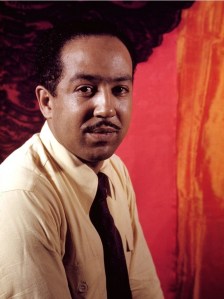
Let America Be America Again

We present this work in honor of Flag Day.

Langston Hughes
American
1902 – 1967


Let America be America again.
Let it be the dream it used to be.
Let it be the pioneer on the plain
Seeking a home where he himself is free.

(America never was America to me.)

Let America be the dream the dreamers dreamed—
Let it be that great strong land of love
Where never kings connive nor tyrants scheme
That any man be crushed by one above.

(It never was America to me.)

O, let my land be a land where Liberty
Is crowned with no false patriotic wreath,
But opportunity is real, and life is free,
Equality is in the air we breathe.

(There’s never been equality for me,
Nor freedom in this “homeland of the free.”)

Say, who are you that mumbles in the dark?
And who are you that draws your veil across the stars?

I am the poor white, fooled and pushed apart,
I am the Negro bearing slavery’s scars.
I am the red man driven from the land,
I am the immigrant clutching the hope I seek—
And finding only the same old stupid plan
Of dog eat dog, of mighty crush the weak.

I am the young man, full of strength and hope,
Tangled in that ancient endless chain
Of profit, power, gain, of grab the land!
Of grab the gold! Of grab the ways of satisfying need!
Of work the men! Of take the pay!
Of owning everything for one’s own greed!

I am the farmer, bondsman to the soil.
I am the worker sold to the machine.
I am the Negro, servant to you all.
I am the people, humble, hungry, mean—
Hungry yet today despite the dream.
Beaten yet today—O, Pioneers!
I am the man who never got ahead,
The poorest worker bartered through the years.

Yet I’m the one who dreamt our basic dream
In the Old World while still a serf of kings,
Who dreamt a dream so strong, so brave, so true,
That even yet its mighty daring sings
In every brick and stone, in every furrow turned
That’s made America the land it has become.
O, I’m the man who sailed those early seas
In search of what I meant to be my home—
For I’m the one who left dark Ireland’s shore,
And Poland’s plain, and England’s grassy lea,
And torn from Black Africa’s strand I came
To build a “homeland of the free.”

The free?

Who said the free? Not me?
Surely not me? The millions on relief today?
The millions shot down when we strike?
The millions who have nothing for our pay?
For all the dreams we’ve dreamed
And all the songs we’ve sung
And all the hopes we’ve held
And all the flags we’ve hung,
The millions who have nothing for our pay—
Except the dream that’s almost dead today.

O, let America be America again—
The land that never has been yet—
And yet must be—the land where every man is free.
The land that’s mine—the poor man’s, Indian’s, Negro’s, ME—
Who made America,
Whose sweat and blood, whose faith and pain,
Whose hand at the foundry, whose plow in the rain,
Must bring back our mighty dream again.

Sure, call me any ugly name you choose—
The steel of freedom does not stain.
From those who live like leeches on the people’s lives,
We must take back our land again,
America!

O, yes,
I say it plain,
America never was America to me,
And yet I swear this oath—
America will be!

Out of the rack and ruin of our gangster death,
The rape and rot of graft, and stealth, and lies,
We, the people, must redeem
The land, the mines, the plants, the rivers.
The mountains and the endless plain—
All, all the stretch of these great green states—
And make America again!

from The Iliad

Homer
Greek
c. 700 B.C. – ?


Unseen by these, the king his entry made:
And, prostrate now before Achilles laid,
Sudden (a venerable sight!) appears;
Embraced his knees, and bathed his hands in tears;
Those direful hands his kisses press’d, embrued
Even with the best, the dearest of his blood!

As when a wretch (who, conscious of his crime,
Pursued for murder, flies his native clime)
Just gains some frontier, breathless, pale, amazed,
All gaze, all wonder: thus Achilles gazed:
Thus stood the attendants stupid with surprise:
All mute, yet seem’d to question with their eyes:
Each look’d on other, none the silence broke,
Till thus at last the kingly suppliant spoke:

“Ah think, thou favour’d of the powers divine!
Think of thy father’s age, and pity mine!
In me that father’s reverend image trace,
Those silver hairs, that venerable face;
His trembling limbs, his helpless person, see!
In all my equal, but in misery!
Yet now, perhaps, some turn of human fate
Expels him helpless from his peaceful state;
Think, from some powerful foe thou seest him fly,
And beg protection with a feeble cry.
Yet still one comfort in his soul may rise;
He hears his son still lives to glad his eyes,
And, hearing, still may hope a better day
May send him thee, to chase that foe away.
No comfort to my griefs, no hopes remain,
The best, the bravest, of my sons are slain!
Yet what a race! ere Greece to Ilion came,
The pledge of many a loved and loving dame:
Nineteen one mother bore—Dead, all are dead!
How oft, alas! has wretched Priam bled!
Still one was left their loss to recompense;
His father’s hope, his country’s last defence.
Him too thy rage has slain! beneath thy steel,
Unhappy in his country’s cause he fell!
“For him through hostile camps I bent my way,
For him thus prostrate at thy feet I lay;
Large gifts proportion’d to thy wrath I bear;
O hear the wretched, and the gods revere!

“Think of thy father, and this face behold!
See him in me, as helpless and as old!
Though not so wretched: there he yields to me,
The first of men in sovereign misery!
Thus forced to kneel, thus grovelling to embrace
The scourge and ruin of my realm and race;
Suppliant my children’s murderer to implore,
And kiss those hands yet reeking with their gore!”

These words soft pity in the chief inspire,
Touch’d with the dear remembrance of his sire.
Then with his hand (as prostrate still he lay)
The old man’s cheek he gently turn’d away.
Now each by turns indulged the gush of woe;
And now the mingled tides together flow:
This low on earth, that gently bending o’er;
A father one, and one a son deplore:
But great Achilles different passions rend,
And now his sire he mourns, and now his friend.
The infectious softness through the heroes ran;
One universal solemn shower began;
They bore as heroes, but they felt as man.

Death Be Not Proud

We present this work in honor of Pentecost.

John Donne
English
1572 – 1631


Death be not proud, though some have called thee
Mighty and dreadfull, for, thou art not soe,
For, those, whom thou think’st, thou dost overthrow,
Die not, poore death, nor yet canst thou kill mee.
From rest and sleepe, which but thy pictures bee,
Much pleasure, then from thee, much more must flow,
And soonest our best men with thee doe goe,
Rest of their bones, and soules deliverie.
Thou art slave to Fate, Chance, kings, and desperate men,
And dost with poyson, warre, and sicknesse dwell,
And poppie, or charmes can make us sleepe as well,
And better then thy stroake; why swell’st thou then?
One short sleepe past, wee wake eternally,
And death shall be no more; death, thou shalt die.