We present this work in honor of the poet’s 240th birthday.
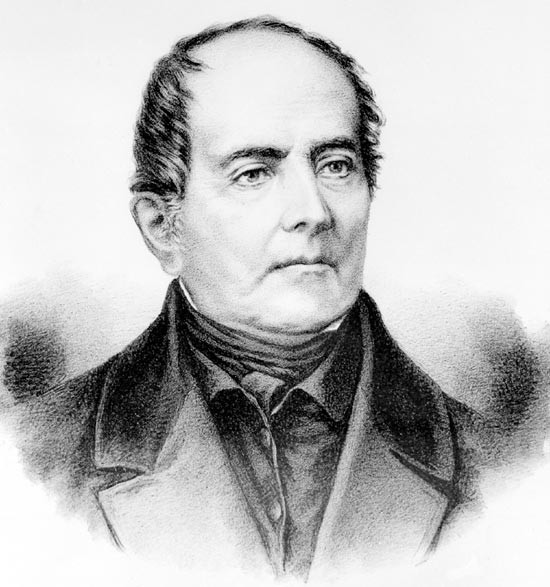
Andres Bello Chilean 1781 – 1865
Do you know, blonde, what favor I solicit When I cover the altars with offerings? Not rich furnishings, not superb lands, Neither a table that flatters the appetite.
At the edge of Aragua I want a parcel To supply me with simple pleasures, And close to my rustic home A brook that runs among the rocks.
To feel good around the summery warmth, I also want my plot to have a grove, Where the proud coconut and the willow can grow.
I’ll be happy if in this refuge I die; And, upon exhaling my fugitive breath, I stamp on your lips my last goodbye!
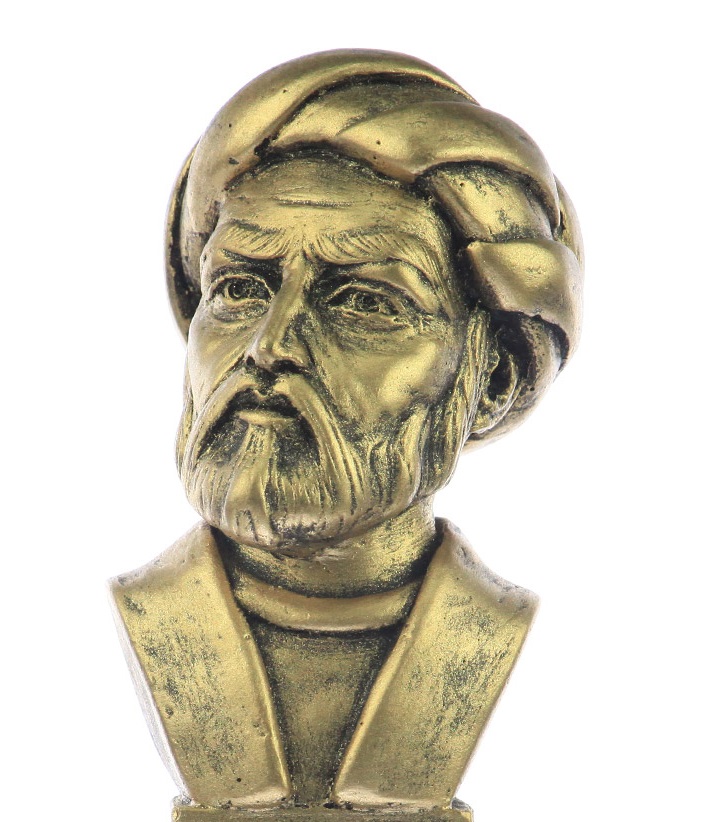
Your servant sits here in a place, A place where joys increase: A singing girl (a radiant moon!) Plays on her harp sweet tunes. All that we need for happiness Is here – except your face. Therefore we two implore you, friend: Please join us; please come soon!
The sun hath shed its kindly light, Our harvesting is gladly o’er Our fields have felt no killing blight, Our bins are filled with goodly store.
From pestilence, fire, flood, and sword We have been spared by thy decree, And now with humble hearts, O Lord, We come to pay our thanks to thee.
We feel that had our merits been The measure of thy gifts to us, We erring children, born of sin, Might not now be rejoicing thus.
No deed of our hath brought us grace; When thou were nigh our sight was dull, We hid in trembling from thy face, But thou, O God, wert merciful.
Thy mighty hand o’er all the land Hath still been open to bestow Those blessings which our wants demand From heaven, whence all blessings flow.
Thou hast, with ever watchful eye, Looked down on us with holy care, And from thy storehouse in the sky Hast scattered plenty everywhere.
Then lift we up our songs of praise To thee, O Father, good and kind; To thee we consecrate our days; Be thine the temple of each mind.
With incense sweet our thanks ascend; Before thy works our powers pall; Though we should strive years without end, We could not thank thee for them all.
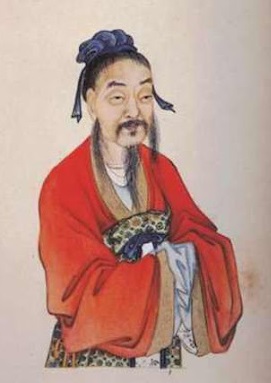
In the year tan-o, Fourth month, first month of summer, The day kuei-tzu, when the sun was low in the west, An owl came to my lodge And perched on the corner of my mat, Phlegmatic and fearless. Secretly wondering the reason The strange thing had come to roost, I took out a book to divine it And the oracle told me its secret: “Wild bird enters the hall; The master will soon depart.” I asked and importuned the owl, “Where is it I must go? Do you bring good luck? Then tell me! Misfortune? Relate what disaster! Must I depart so swiftly? And speak to me of the hour!” The owl breathed a sigh, Raised its head and beat its wings. Its beak could utter no word, But let me tell you what it sought to say: All things alter and change, Never a moment of ceasing, Revolving, whirling, and rolling away, Driven far off and returning again, Form and breath passing onward, Like the mutations of the cicada. Profound, subtle, and illimitable, Who can finish describing it?
Good luck must be followed by bad, Bad in turn bow to good. Sorrow and joy throng the gate, Weal and woe in the same land. Wu was powerful and great; Under Fu-ch’a it sank in defeat. Yüeh was crushed at K’uai-chi, But Kou-chien made it an overlord. Li Ssu, who went forth to greatness, at last Suffered the five mutilations. Fu Yüeh was sent into bondage, Yet Wu Ting made him his aide. Thus fortune and disaster Entwine like the strands of a rope. Fate cannot be told of, For who shall know its ending? Water, troubled, runs wild; The arrow, quick-sped, flies far. All things, whirling and driving, Compelling and pushing each other, roll on. The clouds rise up, the rains come down, In confusion inextricably joined. The Great Potter fashions all creatures, Infinite, boundless, limit unknown. There is no reckoning Heaven, Nor divining beforehand the Tao. The span of life is fated; Man cannot guess its ending.
Heaven and earth are the furnace, The workman, the Creator; His coal is the yin and the yang, His copper, all things of creation. Joining, scattering, ebbing and flowing, Where is there persistence or rule? A thousand, a myriad mutations, Lacking and end’s beginning. Suddenly they form a man: How is this worth taking thought of? They are transforming again in death: Should this perplex you? The witless take pride in his being, Scorning others, a lover of self. The man of wisdom sees vastly And knows what all things will do. The covetous run after riches, The impassioned pursue a fair name; The proud die struggling for power, While the people long only to live. Each drawn and driven onward, They hurry east and west. The great man is without bent; A million changes are as one to him. The stupid man chained by custom Suffers like a prisoner bound. The sage abandons things And joins himself to the Tao alone, While the multitudes in delusion With desire and hate load their hearts. Limpid and still, the true man Finds his peace in the Tao alone.
Discarding wisdom, forgetful of form, Transcendent, destroying self, Vast and empty, swift and wild, He soars on wings of the Tao. Borne on the flood he sails forth; He rests on the river islets. Freeing his body to Fate, Unpartaking of self, His life is a floating, His death a rest. And stillness like the stillness of deep springs, Like an unmoored boat drifting aimlessly, Valuing not the breath of life, He embraces and drifts with Nothing. Comprehending Fate and free of sorrow, The man of virtue heads no bounds. Petty matters, weeds and thorns– What are they to me?
We present this work in honor of the 210th anniversary of the poet’s death.
Heinrich von Kleist German 1777 – 1811
When the War-wheel storms, Men shout at the strife and take up arms, Men, who cherish hearts in their breasts, Hearts that the God of Love designed best.
They can surely rob me of nothing, I say, Not that peace, which has held its sway, Nor that innocence, or in God that faith, Which forbids all terror, as well as hate.
Not the deep shade of the maple tree will they impede, My source of comfort in the cornfield, Not even harass the Nightingale’s oration,
In honor of Revolution Day, we present this work by one of contemporary Mexico’s cleverest poets.
Francisco Hinojosa Mexican b. 1954
Having just heard, my love, that you won a seat by popular vote, I am overwhelmed with joy for you and your electorate and because I know you well I am sure you will legislate with courage and devotion making your voters feel represented forget these household chores a while you don’t have a spouse for nothing and focus on the legislative charge assigned you receive the citizens’ demands attend the sessions ascend the podium assert your views hear out your committee chairman be yourself and above all legislate, legislate, legislate our bed will not feel the void caused by all those nights you work late, legislating you will receive a salary and they will give you bonds and business trips and cell phones and chauffeurs and try, my love, not to be corrupted try to stay honest because you, Honorable Representative woman of laws and convictions our advocate you are our voice in Congress although I did not vote for you forgive me but I never thought you’d win.
Be kind to the hooker, or else in the scrum Thy poor tender shins he will hack; Or take the first chance that is offered to him Of planting his foot in your back. Be kind to the hooker, he’s hidden from view, And can work his revenge in the dark, So if you insult him, as sure as you’re born, He’ll deprive you of some of your bark.
Be kind to the half-back, he’s nippy and sly, And will grab you when rounding the scrum, Or will collar you low, your heels up he’ll throw, And bang on the ground you will come. Be kind to the half-back, that watchful young man, If you hurt him he’ll likely feel wild; And if he should meet you again in the field, You’d probably know why he smiled.
Be kind to the winger, or you he may prod In the home of your afternoon tea; He’s fond of a scrap, and won’t mind a rap If your eye comes to grief on his knee. Be kind to the winger, he’s out for a go, And promptly pays all that he owes; So be careful to give him no more than his due, Or he’ll give you the change on your nose.
Be kind to three-quarters, they’re heady and strong, And can run like their master, Old Nick; So if you tread hard on their corns beg their pardon, Or limp off the field with a rick. Be kind to three-quarters again let me say, For their hatred of roughness is such That, if you should fend them, or neatly upend them, You’ll travel henceforth on a crutch.
Be kind to the full-back or, when in his grip, He’ll handle you roughly for sure. He’s a virtuous fellow, and hates fast young men, So take care that your language is pure. Be kind to the full-back, ’tis kindness well spent, Don’t approach this stern player with vim; If to score you must try, put your collar-bone by – A collarbone’s nothing to him.




 Poets Corner