We present this work in honor of the 410th anniversary of the poet’s death.
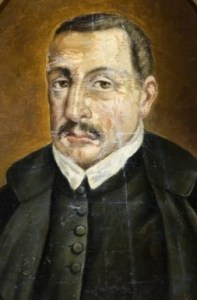
Lupercio Leonardo de Argensola Spanish 1559 – 1613
Frightful representation of death, cruel sleep, my heart no longer agitate, by showing me the tight knot has been cut, sole consolation for my adverse fate.
Seek out the ramparts of some tyrant strong, his walls of jasper, ceiling made of gold; or seek the miser rich in his poor bed, and make him wake up sweating, trembling, cold.
Then let the first see how the angry mob breaks down with wrath his iron-covered gates, or see the hidden blade of lackey bought;
and let the second see his wealth exposed by stolen key or furious assault: and let Love keep the glories he has wrought.
We present this work in honor of the poet’s 390th birthday.
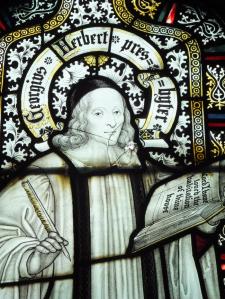
George Herbert Welsh 1593 – 1633
I struck the board, and cry’d, No more, I will abroad. What? Shall I ever sigh and pine? My lines and life are free; free as the rode, Loose as the winde, as large as store. Shall I be still in fruit? Have I no harvest but a thorn To let me bloud, and not restore What I have lost with cordiall fruit? Sure there was wine Before my sighs did drie it: there was corn Before my tears did drown it. Is the yeare onely lost to me? Have I no bayes to crown it? No flowers, no garlands gay? All blasted? All wasted? Not so, my heart: but there is fruit, And thou hast hands. Recover all thy sigh-blown age On double pleasures: leave thy cold dispute Of what is fit, and not forsake thy cage, Thy rope of sands, Which pettie thoughts have made, and made to thee Good cable, to enforce and draw, And by thy law, While thou didst wink and wouldst not see. Away; take heed: I will abroad. Call in thy deaths head there: tie up thy fears. He that forbears To suit and serve his need, Deserves his load. But as I rav’d and grevv more fierce and wilde At every word, Me thoughts I heard one calling, Childe: And I reply’d , My Lord.
We present this work in honor of the poet’s 240th birthday.
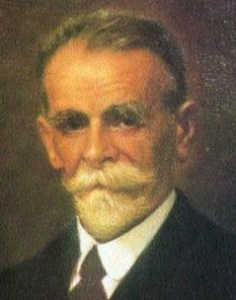
Gabriele Rossetti Italian 1783 – 1854
Thrilled by the first Phœbean impulses, Rough versicles I traced with facile hand: And yet, to my surprise, those lines of mine Almost took wing into a distant flight. A hope of Pindus did I hear me named: But praise increased my ardour, not my pride. And yet some vanity there came and mixed With the fair issue of my preluding: But, all the more I heard the applause increase, With equal force did study grow in me. Not surely that I tried to load my page With pomp abstruse extraneous to my drift; But counterwise each image and each rhyme, The more spontaneous, so meseemed more fair. In trump of gold and in the oaten pipe Let some seek the sublime, I seek for ease. I shunned those verses which sprawl forth untuned Even from my days of schoolboy tutelage: I know they please some people, but not me: Admiring Dante, Metastasio I laud; and hold—a true Italian ear Must not admit one inharmonious verse. Some lines require a very surgeon’s hand To make them upon crutches stand afoot. So be they! But, to set them musical, They must, by Heaven, be in themselves a song. This seems a truthful, not a jibing, rule— Music and lyric are a twinborn thing. Yet think not that I deem me satisfied With upblown empty sound without ideas:— Then will a harmony be beautiful When great emotions and great thoughts it stirs.
Immortal spirit of antiquity, Father of the true, beautiful and good, Descend, appear, shed over us thy light Upon this ground and under this sky Which has first witnessed the unperishable fame. Give life and animation to those noble games! Throw wreaths of fadeless flowers to the victors In the race and in the strife! Create in our breasts, hearts of steel! In thy light, plains, mountains and seas Shine in a roseate hue and form a vast temple To which all nations throng to adore thee, Oh immortal spirit of antiquity!
We present this work in honor of the 40th anniversary of the poet’s death.
Tennessee Williams American 1911 – 1983
I am tired. I am tired of speech and of action. If you should meet me upon the street do not question me for I can tell you only my name and the name of the town I was born in–but that is enough. It does not matter whether tomorrow arrives anymore. If there is only this night and after it is morning it will not matter now. I am tired. I am tired of speech and of action. In the heart of me you will find a tiny handful of dust. Take it and blow it out upon the wind. Let the wind have it and it will find its way home.
We present this work in honor of Defense of the Fatherland Day.
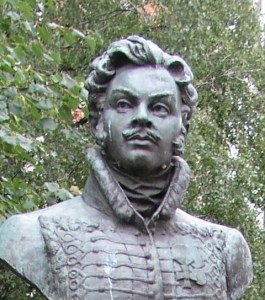
Denis Davydov Russian 1784 – 1839
Where are you, old friends of mine, True hussars by avocation, Comrades both in arms and wine, Champions of conversation?
Grayheads, I remember you, Dippers full, in blissful poses. Drinking while the fire burned through, Glowing like your own red noses!
Sprawled on hayricks for settees, Jaunty shakoes backward tilted, Hussar jackets to your knees, Sabres resting, carven-hilted.
Black-stained pipes between your teeth, Puffing, there you lay in clover, While the smoke, wreath after wreath, Floated lock and whisker over.
Tire re you drowsed and hugged your swords; Not a sound, while smoke curled densely, Not a murmur – drunk as lords, Drunk till you were almost senseless.
But as soon as dawn arrived Off to battle you rode daily With your shakoes to one side, In tire wind your jackets flailing.
Under riders horses fly, Sabres whistle, foemen slaying… Battle over, nightfall nigh — Dippers once again start playing.
Mat do I see now, though? God! War has given way to dancing; Like officials clad and shod. Through a waltz hussars go prancing.
They’ve grown wise, you’ll say to me… Listen to those home-bred Frenchmen: Jomini1 — just Jomini. But of vodka — ne’er a mention!
Where are you, old friends of mine, True hussars by avocation, Comrades both in arms and wine, Champions of conversation?
Welcome, welcome Brother debtor; to yon poor but merry place, Where no Bayliff, dun or setter, Dare to show their frightful face, But kind sir, as you’re a stranger; Down your garnish you must lay Or your coat will be in danger You must either strip or pay.
Ne’er Repine at your confinement From your children or your wife, Wisdom lies in true Refinement Thro’ the various scenes of life Scorn to Show that least resentment Tho beneath the frowns of fate, Knaves and beggars find contentment, Tears and cares attend the great.
Tho’ our Creditors are spiteful And restrain our bodies here, Use will make a Gaol delightful Since there’s nothing else to fear, Every Island’s but a prison Strongly guarded by the sea, Kings and princes for the reason Prisoners are as well as we.
What was it made great Alexander weep at his unfriendly fate?
Twas because he could not wander Beyond ye world’s strong prison gate, The world itself is strongly bounded by the heavens and stars above, Why should we then be confounded, since there’s nothing free but love.
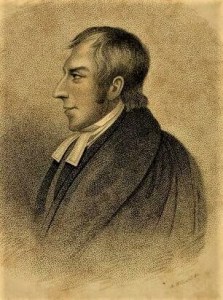
We present this work in honor of the 200th anniversary of the poet’s death.
Charles Wolfe Irish 1791 – 1823
Not a drum was heard, nor a funeral note, As his corse to the rampart we hurried; Not a soldier discharged his farewell shot O’er the grave where our hero we buried.
We buried him darkly at dead of night, The sods with our bayonets turning; By the struggling moonbeam’s misty light And the lantern dimly burning.
No useless coffin enclosed his breast, Nor in sheet nor in shroud we wound him; But he lay like a warrior taking his rest With his martial cloak around him.
Few and short were the prayers we said, And we spoke not a word of sorrow; But we steadfastly gazed on the face that was dead, And we bitterly thought of the morrow.
We thought, as we hollowed his narrow bed And smoothed down his lonely pillow, That the foe and the stranger would tread o’er his head, And we far away on the billow!
Lightly they’ll talk of the spirit that’s gone And o’er his cold ashes upbraid him,– But little he’ll reck, if they let him sleep on In the grave where a Briton has laid him.
But half of our heavy task was done When the clock struck the hour for retiring: And we heard the distant and random gun That the foe was sullenly firing.
Slowly and sadly we laid him down, From the field of his fame fresh and gory; We carved not a line, and we raised not a stone, But left him alone with his glory.





 Poets Corner