In honor of Chilean Independence Day, we present this work of independence by one of Chile’s great poets.
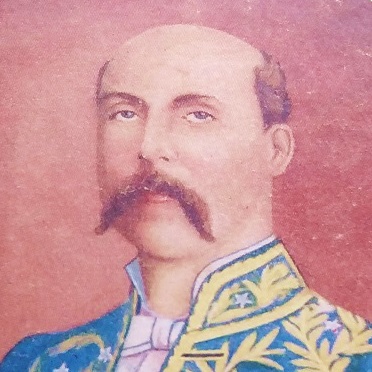
Guillermo Blest Gana Chilean 1829 – 1904
I observed when you snatched viciously me away my loved ones, and then I judged you: relentless like misfortune, inexorable like pain and cruel like the doubt…
But today that you, cold, mute, approach me without hate and without love, neither sullen nor affable, my spirit greets your majesty of the unfathomable and your eternity.
I, without the impatience of the suicide, neither the dread of the happy, nor the inert fear of the criminal, I await your coming;
that equal to everyone’s luck is my fortune: if nothing is expected of life, something must be expected from death.
We present this work in honor of the 230th anniversary of the poet’s death.
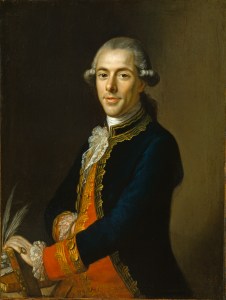
Tomas de Iriarte y Oropesa Spanish 1750 – 1791
The fable which I now present, Occurred to me by accident: And whether bad or excellent, Is merely so by accident.
A stupid ass this morning went Into a field by accident: And cropped his food, and was content, Until he spied by accident A flute, which some oblivious gent Had left behind by accident; When, sniffling it with eager scent, He breathed on it by accident, And made the hollow instrument Emit a sound by accident. “Hurrah, hurrah!” exclaimed the brute, “How cleverly I play the flute!”
A fool, in spite of nature’s bent, May shine for once, by accident.
In honor of Mexican Independence Day, we present this work by one of Mexico’s most celebratory poets.
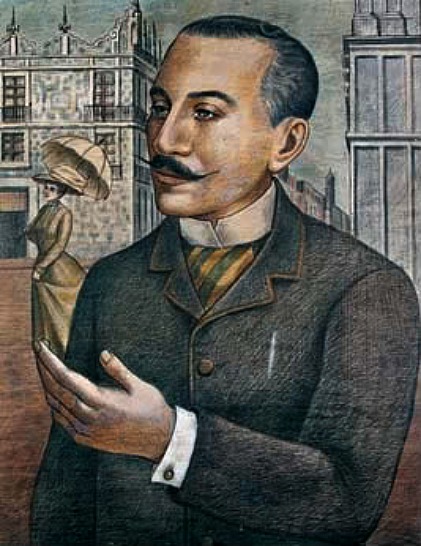
Manuel Gutiérrez Nájera Mexican 1859 – 1895
Speak not a word of wild, blaspheming grief! Be proud, be brave, though fallen in the strife, And gaze, oh poet, with supreme disdain On all the dark injustices of life!
Thou shalt not seek for constancy in love, Nor aught eternal from frail mortals ask; To rear sepuchral monuments on high From all thy griefs, O artist, be thy task! Chisel thy statues out of marble white, Forms chaste of mien, though naked to the air; And let speech slumber on their sculptured lips; Let them stand deeply sad, yet silent there.
A name! A sounding echo on the air, Fleeting and frail, its life a moment’s span! A dreamer’s foolish idol! Name and fame! This is the last sad vanity of man. Why should we justice seek, or clemency.— If our own comrades here deny our plea— From the indifference, mute and icy-cold, Of unknown men, to live in days to be?
Tardy compassion why should we implore From strangers hid in shadows, one and all? The echoes sleep within the darksome wood, And no one, no one answers to our call.
The only consolation in this life Is to remember happy hours and fair, And lift our eyes on high to view the skies When skies are blue or stars are shining there;
To flee the sea, and on the sleeping lake Enjoy the water’s calm, the peaceful time; To sleep—to dream—our wizard strong, the Dream, Is a deceiver holy and sublime!
‘Tis true, alas, that in the honest breast The fresh wound calls for vengeance and for strife; But yet—forgive the evil they have done! All suffer from the malady of life.
The very men who crown themselves with flowers Are born to sorrow, and to perish, too. If those you love the most betray your trust, Forgive them, for they know not what they do!
Perhaps those instincts they inherited, And they avenge unknowingly to-day Races that gathered on their hapless heads All griefs and hatreds ere they passed away.
Are thou perchance the judge—the sinless one? Do justice and sweet mercy meet in thee? Ah, who is not a fugitive, that bears The weight of crimes unpunished, guiltily?
Who has not feigned to love, dared with false vows Into a maiden’s holy soul to steal? Who can be sure that he has never killed? Who is the just man, that may justice deal?
Pity and pardon for all those that live! So, full of love, in mild and gentle mood, We shall be tender and compassionate, And haply, haply, some time shall be good!
Friend, dost thou suffer? Seek thy sweetheart fair In deathless beauty, free from pain and fear— Live leaning on thy sadness, as of old On young Cordelia leaned the wandering Lear.
See, far and farther ebbs the dying day! How good it is to rest! In shade obscure The woodland lulls us with a music soft; Virgin the water is, the air is pure.
Weary, her eyes the light is closing now; Sad murmors sound, and many a mournful sigh. The night, descending, to the earth says, ‘Come! ‘Tis over. Go to sleep, and do not cry!’
To recollect—forgive—have loved, believed, And had brief happiness our hearts to bless, And soon, grown weary, to recline against The snowy shoulder of forgetfulness!
To feel forevermore the tenderness That warmed your youthful bosoms with its flame, Receiving happiness, if it should come, Like a glad visit from some beauteous dame;
To hold still hidden that which most we love— Smiling forgiveness on our lips to keep— Until at last, O earth! we come to thee In the complete abandonment of sleep:
This ought to be the life of him who thinks How transient all things are that meet his eyes, And, wisely, stops before the wide expanse Of falsehood’s ocean that around him lies.
Gather the flowers, while there are flowers to pluck; Forgive the roses for their thorny guise! Our sorrows also pass away and fly, Flitting like swarms of dark-winged butterflies.
Love and forgive! Resist with courage strong The wicked, the unjust, the cowardly. The silent night, when it settles down, Pensive and sad, is beautiful to see!
When sorrow dims my spirit, on the heights I seek for calmness and for shining light. Upon the frozen summits of my soul Infinite pity spreads its hue of white.
The ore in the crucible is pungent, smelling like acrid wine, It is dusky red, like the ebb of poppies, And purple, like the blood of elderberries. Surely it is a strong wine – juice distilled of the fierce iron. I am drunk of its fumes. I feel its fiery flux Diffusing, permeating, Working some strange alchemy… So that I turn aside from the goodly board, So that I look askance upon the common cup,
And from the mouths of crucibles Suck forth the acrid sap.
We present this work in honor of the poet’s 105th birthday.
Roald Dahl Welsh 1916 – 1990
The crocodile, with cunning smile, sat in the dentist’s chair. He said, “Right here and everywhere my teeth require repair.” The dentist’s face was turning white. He quivered, quaked and shook. He muttered, “I suppose I’m going to have to take a look.” “I want you”, Crocodile declared, “to do the back ones first. The molars at the very back are easily the worst.” He opened wide his massive jaws. It was a fearsome sight— At least three hundred pointed teeth, all sharp and shining white. The dentist kept himself well clear. He stood two yards away. He chose the longest probe he had to search out the decay. “I said to do the back ones first!” the Crocodile called out. “You’re much too far away, dear sir, to see what you’re about. To do the back ones properly you’ve got to put your head Deep down inside my great big mouth,” the grinning Crocky said. The poor old dentist wrung his hands and, weeping in despair, He cried, “No no! I see them all extremely well from here!” Just then, in burst a lady, in her hands a golden chain. She cried, “Oh Croc, you naughty boy, you’re playing tricks again!” “Watch out!” the dentist shrieked and started climbing up the wall. “He’s after me! He’s after you! He’s going to eat us all!” “Don’t be a twit,” the lady said, and flashed a gorgeous smile. “He’s harmless. He’s my little pet, my lovely crocodile.”
Some have God’s words; others have songs of comfort for the bereaved. If I can pluck courage here, I would like to speak directly to the dead—the September dead. Those children of ancestors born in every continent on the planet: Asia, Europe, Africa, the Americas…; born of ancestors who wore kilts, obis, saris, geles, wide straw hats, yarmulkes, goatskin, wooden shoes, feathers and cloths to cover their hair. But I would not say a word until I could set aside all I know or believe about nations, wars, leaders, the governed and ungovernable; all I suspect about armor and entrails. First I would freshen my tongue, abandon sentences crafted to know evil—wanton or studied; explosive or quietly sinister; whether born of a sated appetite or hunger; of vengeance or the simple compulsion to stand up before falling down. I would purge my language of hyperbole; of its eagerness to analyze the levels of wickedness; ranking them; calculating their higher or lower status among others of its kind. Speaking to the broken and the dead is too difficult for a mouth full of blood. Too holy an act for impure thoughts. Because the dead are free, absolute; they cannot be seduced by blitz. To speak to you, the dead of September 11, I must not claim false intimacy or summon an overheated heart glazed just in time for a camera. I must be steady and I must be clear, knowing all the time that I have nothing to say—no words stronger than the steel that pressed you into itself; no scripture older or more elegant than the ancient atoms you have become. And I have nothing to give either—except this gesture, this thread thrown between your humanity and mine: I want to hold you in my arms and as your soul got shot of its box of flesh to understand, as you have done, the wit of eternity: its gift of unhinged release tearing through the darkness of its knell.
We present this work in honor of Ganesh Charturthi.
N.K. Osho Indian b. 1975
Thousandfold flowers unfetters fragrance… Thousandfold powers dowers Deliverance… All frith flowers adore thine aubade! All Ambrosia audacious attunes along cascade!
When my myriad… mystic Mood… in mute stands rustic O’erflows joy e’er encompass! Sacred love, encore! all onus… pious abyss!
Daze, dazzling… blushes those sweet flower, Carries my Chariot thought to Rose land! And thy relume thought compose and jocund! Where withal… Whimsical thro’ Orison pervade





 Poets Corner