We present this work in honor of the poet’s 390th birthday.
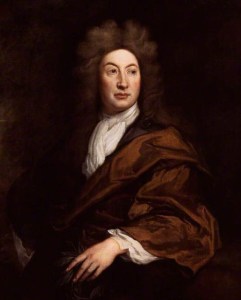
John Dryden English 1631 – 1700
Happy the man, and happy he alone, He who can call today his own: He who, secure within, can say, Tomorrow do thy worst, for I have lived today. Be fair or foul or rain or shine The joys I have possessed, in spite of fate, are mine. Not Heaven itself upon the past has power, But what has been, has been, and I have had my hour.
We present this work in honor of the poet’s 35th birthday.
Rossy Evelin Lima-Padilla Mexican b. 1986
This poem is titled sailor of the Gulf, and if I begin to remember it’s called tiger hand.
When I sit on the floor thinking of the shoes I used as a little girl it’s called grandfather of smoke, It’s also called this when I find a box of Raleigh on the floor.
This poem is called the incomplete story, it’s called returning, the gift of memory.
When I hear the seagull cry this poem is called blue boat, it’s called uprooting press mill.
When I think of the future this poem is called the invincible past, it’s called knowing myself through your stories.
This poem has a thousand faces and when I come across it, it tells me, “There is no fire that burns more than distance”
And the memory sinks its hand in my burning heart.
We present this work in honor of the poet’s 130th birthday.
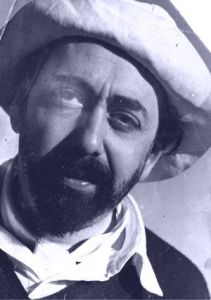
Oliverio Girondo Argentine 1891 – 1967
I play I play pores cables keys coves I play on subjects of nerves wharves weavings that play upon me scars cinders tropical bowels I play only only undertows hangovers heavy breathing I play and moreplay and nothing
Prefigures of absence inconsistent tropes what a you what a what what a flute what loot what hollows what masks what empty lonely reaches what a yes what a no what a yesno fate putting me out of tune what reflexes reflect what deeps what wizard material what keys what nocturnal ingredients what frozen shutters that do not open what a nothing I play wholely
We present this work in honor of the poet’s 250th birthday.
Sir Walter Scott Scots 1771 – 1832
Breathes there the man, with soul so dead, Who never to himself hath said, This is my own, my native land! Whose heart hath ne’er within him burn’d, As home his footsteps he hath turn’d From wandering on a foreign strand! If such there breathe, go, mark him well; For him no Minstrel raptures swell; High though his titles, proud his name, Boundless his wealth as wish can claim; Despite those titles, power, and pelf, The wretch, concentred all in self, Living, shall forfeit fair renown, And, doubly dying, shall go down To the vile dust, from whence he sprung, Unwept, unhonour’d, and unsung.
In honor of Allegiance Day, we present this work by one of modern Morocco’s finest poets.
Fatiha Morchid Moroccan b. 1958
I rise from under the ruins Climb my pride And reach to the surface… The zenith of pain From memory I build up a fortress …and from monotony. I wrap myself in expectations from above Before I resume… My falling.
I love this body of mine that has lived life, its hip flask outline, its softness of water, the spurting of hair that crowns my cranium, the crystal glass of a face, its delicate base that ascends faultless from shoulders and collarbone.
I love my back, gullible to turned-off stars, my revealed hills, fountains of the chest that provide the first sustenance of the species. Coming out of the ribs, mobile waist overflowing and warm vessel of my stomach.
I love the moon curve of my hips, moulded by alternate pregnancies, the vast roundness of the wave of my gluteals, and my legs and feet, foundations and support of the temple.
I love the handful of dark petals, the hidden fleece that stores the dawning mystery of paradise, the humid cavity where blood flows and living water shoots out.
This hurting body of mine that gets sick, that festers, that coughs, that perspires, secretes moods, feces, saliva, and that gets tired, exhausted, and withers.
Living body, link that assures the infinite chain of successive bodies. I love this body made of the purest mud: seed, root, sap, flower, and fruit.
We present this work in honor of World Elephant Day.
James McIntyre Canadian 1828 – 1906
On Ganges banks roams the tiger, And lion rules by the Niger, Hunder heard shrill cry of peacocks, In Indian jungles go in flocks.
And he saw tiger crouch and spring, To crush a bird with beauteous wing, But the tiger missed his aim, And he hung his head with shame.
Then there came a mighty crush, Of elephants rush through the bush, The tiger cat-like crouched on ground, And elephants rushed in with bound.
In front was baby elephant, To crush its bones did tiger want, But mother saw fierce forest ranger, And she gave a cry of danger.
Leader of herd he madly rushed, Resolved the tiger should be crushed, But tiger strove to run away, Willing to relinquish prey.
But when he found that he must fight, On elephant’s back he strove to light, But elephant struck him with his foot, And then with tusks he did him root.
So now once more must praise be sung, To beasts who nobly fight for young, And grateful feelings were now stirred, Towards the leader of the herd.
We present this work in honor of the poet’s 90th birthday.
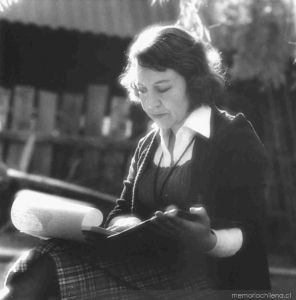
Delia Domínguez Chilean b. 1931
Tomorrow, a God I don’t know will offer me salvation if I don’t blindfold my soul as your shadow passes by.
Tomorrow, a mist will rise from the cornfields and we’ll know another season is upon us because our clothing will stick to our ribs, and you’ll depart forever like those visitors from the city who don’t know the sense of belonging or the scent of rotting leaves —or even less— the desolation of the hillsides after an infernal rain.
Tomorrow I’ll be silent, turned toward my solitary pillow like a schoolgirl punished in the farthest corner of the world, while the nettles at the back of the garden will open their milky buttons in the midst of this silence when it’s all much too late.